



Sunscreen is essential for protecting against sunburn, premature aging, and skin cancer. But not all formulas are created equal.
In the FDA’s 2019 proposed rule, only zinc oxide and titanium dioxide were classified as GRASE (Generally Recognized as Safe and Effective), while many other sunscreen ingredients still require additional safety data.
This leaves other common chemicals in regulatory limbo. Understanding what ingredients to avoid in sunscreen helps you make safer choices for your health and the environment.
Here we’ll cover harmful chemicals, from hormone disruptors to reef-damaging compounds. After reading, you’ll know exactly which ingredients to skip for safer sun protection.
Why Some Sunscreen Ingredients Raise Concerns
Chemical UV filters work by absorbing into the skin and converting UV radiation to heat.
Recent FDA testing revealed that several common active ingredients absorb into the bloodstream at levels far exceeding the safety threshold, requiring further evaluation.
Beyond systemic absorption, problematic sunscreen chemicals fall into three main categories: endocrine disruptors that interfere with hormones, allergens causing skin reactions, and marine toxins damaging coral reefs.
The FDA now requires additional safety data for 12 chemical filters before they can receive GRASE (Generally Recognized as Safe and Effective) status.
Environmental concerns add another layer, with Hawaii and other regions banning specific ingredients to protect ocean ecosystems from bleaching and toxicity.
High-Risk Active Ingredients
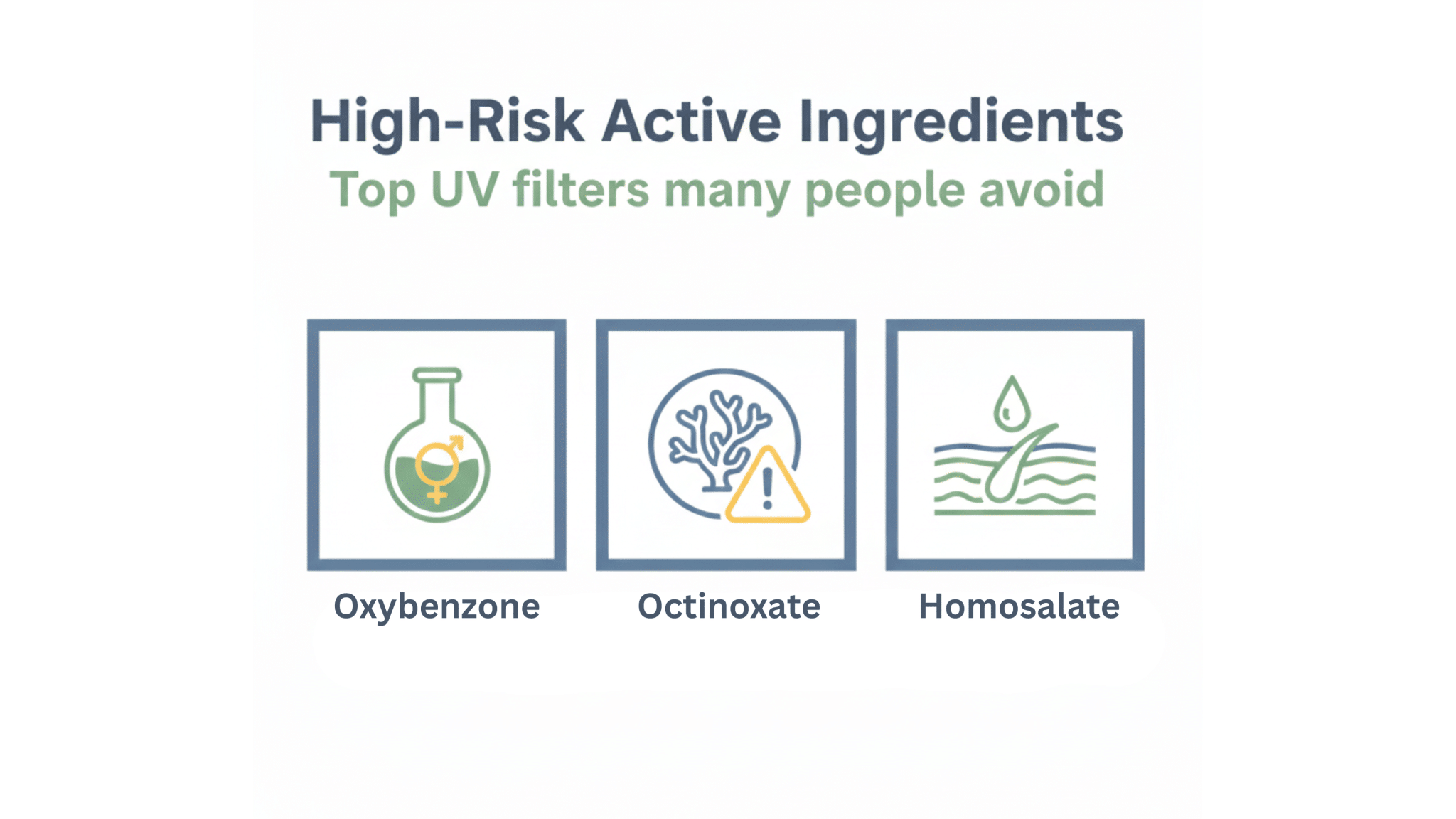
These three chemical UV filters pose the most serious health and environmental concerns.
They’ve been banned in multiple countries and regions due to strong evidence of systemic absorption and potential harm.
1. Oxybenzone (benzophenone-3)
Oxybenzone is the most concerning sunscreen ingredient. This endocrine disruptor absorbs readily through the skin and appears in the bloodstream and breast milk.
Studies link it to reproductive harm and hormonal imbalances. Hawaii and several countries have banned it due to coral reef damage. The FDA requires more safety data before approval.
2. Octinoxate (octyl Methoxycinnamate)
Octinoxate penetrates skin and continues absorbing after application. Research shows it can disrupt hormones, particularly thyroid function, and may affect testosterone and progesterone levels.
Studies link urinary concentrations in children to delayed puberty. Hawaii banned this ingredient alongside oxybenzone to protect marine ecosystems from bleaching and toxicity.
3. Homosalate
The European Commission restricted it to just 0.5% concentration in the finished product due to endocrine concerns, while the US allows up to 15%. This limit is based on endocrine disruption concerns.
Made from salicylic acid, it’s linked to potential birth defects. Pregnant women should avoid this ingredient entirely for fetal safety.
Moderate-Risk Active Ingredients
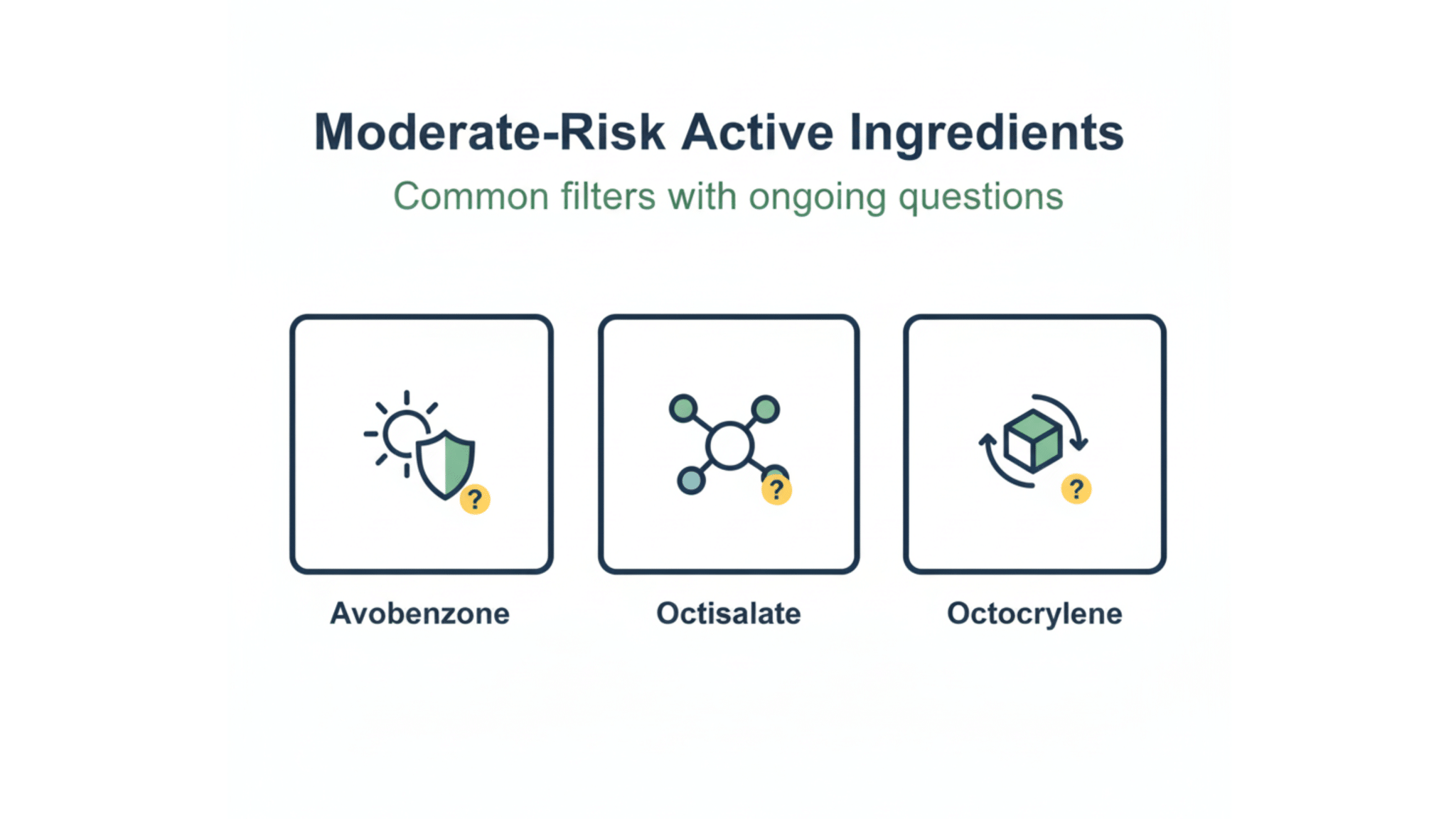
These chemical filters have concerning safety profiles but less conclusive evidence than high-risk ingredients.
They’re still widely used in US sunscreens despite growing research about potential harm.
4. Avobenzone
Avobenzone provides UVA protection but lacks stability, breaking down in sunlight to create toxic compounds. It’s absorbed at levels nine times the FDA’s safety threshold and shows endocrine-disrupting properties in studies.
Because it degrades quickly, manufacturers pair it with stabilizers, often other questionable chemicals. Breakdown products can trigger allergic reactions.
5. Octisalate (ethylhexyl Salicylate)
Octisalate absorbs through the skin at ten times the FDA’s systemic exposure limit. Made from salicylic acid, it raises birth defect concerns in humans and fish, making it unsuitable for pregnancy.
Studies suggest it may interact with estrogen receptors. The ingredient has been linked to allergic contact dermatitis in case reports.
6. Octocrylene
Octocrylene penetrates skin at fourteen times the FDA’s safety cutoff. This chemical is often contaminated with benzophenone, a known carcinogen that increases as the product ages.
It causes photo-contact allergies; reactions when skin comes into contact with both the chemical and sunlight. Research shows bioaccumulation in fish brains and livers, harming marine wildlife.
Other Harmful Active Ingredients
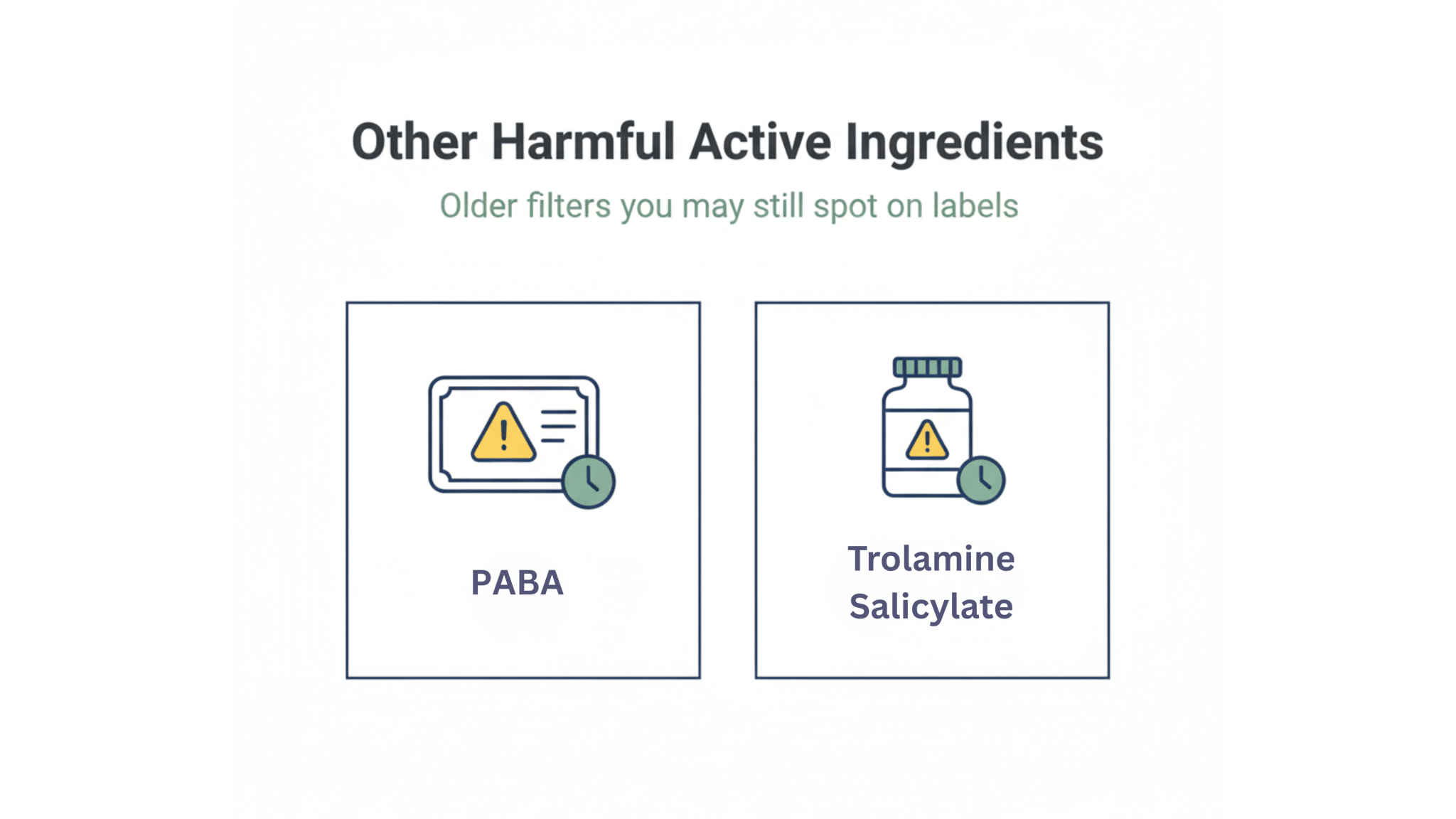
These older sunscreen chemicals are being phased out or are rarely used today.
The FDA has proposed classifying them as unsafe based on safety data and adverse reactions.
7. Paba (aminobenzoic Acid)
PABA was once common in sunscreens but is now rare. The FDA proposed classifying it as “not safe and effective” due to data showing safety issues.
It causes allergic dermatitis and photosensitivity reactions. Some studies suggest hormone disruption and cancer risk. Most manufacturers have removed this ingredient from modern formulations.
8. Trolamine Salicylate
Trolamine salicylate absorbs UV light, but the FDA proposed “not safe” status based on concerning safety data. This ingredient is being phased out of sunscreen products.
While less common than other chemicals on this list, it may still appear in older formulations. Check labels carefully to avoid this questionable ingredient.
Harmful Inactive Ingredients
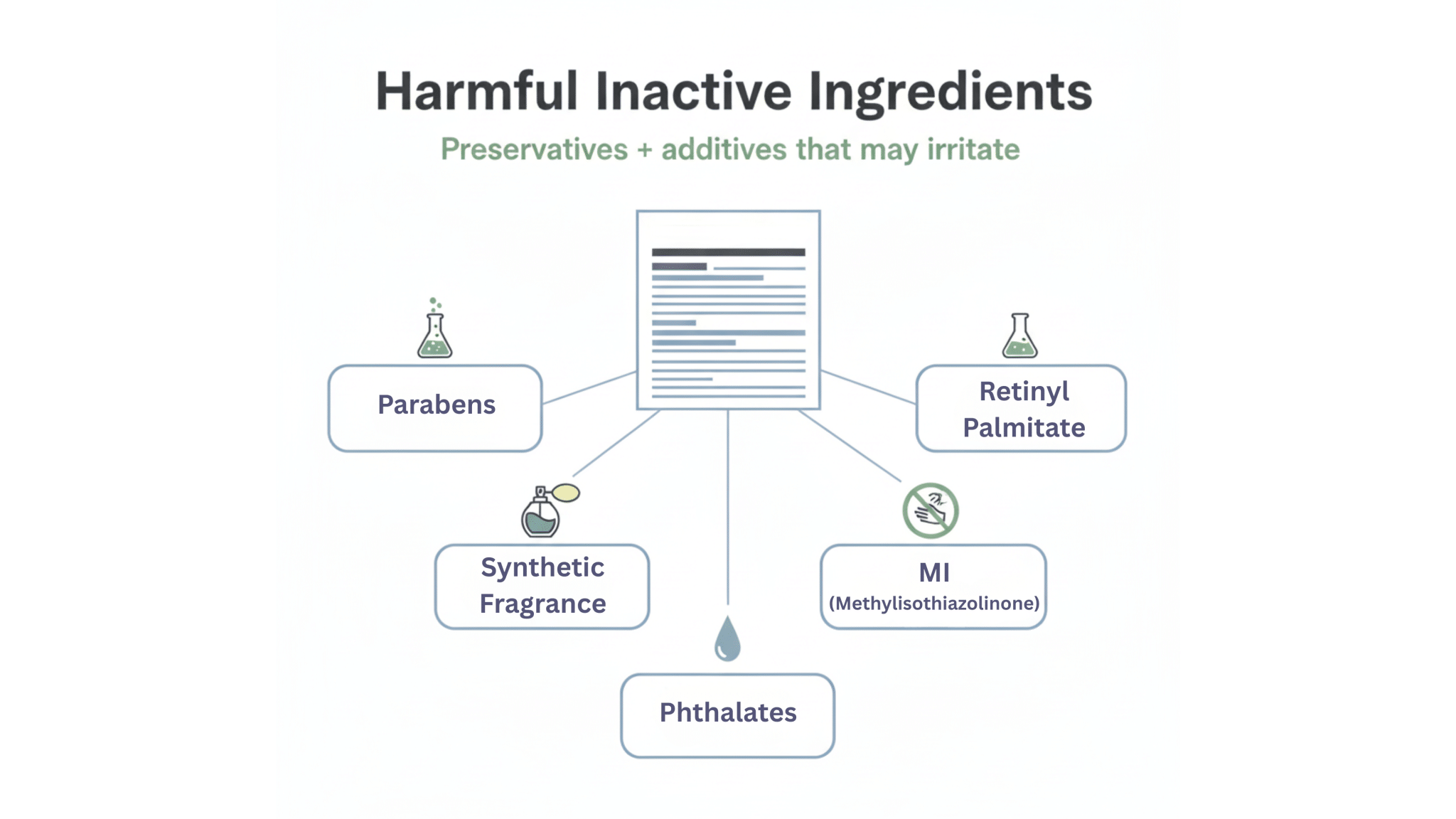
Beyond UV filters, many sunscreens contain problematic “inactive” ingredients that make up 50-70% of the formula.
These preservatives, stabilizers, and additives can cause allergic reactions, hormone disruption, and other health concerns.
9. Parabens
Parabens extend shelf life by preventing bacterial growth in cosmetics. However, they’re linked to breast cancer because they may affect breast cell mechanisms and mimic estrogen.
These preservatives appear in the bloodstream and have hormone-disrupting properties. Look for ethylparaben, methylparaben, or any ingredient ending in “-paraben” and avoid them.
10. Retinyl Palmitate
Retinyl palmitate is a vitamin A form that may accelerate skin cancer cell growth when applied under sunlight. A Norwegian study linked excessive vitamin A to liver damage, hair loss, and weakened bones.
Government research suggests it may speed the transformation of normal cells into cancerous tumors. Choose sunscreens without this controversial ingredient.
11. Benzene
Benzene is a known carcinogen and environmental hazard. This colorless, flammable liquid can appear as a byproduct in the propellants of aerosol sunscreens, not as an intentional ingredient.
Studies confirm its cancer-causing properties. To avoid benzene exposure, skip aerosol spray sunscreens entirely and choose lotion or stick formulations instead for safer application.
12. Phthalates
Phthalates act as solvents and stabilizers in sunscreen formulas. These chemicals are endocrine disruptors linked to reproductive issues, developmental problems, and cancer.
The concerning aspect: they’re often unlisted on ingredient labels, hidden under “fragrance.” Choose phthalate-free products from transparent brands that disclose all formula components.
13. Synthetic Fragrance
Synthetic fragrances replicate natural scents using petroleum-based chemical compounds. A single “fragrance” listing can hide hundreds of undisclosed chemicals.
These ingredients cause skin irritation, respiratory issues, and allergic reactions, especially for sensitive skin. Petroleum derivatives are particularly problematic. Always choose fragrance-free sunscreens for safer protection.
14. Methylisothiazolinone (mi)
Methylisothiazolinone is a preservative with neurotoxic concerns based on animal studies. It causes allergic reactions and skin sensitization.
Since sunscreen involves significant skin exposure and frequent application, MI poses an elevated risk compared to other cosmetics. Studies suggest it may damage nerve cells. Look for MI-free formulations.
15. Titanium Dioxide (nano, in Sprays)
Titanium dioxide is FDA-approved and safe in lotion sunscreens. However, in nano-particle spray or powder form, it becomes a potential carcinogen when inhaled.
Animal inhalation studies show concerning results. The International Agency for Research on Cancer classifies it as possibly cancer-causing through respiratory exposure. Stick to cream formulations only.
Sunscreen Ingredients to Avoid During Pregnancy
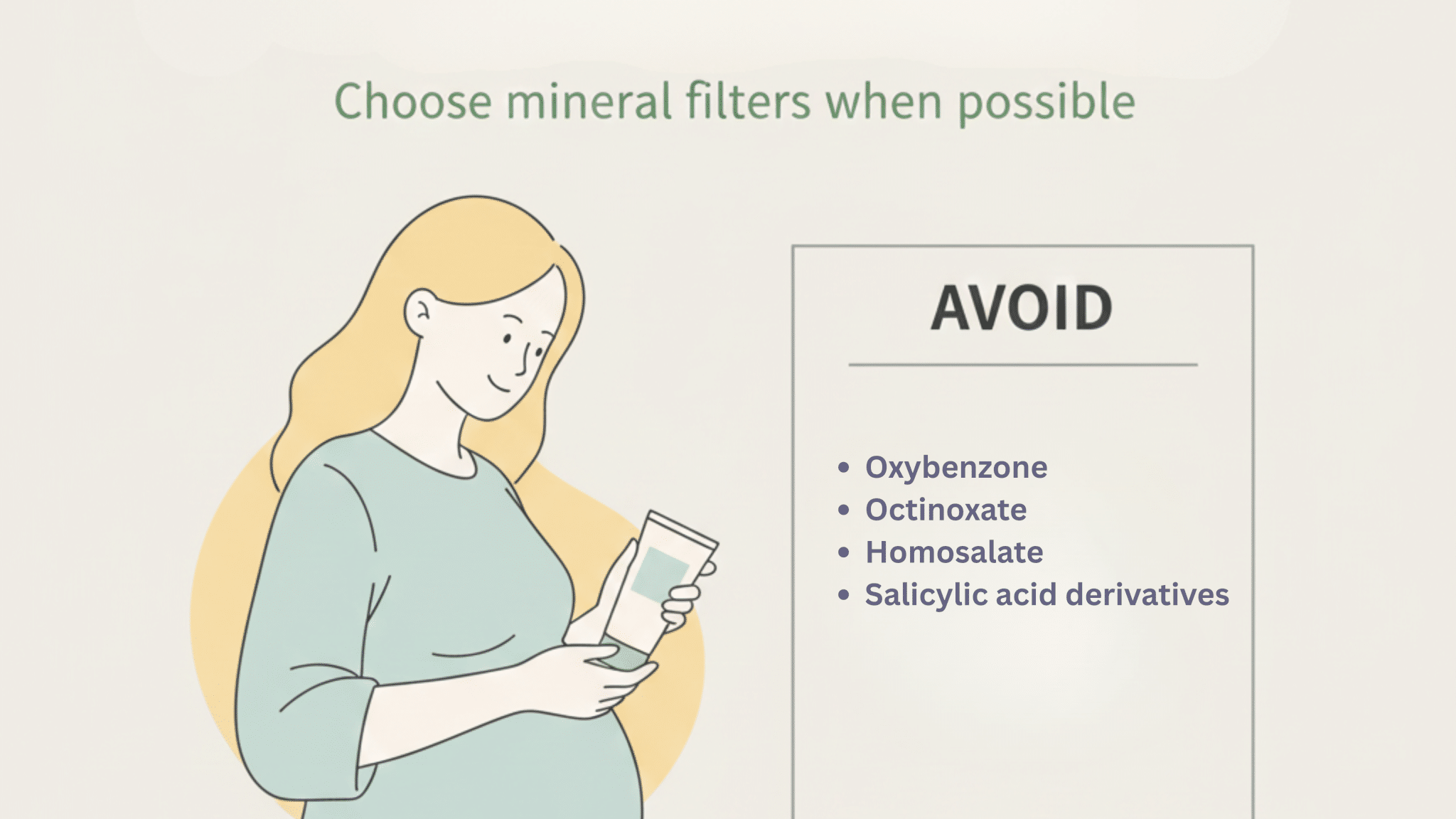
Pregnancy requires extra caution with skincare products, as some chemical filters can be systemically absorbed.
Research on sunscreen actives during pregnancy remains limited, but certain ingredients raise particular concern for both maternal health and fetal development. Pregnant women are advised to avoid this ingredient as a precaution due to potential risks to fetal development.
Key ingredients pregnant women should avoid:
- Oxybenzone: Detected in human breast milk and associated with Hirschsprung’s disease in observational studies. While this doesn’t prove causation, many clinicians recommend avoiding it during pregnancy and breastfeeding.
- Octinoxate: Shows systemic absorption in FDA trials with potential thyroid disruption. Research links it to hormonal imbalances that may affect pregnancy outcomes.
- Homosalate: Raises birth defect concerns due to its salicylic acid base. Studies suggest it may cause developmental issues in humans and fish.
- Salicylic acid derivatives: Octisalate and other salicylates may pose risks similar to homosalate during pregnancy.
Safe pregnancy alternative: Choose mineral sunscreens with zinc oxide or titanium dioxide during pregnancy. Always consult your OB or dermatologist about concerns.
The Safe Alternative: Mineral Sunscreens
Mineral sunscreens use zinc oxide and titanium dioxide as UV filters, forming a protective barrier that absorbs and reflects UV radiation.
In the FDA’s proposed framework, these are the only two actives classified as safe and effective (GRASE).
Apply evenly 15 minutes before sun exposure. Choose lotions, creams, or sticks over sprays to minimize inhalation risks.
| Feature | Chemical sunscreens | Mineral sunscreens |
|---|---|---|
| Actives | Organic UV filters (e.g., avobenzone, octocrylene) | Zinc oxide, titanium dioxide |
| Feel/finish | Often more invisible | Can leave white cast (tinted helps) |
| Sensitive skin | May sting/irritate some | Often gentler (varies) |
| Reef note | May include oxybenzone/octinoxate (restricted in Hawaii) | Typically avoids those |
| Best format | Lotions/sticks (sprays exist) | Lotions/sticks (skip sprays/powders) |
| FDA (proposed) | Many need more data | ZnO & TiO₂ proposed GRASE |
How to Choose a Safe Sunscreen
Reading labels correctly helps you identify safer sunscreen options quickly. Start with the “Active Ingredients” box to see which UV filters the formula uses.
If you’re minimizing controversy, choose zinc oxide and titanium dioxide exclusively. Go fragrance-free if you’re sensitive and look for “fragrance-free,” not just “unscented.”
Aim for broad-spectrum SPF 30 or higher for adequate protection against both UVA and UVB rays. Select water-resistant formulas if swimming or sweating.
Prefer lotions and sticks over aerosol sprays to avoid inhaling particles. Useful tools include EWG’s Sunscreen Database, Think Dirty, and CodeCheck apps for scanning ingredient lists.
Always reapply every two hours or after swimming for continuous protection.
Final Takeaway
Sunscreen remains non-negotiable for UV protection, but you can be selective about the formula. Knowing what ingredients to avoid in sunscreen empowers you to make safer choices for your health and the planet.
To minimize concerns, avoid ingredients associated with hormone disruption, allergic reactions, and reef damage, especially oxybenzone, octinoxate, octocrylene, homosalate, and preservatives like MI.
For most people, particularly during pregnancy or with sensitive skin, mineral sunscreen lotions with zinc oxide and titanium dioxide are the safest option. Protecting your skin and ocean health starts with informed choices today.
Grab your current sunscreen, check the ingredients against this list, and swap it for a cleaner formula if needed. Your skin and coral reefs will thank you.