

There’s a reason names like Galia Lahav and Lihi Hod live rent-free in so many bridal mood boards. Their gowns are masterclasses in bridal couture language: sculpted structure, strategic sheerness, lace that looks hand-drawn, and that “how is this even possible?” kind of finish.
But there’s another truth brides don’t always hear soon enough: you can love that level of design without needing a couture-level invoice.
In Charlotte, North Carolina, J. Major’s Bridal Boutique has spent decades learning what brides actually want, then building a wardrobe that delivers it with warmth, realism, and craft-led intention. Established in 1984, the boutique has become a multi-generational destination rooted in service and emotional ease, the kind of place where the dress is important, but the bride is the center.
And within that world sits something especially interesting for design lovers: JM private label, J. Major’s own in-house designs created to echo elevated bridal aesthetics at a far more accessible price point.
What Brides Mean When They Say “Galia” or “Lihi” (Even If They Don’t Say It Out Loud)
When brides reference these designers, they’re often reaching for a feeling expressed through specific design codes:
The Galia Lahav effect: engineered glamour
Galia Lahav gowns are often associated with illusion elements, couture corsetry, dramatic fitted silhouettes, and ornate surface work, a kind of precision sensuality that still reads bridal. Bridal boutiques that carry the line commonly describe the brand through these signature details and place it in a luxury price bracket.
The Lihi Hod signature: softness with structure
Lihi Hod is frequently positioned as romantic, refined, and fashion-forward without being loud, cleaner lines, airy textiles, and a modern femininity that feels edited, not overworked. Retail listings often place the gowns in the upper luxury tier.
This is couture design in action, and couture pricing follows, driven by labor intensity, specialty textiles, and the sheer time it takes to execute details like lace placement, boning, and hand finishing.
Where J. Major’s “JM” Designs Quietly Compete: Design Intelligence
J. Major’s isn’t trying to be a couture house. The point is different, and, for many brides, better: translate high-fashion design cues into gowns that feel incredible, photograph beautifully, and stay financially breathable.
The boutique publicly positions its pricing in a range meant to balance “luxury with affordability,” with many gowns sitting well below the typical couture conversation.
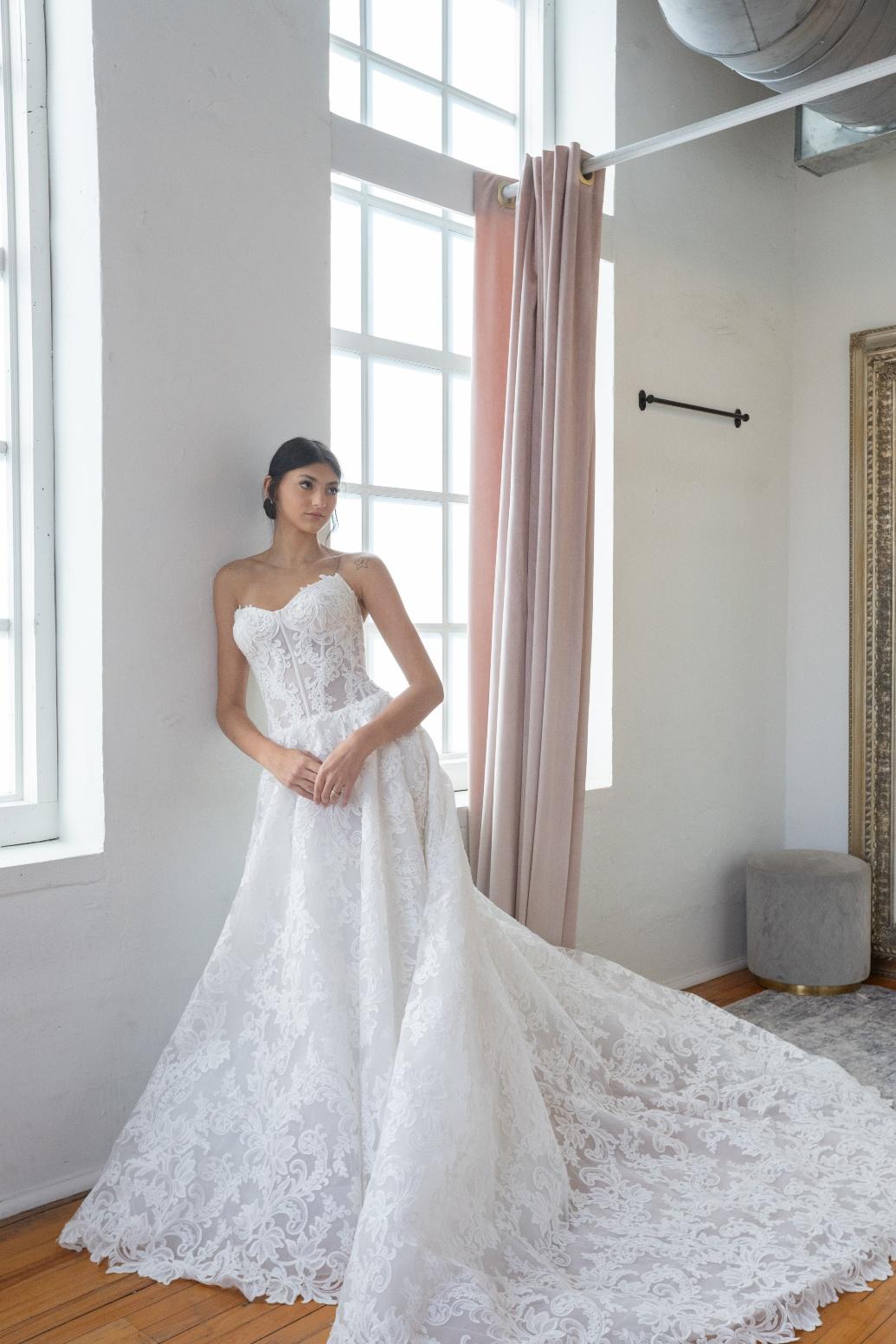
Photo: Robert Burns II Photography and Videography
Here’s where JM designs stand out in comparison, in design:
1) The silhouette architecture, without the couture markup
Couture-level brands often win on internal engineering: corsetry, seam placement, and balance that shapes the body like sculpture.
JM gowns lean into strong bodices and clean proportion, the part that gives brides that “snatched-but-still-breathing” confidence. You can see this emphasis in JM product descriptions that highlight neckline structure, bodice transparency, and deliberate lace placement.
2) Lace and applique that reads “atelier”
Where couture houses may use extensive handwork across an entire gown, JM designs often use strategic placement, floral lace concentrated where it has the most visual impact: neckline framing, waist emphasis, and organic transitions into skirt volume. That’s how you get editorial-level romance without paying for every inch to be labor-heavy.
3) Modern bridal drama made wearable
Galia Lahav’s world is unapologetically dramatic. Lihi Hod’s world is quietly fashion-forward. JM designs sit in the middle: bridal impact that still feels practical, gowns that can move, sit, dance, and survive a real wedding day.
That practical glamour aligns with what J. Major’s is known for in press-style coverage: a service model built around listening, clarity, and reducing stress in a high-emotion purchase.
“A Fraction of the Cost” Is Really About Where Value Lives
A couture label’s price can reflect global brand equity, runway development cycles, and high-touch customization infrastructure. Meanwhile, boutiques like J. Major’s build value differently:
What J. Major’s puts money into (on purpose)
- Curated selection and fit range, including size inclusivity as a core value
- Transparent price guidance and budget realism—a recurring theme in both boutique messaging and third-party features
- Access points like sample sales and off-the-rack options, which can dramatically reduce cost without sacrificing style
This matters because the average U.S. wedding dress spend is often cited in the low-thousands range, meaning most brides are trying to make fashion meet real life.
The Sustainability Lens: The Most Underrated Luxury Is Longevity
Bridal has an inconvenient truth: many gowns are worn once. So the most fashion-forward brides are increasingly asking a different question:
What makes this purchase feel responsible?
One answer is circularity: resale, sample buying, and keeping gowns in use longer. Even major luxury bridal players are acknowledging this shift through resale initiatives and marketplace experimentation.
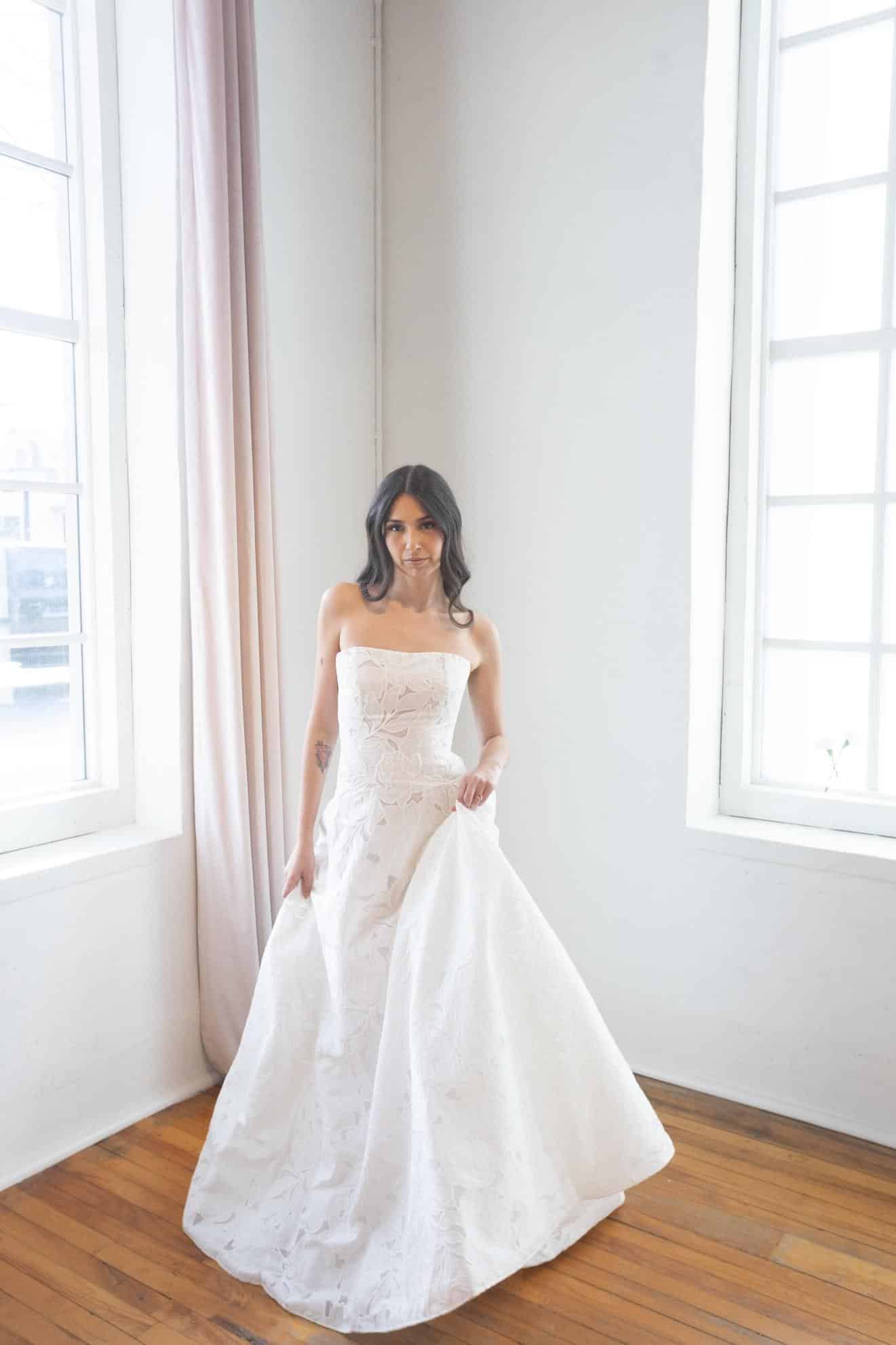
Photo: Robert Burns II Photography and Videography
How to Shop This Like a Design Editor
If you love couture aesthetics, take this into any appointment, especially at J. Major’s:
Bring references, but name the elements
Instead of “I want Galia,” say:
- “I want corset definition with a softer skirt.”
- “I love illusion lace but I don’t want it to itch.”
- “I want surface detail that photographs from ten feet away.”
Ask for the JM pieces that match your references
J. Major’s explicitly points to JM private label as part of its affordable style mix, including under-$2,000 moments in certain contexts.
Use the “three-light test”
- Mirror lighting (salon)
- Phone flash (reality)
- Movement (walking + sitting)
Couture is built for staging. The best affordable luxury is built for living.
A Final Word, From the Kind of Place That’s Seen Thousands of “Yes” Moments
J. Major’s has lasted since 1984 by staying close to what the moment actually feels like for a bride.
Couture will always have its rightful place in fashion culture. But for many brides, the truest luxury is this:
A gown with real design intelligence. And a room where you’re treated like you matter.