

The Self-Care Ritual Your Beauty Routine Is Actually Missing
Most self-care content circles the same territory. Serums. Face masks. A long bath with candles and a podcast. Those things work, and I’m not knocking any of them. But there’s a gap in the conversation, and I’d argue it’s more significant than the missing step in your skincare layering order.
Spending time making art – and then living with what you made – has a measurable effect on stress, mood, and long-term mental health. Not in a vague, “it’s good to be creative” way. There’s real data behind it. And the barrier to entry is lower than you think.
Why Art Belongs in Your Self-Care Routine
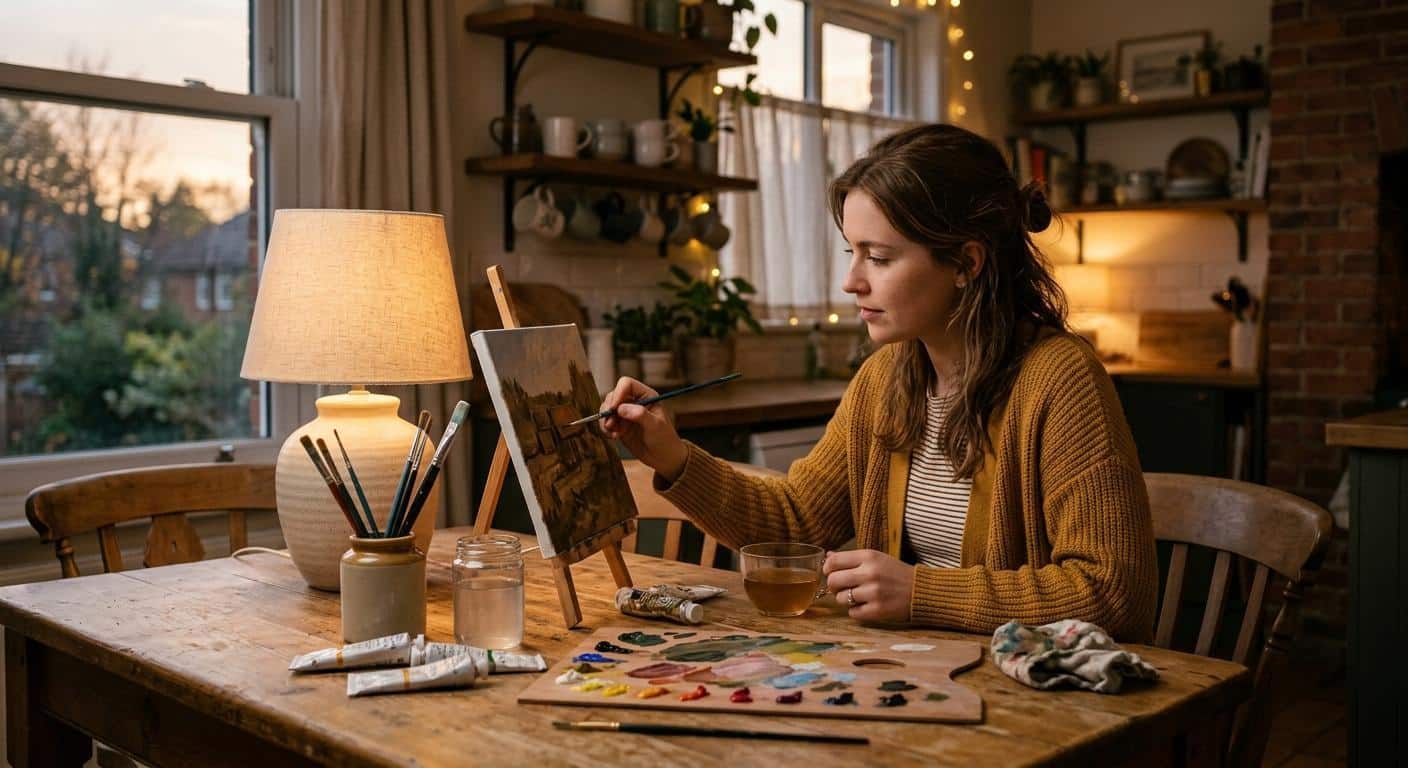
Setting aside even 20 minutes with a canvas and a few brushes is enough to shift your headspace.
A 2025 poll by the American Psychiatric Association found that Americans who engage in creative activities at least weekly report better mental health than those who do it less frequently. That’s not a soft finding – it came from a nationally representative sample, and the gap between weekly creatives and occasional ones was consistent across age groups.
A separate review of over 3,000 studies, cited in Frontiers in Psychology (2025), found that drawing and painting are specifically linked to reduced depression and anxiety. Not just general wellness, but measurable reductions in clinical markers.
Why does it work? Focused, repetitive activity – following numbered sections on a canvas, mixing a specific shade, staying inside the lines – creates a state that’s functionally similar to meditation. Your cortisol drops. Dopamine ticks up. And unlike scrolling or watching something, your hands are actually doing something, which changes the experience entirely.
Think about what a thorough skincare routine actually does for your brain: it gives you a structured, sensory ritual that signals “the day is over.” Painting does the same thing, but it also produces something. That matters.
The “I’m not artistic” objection is real, but paint-by-numbers kits remove it entirely. Every section is numbered. Every color is included. You don’t need to make a single creative decision to get started. If you want to try it without overthinking the supplies, you can browse art kits online and find beginner-friendly options with no prior experience required.
Creative self-expression shows up in beauty rituals too – just as choosing between different types of makeup styles is a form of personal expression, so is deciding what you want to spend an evening painting.
A 2025 Jackson’s Art survey (UK) found that 46% of people who engage in creative activities do so specifically to relieve stress and anxiety. Nearly half the respondents said picking up a new hobby would benefit their mental health. These aren’t people going to therapy through their sketchbooks – they’re people fitting 30-minute creative sessions into ordinary evenings.
What the Science Actually Says (And It’s More Than “Art Is Relaxing”)
UCL professor Daisy Fancourt analyzed data from the English Longitudinal Study of Aging – a study that tracked English adults over a decade – and found that people who regularly engaged in cultural activities developed depression at a rate of 23%, compared to 35% in those who didn’t, according to The Art Newspaper (January 2026). That’s nearly a 12-percentage-point difference over ten years. Fancourt’s findings were published in her book Art Cure, released in January 2026, and drew on seven major cohort studies involving millions of participants.
There’s also a King’s College London experiment, financed by the Art Fund, that measured the physiological responses of 50 volunteers while they viewed Van Gogh and Gauguin paintings. Original artworks produced measurably stronger reactions – heart rate, body temperature, and saliva cortisol – than reproductions. The body responds differently to original art. Its reaction is physical, not just aesthetic.
The pattern across the research is consistent: art lowers blood pressure, reduces cortisol, and in some clinical settings has been used to interrupt anxiety spirals. This isn’t “art is nice.” It’s a measurable effect on the nervous system.
One honest caveat: most of these studies track exposure and participation over time. You won’t undo a bad week with a single 20-minute session. But build it into your routine – the way you’d build in a workout or a sleep window – and the cumulative effect is real.
Displaying What You Made
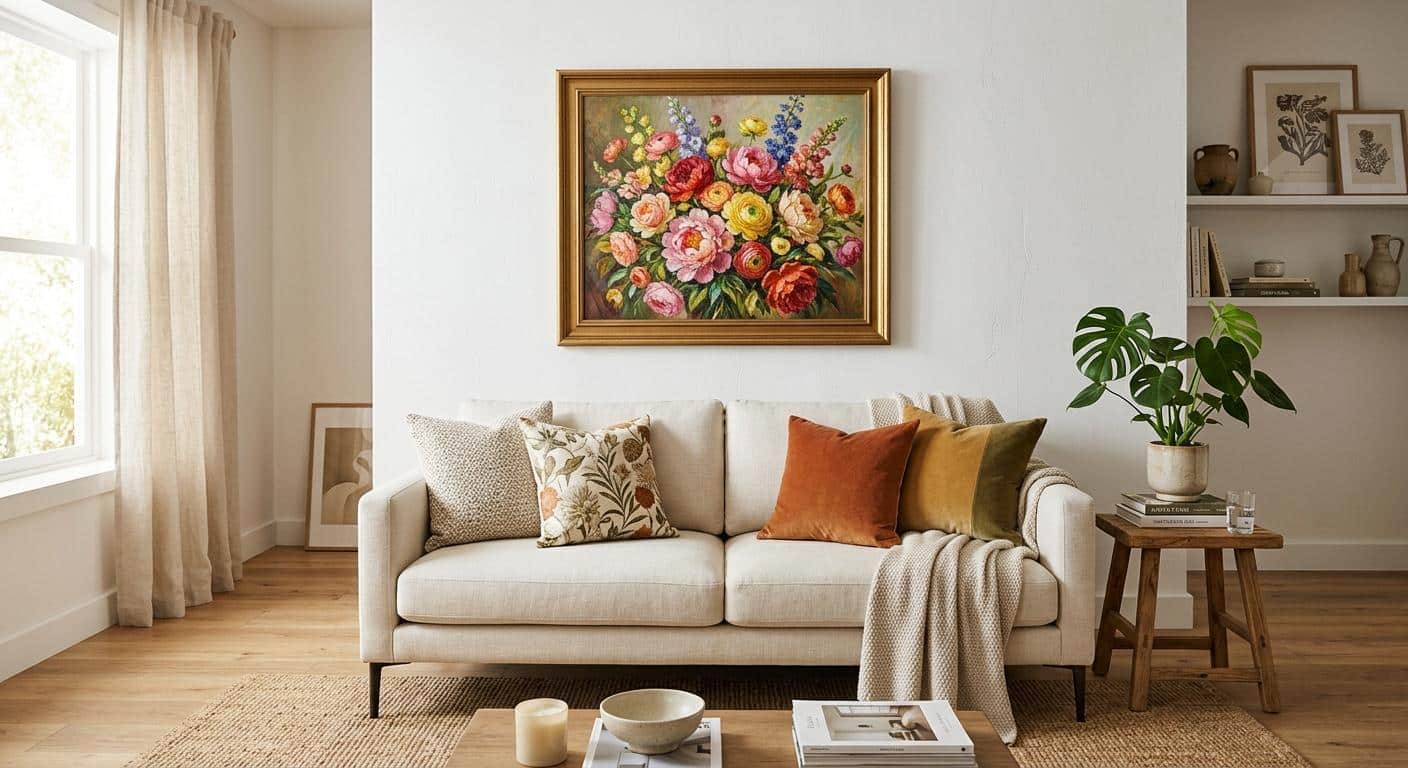
A finished piece on the wall does double duty: it’s a reminder that you made something, and the King’s College London physiological study shows original artworks continue producing positive responses long after the brushes are put away.
The benefits don’t stop when you clean your brushes.
Living with art – especially a piece you made yourself – continues the mood effect. The King’s College London physiological study showed that original artworks produce stronger positive responses than reproductions. If a Van Gogh print still moves the needle, imagine the effect of something that exists because you made it, over four evenings, in your own living room.
Placement matters more than most people acknowledge. Hanging a finished piece somewhere you see it first thing in the morning (on the wall you face when you wake up, or at the top of a staircase) gives your nervous system a consistent, positive visual cue before the day starts. Behind a workspace, it does something similar – a small reset point in your peripheral vision.
Floral art in particular fits well into spaces that already function as a wind-down zone: a bathroom, a bedroom, a reading corner. The color associations that made it calming to paint continue working when it’s on the wall. Seaside Art’s guide to floral art in the home notes that the ongoing mood effects of hanging nature-adjacent art are well-documented and don’t require the person to actively focus on the piece to work.
Both paths are valid here – making the piece or buying one. If you’d rather go straight to the display stage, there are some genuinely beautiful flower paintings for sale from independent artists that deliver the same effect on the wall. Science doesn’t distinguish between “made it” and “chose it.” Both are intentional acts.
For a broader approach to color and creative expression in your personal aesthetic, it’s worth reading up on types of eye makeup – the same instinct that makes you reach for a particular eyeshadow palette is what makes certain paintings draw you across a room.
And if you want a low-pressure entry point for creative activities with a younger person in the house, the same logic that applies to adult painting applies to kid-friendly nail designs – both are creative acts where “imperfect is fine” is genuinely part of the appeal.
The Case for Painting Flowers Specifically
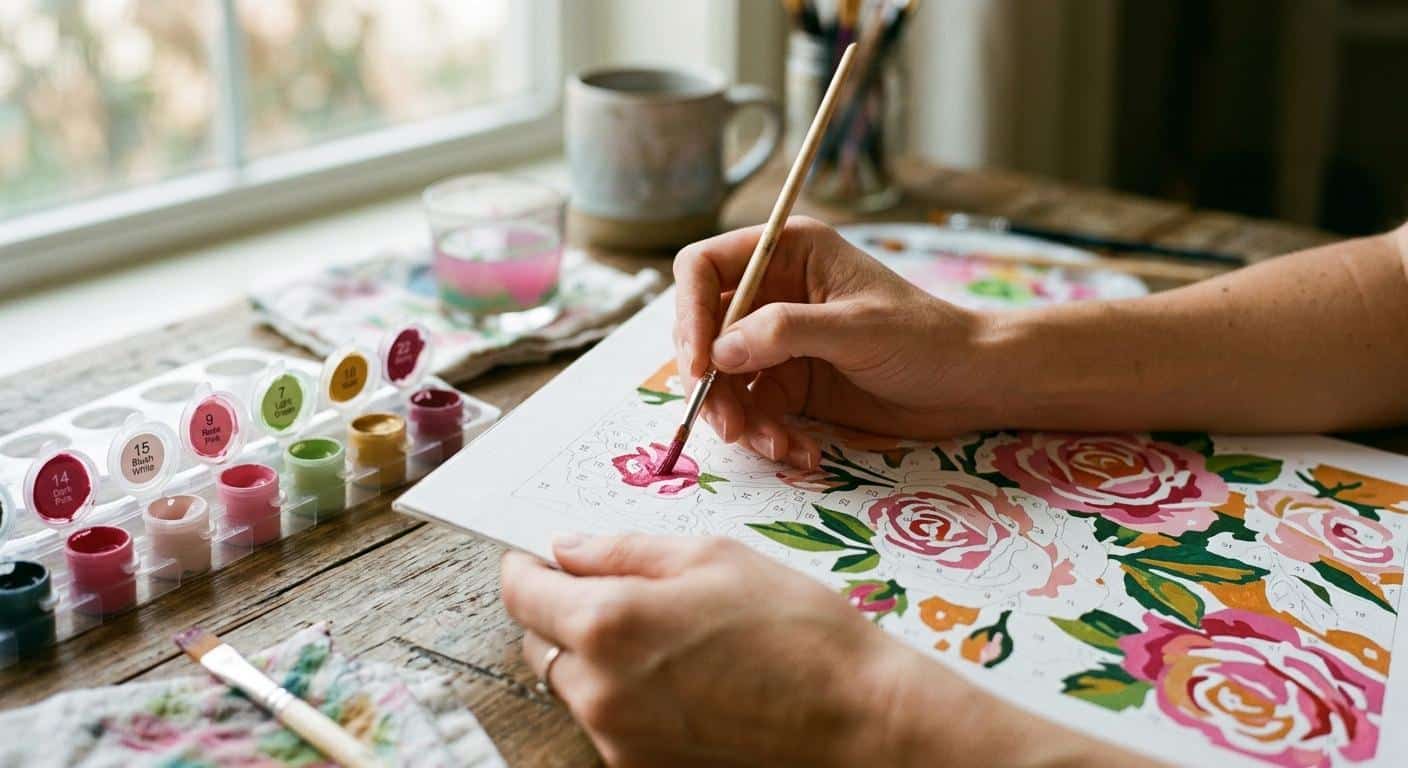
Floral designs are a popular starting point – the color palette tends to be forgiving and the subject matter calming.
Not all subjects produce the same effect when you’re painting them, and flower-focused work has some specific advantages.
Floral imagery activates what researchers call the biophilic response – the same calming effect that comes from being near nature. A Thursd analysis of floral imagery in home interiors found that the patterns found in flowers – repetitive, fractal, symmetrical – reduce visual tension and support a lower-arousal mental state. That’s part of why being in a garden feels genuinely restorative, not just pleasant.
When you’re painting those patterns, you’re not just looking at them – you’re tracing them, section by section. The engagement is deeper.
There’s also the element of personal meaning. Floriography – the Victorian-era language of flowers – means that roses, sunflowers, peonies, and lavender all carry distinct emotional associations. Painting a subject that means something to you changes the experience of making it. It’s not just color practice. It’s closer to journaling.
From a purely practical standpoint, floral paint-by-numbers kits are a good starting point for beginners. The color palettes tend to run harmoniously – pinks and greens, warm neutrals, and creamy whites – which means your early efforts look good even when your brushwork isn’t precise. Floral subjects are also forgiving of slightly blurred edges. A peony doesn’t need geometric accuracy.
A Smaller Ask Than You Think
Here’s the thing about most self-care advice: it asks you to commit to a whole system. A 10-step routine. A morning practice. A course. Painting doesn’t require that.
Twenty minutes with a paint-by-numbers kit and a cup of tea is enough to get a real shift. You don’t need to finish the painting in one sitting. You don’t need to be good at it. The APA poll data shows the effect kicks in with weekly engagement, which is a much lower bar than most wellness advice suggests.
Pick one evening this week. One kit. One flower design. Put it somewhere you’ll actually sit with it – not a spare bedroom you never use. See what 20 minutes does.
If the serum step is already sorted, this might be the next one to add.