
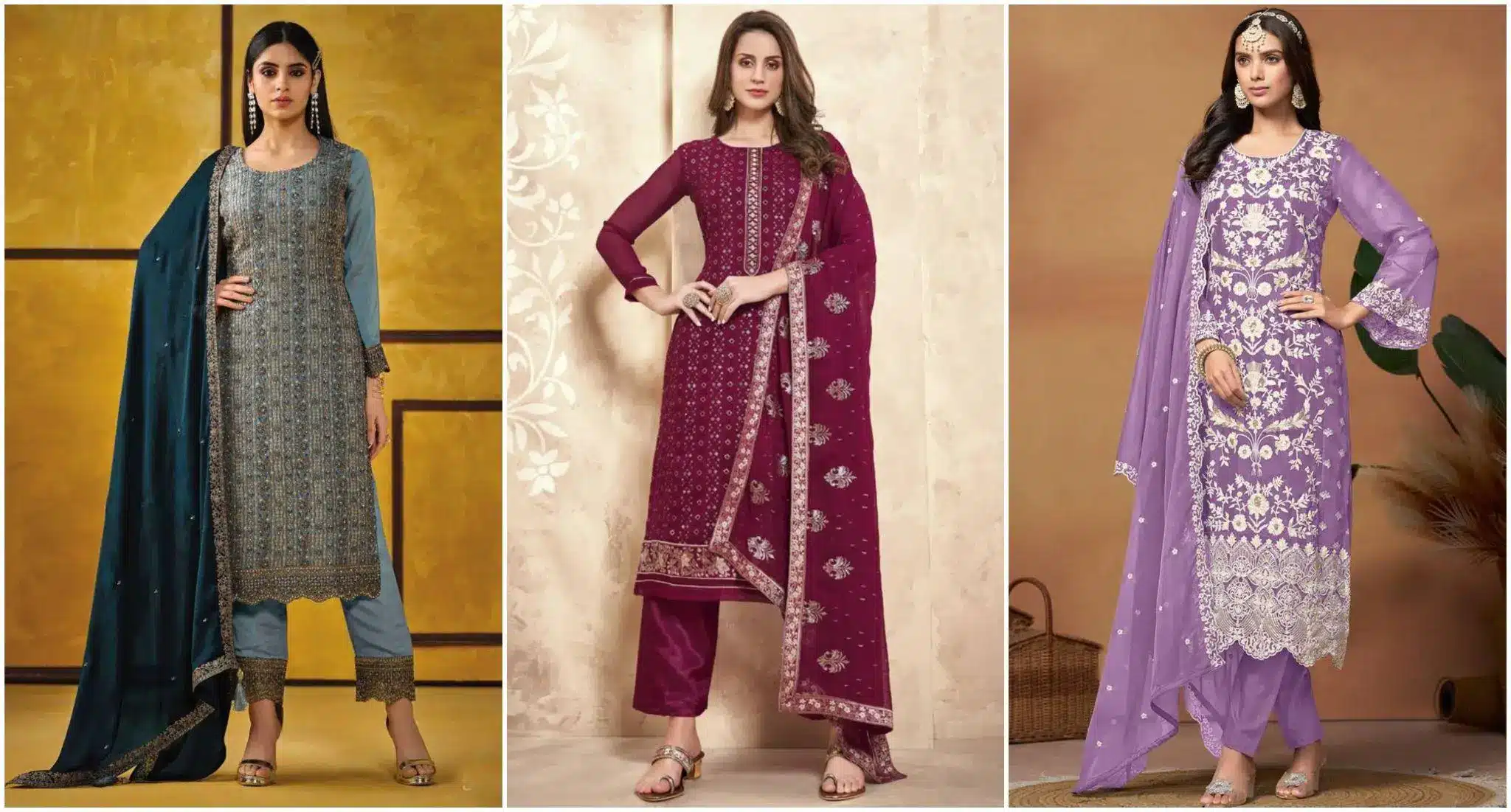

There is something about Pakistani suits that makes them stand out among all the other salwar suits. They have unique designs, pleasing shades and lovely handcrafted details that don’t feel overwhelming. The work on this outfit brings a sense of sophistication which instantly catches the attention and makes your look one of a kind.
The Pakistani and Indian suits both have the same roots and yet the difference between them is huge. Where the Pakistani dressescome with subtle work, Indian suits have more design elements which suit grand occasions.The Pakistani suits have a modest touch to them and that is why women choose them for Eid celebrations.If you’re planning to buy a Pakistani suit for Eid, here’s all you need to know about it.
The Difference in Silhouettes
The major difference between a Pakistani and an Indian suit is the way their silhouettes appear. The cut and proportion of their kurtas are poles apart.
- A Pakistani salwar suit has a long and straight kurta that goes to your ankle or even below it. The princess seaming can be seen in most of these suits and their side slits go way higher than the regular kurtas.
- Indian salwar kameez, on the other hand, have shorter kurtas in multiple hemline variations. They have A-line flares, asymmetric cuts, high-low hems and layered panels which make them look different from Pakistani suits.
The Neckline and Embellishment Placement
The embellishment on Pakistani designer suits is another thing why modern women love it so much. It has the most intricate detail around the neck, cuffs and hem which has depth and still looks subtle. The rest of the base of this suit is plain which balances the overall look and makes it elegant. The most common neckline styles in Pakistani outfits include:
- Piping or lace trim on V-necks
- Hand-finished embroidery on round necks
- Minimal embellishment on boat necks for collarbone focus
When you compare both Indian and Pakistani dresses, you’ll find Indian suits having embroidery all across the outfit. This kind of detailing works the best for grand occasions like weddings. But if you’re looking for something subtle for festivals like Eid, a Pakistani suit is definitely the best choice.
Fabric Options in Pakistani Suits
The fabrics of Pakistani salwar kameez are carefully selected. The designer uses the minimalist fabrics that make the maximum impact when merged with the embroidery and right colors. Here are a few fabric choices that make this outfit worth having in your wardrobe:
- Lawn: This tightly woven cotton fabric is the backbone of Pakistani dresses. You can’t see many Indian outfits made out of this fabric but it’s a prominent part of casual and semi-formal styling in Pakistan. This is a breathable fabric just like cotton which is why its suited for Eid celebrations in summers.
- Chiffon and Organza: Both chiffon and organza are fabrics that add grace in Pakistani outfits. Organza is a fabric that drapes well and mostly has delicate floral prints, which make it minimal and aesthetic. Chiffon is a more fluid fabric that flows beautifully and comes with lace or threadwork.
The Dupatta Draping
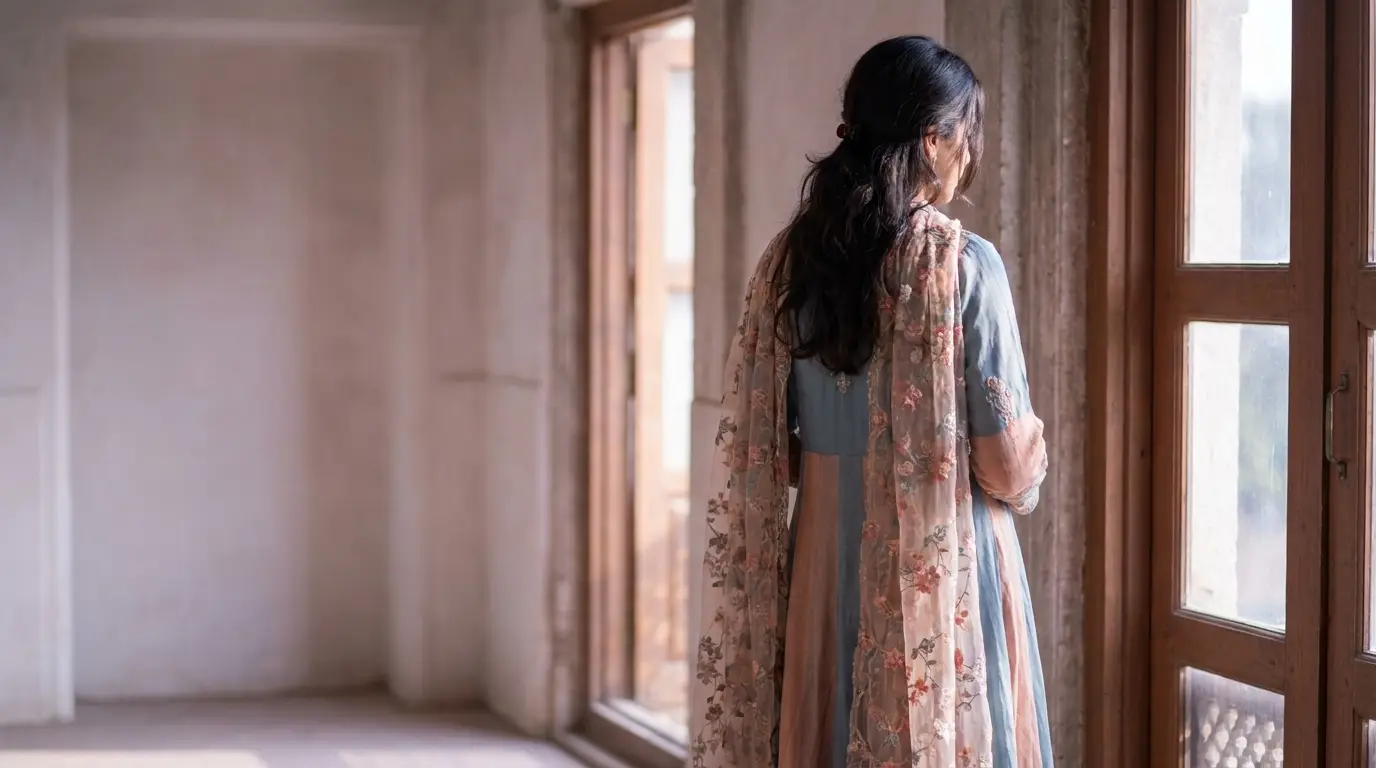
Both Indian and Pakistani traditional suits come with a dupatta, but the way they are draped is what makes the whole difference in the look.
- In Pakistani dresses, you can find dupattas that are wider, longer and have heavy embroidery work along their borders. It’s mostly pinned at both sides of the shoulders and spreads across the chest, making you look elegant and graceful. A dupatta in a Pakistani suit is central to the look, not an afterthought.
- Indian dupatta styling is much more relaxed and independent comparatively. On these suits, you can toss the dupatta over one shoulder, wrap it as a shawl or pin it casually. Dupatta in Indian suits work as a complementary, not a central element.
Eid-Specific Style Codes Worth Knowing
Pakistani salwar kameez has always had a consistent color palette and silhouette for Eid. This palette includes graceful pastel shades and ivory tones that look simple but bring the festive vibe to your outfit. You can find these suits in soft pinks, mint greens, powder blues and warm creams. All these outfits come with delicate embroidery around the neckline, sleeves and heavy work on dupatta borders. The chiffon and lawn fabric make these colors and embroidery pop wonderfully, and you can pair this outfit with silver jewellery and embroidered khussas for a classic Eid look.
Why Pakistani Suits Work for Eid?
The modesty of a Pakistani suit is one of the many reasons why you should choose it this Eid. It beautifully captures the essence of fashion and culture. It instantly adds a grace to your overall look without trying hard, and the shades and fabrics of this suit keep up with the modern trends. The subtlety of these dresses is what makes them stand out among all the other ethnic outfits. So, if you’re looking for something that looks both elegant and fashionable, you can buy yourself a Pakistani suit without any second thoughts.