

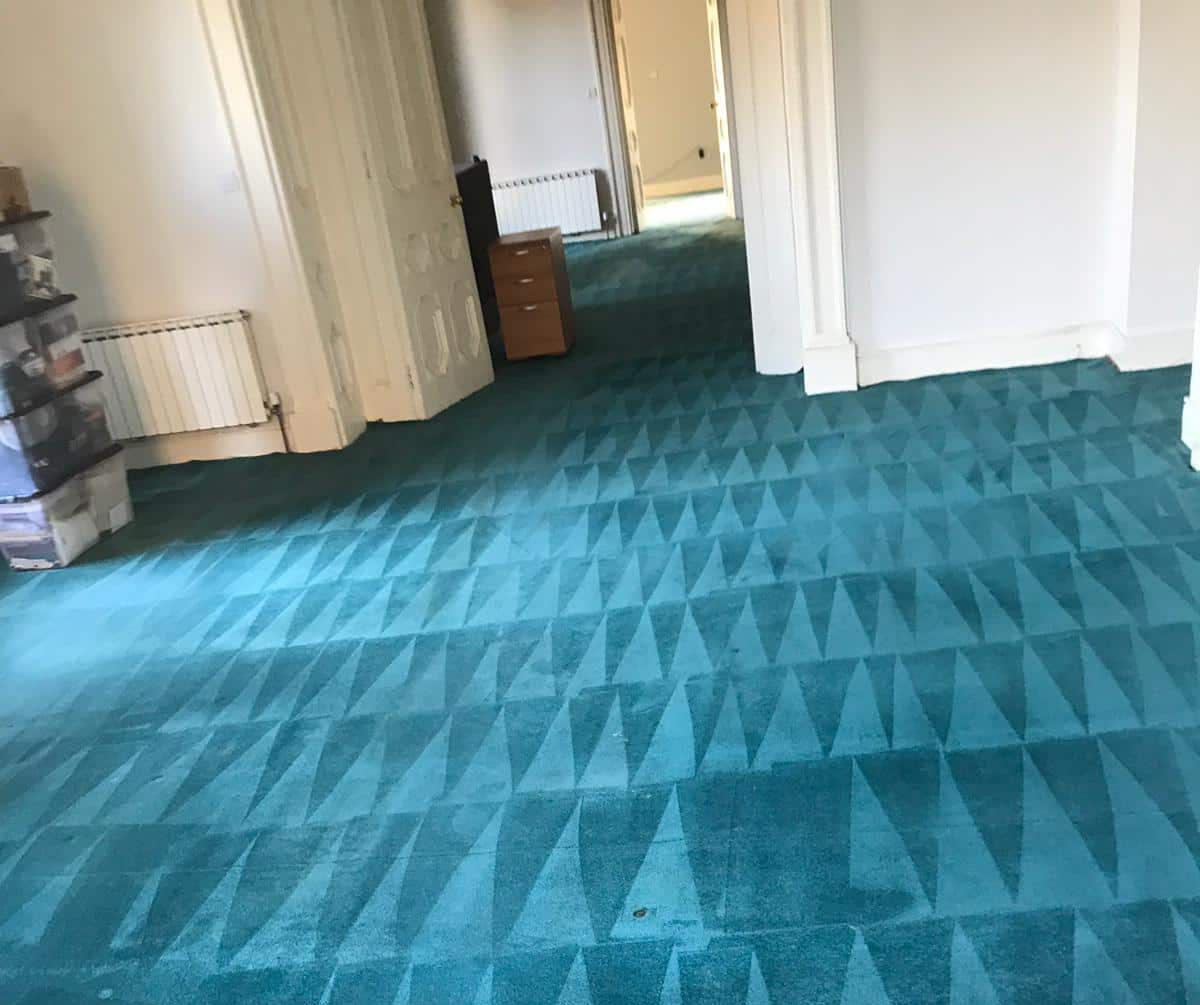

Replacing the flooring in a typical three-bedroom home can easily cost upwards of $4,000. It is a staggering expense, yet many homeowners rush into this renovation because their floors look “old,” not realizing they are merely dirty. Often, that dull, matted appearance isn’t permanent damage, but a reversible condition that can be solved for a fraction of the replacement price.
While visible stains usually catch our attention, the true destroyer of longevity hides completely out of sight. Deep at the base of the fibers, microscopic shards of structural grit accumulate to create what experts call the “Sandpaper Effect.” Every time you walk down a hallway, this sharp debris saws against the carpet strands until they eventually snap and flatten, creating permanent wear patterns.
Vacuuming is essential for surface aesthetics, but it cannot reach these abrasive particles buried in the backing. Industry data confirms that removing this hidden grit is the only way to prevent fibers from cutting themselves, underscoring the importance of deep cleaning to prevent premature replacement. By shifting your mindset from “daily chores” to “asset management,” you protect the material’s structural integrity.
Realizing the true cost of carpet cleaning vs replacement turns a potential financial headache into a simple maintenance win.
The ‘Sandpaper Effect’ Explained: How Hidden Grit Shreds Your Carpet Fibers
We often judge cleanliness by the absence of visible spills, yet the most destructive element in your home is hiding beneath the surface. Deep-seated soil isn’t merely soft dust; it acts more like a bed of microscopic, jagged rocks. This invisible debris is the primary reason carpets age prematurely, creating a long-term threat to fiber integrity.
Every time you walk across the room, your body weight grinds these sharp particles against the delicate yarn of the carpet, much like rubbing sandpaper against a fine silk shirt. Over time, this constant friction saws through the fibers, causing them to fray, unravel, and eventually snap off at the base.
Signs of this damage typically appear as those stubborn, gray traffic lanes in hallways that never seem to brighten up. That dullness is rarely just dirt; it is actually light reflecting off scratched and shredded fibers that can no longer hold their sheen. Because standard household vacuums lack the suction power to remove heavy, wedged-in grit, deep cleaning becomes the only way to physically remove the abrasive material and stop the shredding process.
Mastering these carpet lifespan extension techniques protects your financial investment, but physical wear isn’t the only concern. While your carpet acts as a trap for abrasive grit, it is simultaneously locking in airborne particles that directly impact the quality of the air you breathe.
Your Carpet as an Air Filter: Removing Deep-Seated Allergens You Can’t See
Think of your carpet less as a floor covering and more like the largest air filter in your home. Just as an HVAC filter traps dust to keep it out of the air, carpet fibers grab floating particles and lock them away. This acts as a passive defense for your breathing zone until the fibers become saturated. Once full, however, simple foot traffic releases invisible plumes of trapped contaminants back into the room.
Standard vacuuming handles surface lint, but it struggles with removing deep-seated allergens from carpet fibers where they settle near the backing. Without the flushing action of professional hot water extraction, your floor becomes a hidden reservoir for bio-pollutants. Common irritants that accumulate deep in the weave include:
- Pollen: Sticky particles tracked in from outdoors.
- Dust Mites: Microscopic organisms thriving in fibrous environments.
- Pet Dander: Oily skin flakes that adhere stubbornly to yarn.
- Lead Dust: Heavy, toxic particles often brought in on shoes.
Improving indoor air quality through floor maintenance effectively “changes the filter,” significantly reducing the airborne triggers that cause allergies. Beyond the health benefits, eliminating this heavy soil load serves a structural purpose. With the weight of the debris gone, the fibers are finally free to stand up straight, setting the stage for restoring the carpet’s original fluff and texture.
Restoring the ‘Bounce’: How Deep Cleaning Fixes Matted Carpet Pile
High-traffic areas often develop a tired, flattened look known as “pile crush,” leading many homeowners to prematurely believe their flooring needs replacement. This matting occurs when heavy furniture or constant footsteps bend the yarn fibers down, burying the texture. While the “Sandpaper Effect” cuts the fibers, pile crush simply distorts their shape, making restoring matted carpet pile a possibility rather than a lost cause.
Synthetic carpet fibers function much like hair or plastic; they possess a “thermal memory” that can be reset. Cold water and standard vacuuming cannot convince these bent plastic fibers to stand up straight again. To achieve true carpet revitalization, professional equipment utilizes high heat to relax the tension in the twisted yarns, allowing them to spring back to their original vertical orientation.
Can old carpets be restored with professional cleaning? In many cases, yes, because the restoration process targets the physics of the fiber through three distinct stages:
- Thermal Relaxation: High-temperature water (often over 200°F) softens the rigid synthetic structure.
- Physical Extraction: Strong vacuum lift pulls the softened fibers upward while flushing out the soil weighing them down.
- Setting the Nap: Post-cleaning grooming tools comb the pile in one direction to ensure it dries standing tall.
Reviving this “bounce” does more than just improve aesthetics; it exposes the deeper parts of the fiber to airflow, ensuring a faster dry and a cleaner home. However, achieving this mechanical reset requires a powerful combination of heat and chemistry that simple surface methods cannot provide.
The Laundry Analogy: Why Hot Water Extraction Beats Surface DIY Methods
Think of your carpet like a heavy wool sweater that has been worn through a muddy field. You wouldn’t expect to get that sweater clean by simply wiping the surface with a damp cloth; you would need to flush water through the fabric to rinse away the grime trapped in the weave. This is the fundamental limitation of consumer-grade cleaning machines, which often function like that damp cloth, brightening the visible tips of the yarn while leaving the heavy soil embedded near the backing.
Comparing DIY carpet cleaning vs professional steam cleaning reveals a critical gap in mechanical capability. Rental machines typically spray water into the fibers but lack the industrial-strength vacuum power necessary to pull it all back out. Professional hot water extraction benefits your home by injecting pressurized hot water to suspend dirt and immediately extracting it with powerful suction, ensuring the “wash cycle” is actually completed rather than just leaving the floor wet and soapy.
Because consumer machines often fail to extract the cleaning solution fully, they leave behind a sticky detergent residue. This chemical film acts as a magnet for new dust, creating a frustrating cycle where the carpet looks clean immediately after scrubbing but rapidly re-soils within weeks as the leftover soap grabs onto every shoe print. Professional systems use specific rinsing agents to neutralize this residue, leaving fibers soft and repellent to dirt rather than sticky.
Excess moisture trapped at the base of the yarn also leads to soil wicking, a phenomenon where dissolved stains deep in the backing migrate up to the surface as the carpet dries, causing “ghost stains” to reappear days later. Proper extraction removes this deep moisture, preventing the stain from returning and protecting the subfloor from water damage. Recognizing this physical difference explains why a slightly higher upfront cost can prevent massive future expenses.
The $200 vs. $5,000 Decision: Calculating the True ROI of Professional Restoration
Most homeowners view professional cleaning as a luxury expense, but it actually functions as asset protection for your wallet. Replacing flooring in a standard home can easily exceed $5,000, whereas professional maintenance costs a fraction of that amount. The cost saving of carpet restoration comes from extending the usable life of your floor; instead of replacing it every seven years due to abrasive soil damage, regular extraction can push that timeline to fifteen years.
Beyond the immediate savings, there is fine print in your flooring agreement that demands attention. Maintaining manufacturer carpet warranties through deep cleaning is often a mandatory requirement rather than a suggestion. Major brands typically stipulate that you must utilize hot water extraction every 12 to 18 months and retain the receipts; failing to do so usually voids coverage for texture retention, leaving you with no recourse if the fibers fail prematurely.
To visualize the impact on your household budget, consider this ten-year comparison for an average home:
- Scenario A (Neglect): Initial Install ($4,500) + Early Replacement at Year 7 ($5,000) = $9,500 Total.
- Scenario B (Maintained): Initial Install ($4,500) + 6 Professional Cleanings ($1,500) = $6,000 Total.
Knowing how often should you deep clean home carpets keeps you in the money-saving Scenario B. However, strict schedules aren’t the only metric. Physical signs also indicate whether your floor can still be rescued or if it’s time to retire it.
Rescue or Retire? Spotting the 3 Critical Signs Your Carpet Needs Cleaning, Not Replacing
Before calling the dumpster, check the foundation. The difference between a dirty carpet and a dead one often lies in the backing, not the surface stains. If the layers are separating—a condition called delamination—replacement is necessary, but if the structure feels tight, those ugly gray paths are likely just trapped soil waiting for extraction.
You can perform a quick health check on your floors using the “3-Finger Test” in a high-traffic zone:
- Tuft Tug: Gently pull a fiber tuft; if it lifts out easily, the glue holding the carpet together has failed.
- Resilience Check: Press your finger into the pile and release; fibers that spring back are healthy, while matted ones that stay flat may be past the “Point of No Return.”
- The Crunch: Listen for a crunching noise when walking, which indicates the padding underneath is disintegrating.
Persistent smells are another common concern, yet they rarely require ripping up the floor. While store-bought sprays only mask scents, professional pet odor and stain removal guide protocols utilize enzymes that physically digest the organic source material. Unless the moisture has penetrated the wooden subfloor, these treatments can fully restore freshness.
Choosing eco-friendly carpet revitalization methods allows you to strip away years of buildup without introducing harsh residues. With a savable asset confirmed, a strategic maintenance plan can double its remaining lifespan.
Your Long-Term Floor Asset Plan: 3 Steps to Doubling Your Carpet’s Useful Life
You no longer need to view maintenance as just a chore. By understanding how hidden grit destroys fibers, you have shifted from cleaning for appearance to asset preservation. This insight empowers you to protect your home’s value rather than watching your investment degrade in the hallway.
Start your protection plan by vacuuming high-traffic lanes twice weekly to catch surface grit, and treat spills immediately. Crucially, schedule a professional carpet cleaning every twelve to eighteen months. This routine flushes out abrasive particles that vacuums miss, effectively resetting your carpet’s lifespan.
Prioritizing deep cleaning as a vital alternative to replacement keeps money in your pocket. You aren’t just washing a floor; you are managing a financial asset. Take the first step toward saving thousands on home maintenance today.