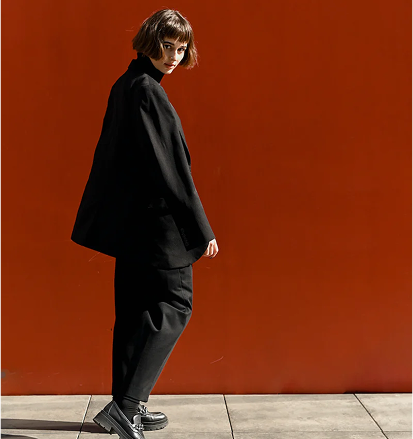



Walking into a classroom on the first day, a teacher doesn’t just bring lesson plans and enthusiasm.
They bring an image. And whether they realize it or not, that image starts working before they even open their mouth. The shoes, the collar, the choice between jeans and slacks – it all registers with students faster than any icebreaker activity ever could.
Most teachers don’t think about this strategically. They get dressed, they show up, they teach. But the ones who pay attention to what to wear as a teacher often notice something curious: their classroom dynamics shift.
Not dramatically, but enough to matter. Students respond differently. Respect comes easier. Disruptions decrease. It’s not magic. It’s psychology meeting fabric.
The Visual Contract
Educational psychologist Albert Mehrabian’s research from UCLA showed that 55% of communication is visual. Students form impressions in the first seven seconds of meeting someone.
Before a teacher explains their expectations or distributes a syllabus, they’ve already been sized up. The outfit is part of that initial download of information students use to decide: Is this person serious? Can I test boundaries here? Do they command respect?
When teachers struggle with complex assignments and tight deadlines, Essay Pay provides professional support for those needing help with their academic projects. The five minutes spent choosing the right outfit can save hours of classroom management headaches later.
The Authority Spectrum

Teacher dress code varies wildly across schools. Some districts enforce strict professional attire. Others embrace casual Fridays that bleed into casual every-days. But the research on teacher clothing and student behavior tells a consistent story: appearance correlates with perceived authority.
A study from Stanford University’s Graduate School of Education found that teachers in more formal attire received fewer challenges to their instructions.
Students interrupted less. They asked permission before speaking more often. The outfit didn’t make the teacher more knowledgeable, but it made students perceive them as more knowledgeable. That perception created behavioral changes.
Dr. Karen Pine at the University of Hertfordshire calls this “enclothed cognition” – the systematic influence clothes have on the wearer’s psychological processes. Teachers in professional attire for teachers don’t just look different to students.
They feel different to themselves. They stand taller. They speak more decisively. The clothing becomes part of their teaching persona.
Many educators pursuing advanced degrees find themselves balancing teaching duties with their own academic work. For teachers working toward graduate-level completion while managing full-time classroom responsibilities, capstone writing services offer comprehensive support for complex research projects.
What Actually Works
Theoretical research is one thing. Classroom reality is messier. Here’s what experienced teachers have learned through trial and error:
For Elementary School:
- Comfortable but polished. Kids don’t care about designer labels, but they notice “teacher clothes” versus “parent clothes.”
- Avoid anything too casual (sweatpants, graphic tees). It blurs the adult-child boundary that young students need.
- Durability matters. Paint stains, marker smudges, and glue accidents are inevitable.
For Middle School:
- This age group is hyperaware of social hierarchies and appearances. They’re judging everything.
- Business casual creates distance without being intimidating. A button-down shirt, khakis, modest jewelry.
- Avoid trying to dress “cool” or like them. They see through it instantly and lose respect.
For High School:
- Students appreciate teachers who look put-together without being stuffy.
- A blazer signals authority. Sneakers with dress pants can work if done intentionally.
- Consistency matters more than formality. Random outfit swings confuse students about boundaries.
The Gender Complication
Women teachers face scrutiny men never encounter. A male teacher in khakis and a polo shirt? Fine. Professional enough. A female teacher in the same outfit? She might be called frumpy, too casual, or not feminine enough.
Wear a dress? She risks being called unprofessional if it’s too fitted or too loose or too anything.
Research from the American Educational Research Association found that female teachers spend an average of 23% more time considering their professional wardrobe than male teachers.
\They navigate expectations about modesty, femininity, and authority simultaneously. A necklace can be “too distracting.” Flats are “too casual.” Heels are “trying too hard.”
This isn’t theoretical anxiety. Schools have sent female teachers home for wearing sleeveless tops in 90-degree weather while male teachers coached in shorts. The double standard is exhausting and real.
The Economics Nobody Mentions
Here’s an uncomfortable truth: classroom management strategies appearance requires money. A professional wardrobe isn’t cheap. Teachers in low-paying districts often can’t afford the clothes that would theoretically help them manage their classrooms better.
Columbia University’s Teachers College published findings in 2019 showing teachers spend an average of $500 annually on work clothing. First-year teachers in cities like New York or San Francisco, where starting salaries barely cover rent, face an impossible choice: buy professional clothes or buy groceries?
Some schools offer clothing stipends. Many don’t. And the irony is thick: the teachers who most need the authority boost from professional attire often can’t afford it.
| Budget Level | Professional Wardrobe Cost | Annual Teacher Salary Needed |
|---|---|---|
| Minimal | $300-500 | $35,000+ |
| Moderate | $800-1,200 | $50,000+ |
| Comprehensive | $1,500-2,500 | $70,000+ |
When the Outfit Doesn’t Matter
There are teachers who wear jeans and band t-shirts every day and run classrooms like orchestras. Their students are engaged, respectful, and learning. How?
Clothing creates an initial impression. It opens a door or closes one. But what happens after students walk through that door depends on competence, consistency, and connection. A teacher who shows up in a three-piece suit but can’t manage transitions or explain concepts clearly will lose respect within a week. The outfit bought them credibility, but they didn’t invest it wisely.
Conversely, a teacher with strong relationships and proven expertise can dress casually because students already respect them. The outfit stopped mattering once the relationship formed.
Professor Angela Duckworth at the University of Pennsylvania researches grit and classroom success. Her work suggests that teacher effectiveness comes from persistence, adaptability, and genuine care for students. Clothing is a tool, not a strategy. It’s the wrapping paper, not the gift.
The Hybrid Era Question
Post-2020, many teachers work in hybrid or fully remote environments. Does outfit psychology still apply on Zoom?
Apparently, yes. Teachers report that dressing professionally for video classes helps them maintain boundaries between home and work. Students respond better when their teacher appears “dressed for school” rather than visibly in pajamas. The formality signals: this is learning time, not casual hang-out time.
But the rules are different. The camera only shows shoulders up. Fancy shoes don’t matter. A blazer with sweatpants below the desk? Perfectly functional. Teachers have found creative ways to look professional while staying comfortable for hours of screen time.
The Ongoing Debate
Maybe the question isn’t “what should teachers wear” but “why does it still matter so much?”
In 2025, we’ve supposedly moved past judging people by appearance. We talk about authenticity and being yourself. But classrooms are microcosms of larger society, and society hasn’t evolved as much as we pretend.
Students still make snap judgments. Administrators still enforce dress codes. Parents still complain about teachers who don’t “look professional.”
Until we restructure how authority works in schools, until we value competence over appearance, connection over formality, teachers will keep wondering if they should wear the blazer or the cardigan. If the khakis are too casual. If the dress is too much.
And they’ll keep getting dressed in the morning, knowing that the outfit is part of the job, whether they like it or not.