

Your ring arrived first. It sits on your finger now, a constant presence that has become part of how you see your own hand. When you begin trying on wedding dresses, that ring will catch light in every mirror, appear in every photograph, and rest against every fabric you touch. The two pieces will exist together for hours on your wedding day, and the relationship between them deserves some thought before you commit to yards of silk or tulle.
Treating the dress and ring as separate decisions misses an opportunity. The visual conversation between them can feel intentional or accidental, harmonious or slightly off. This comes down to a few concrete factors: the geometry of your stone, the metal on your finger, the texture of your gown, and how much ornamentation you want competing for attention on your body.
Matching Cut Geometry to Gown Structure
A dress with clean tailoring and minimal ornamentation calls for a ring with equally precise lines. Emerald cuts and asscher cuts sit well against sleek crepe or mikado fabrics because both the stone and the gown rely on form rather than surface detail. Softer silhouettes with gathered tulle or lace overlays tend to pair better with cuts that have more internal light play. A radiant cut engagement ring or a cushion cut brings warmth and movement that echoes the texture of flowing fabrics without competing for attention.
Sharp, structural shapes like emerald cuts also complement architectural gown silhouettes, and bezel or minimalist settings enhance the ring’s clean lines. A column dress in heavy satin shares the same visual language as a step-cut stone. Both reject the soft and the curved in favor of angles.
When Your Dress Has Weight and Texture
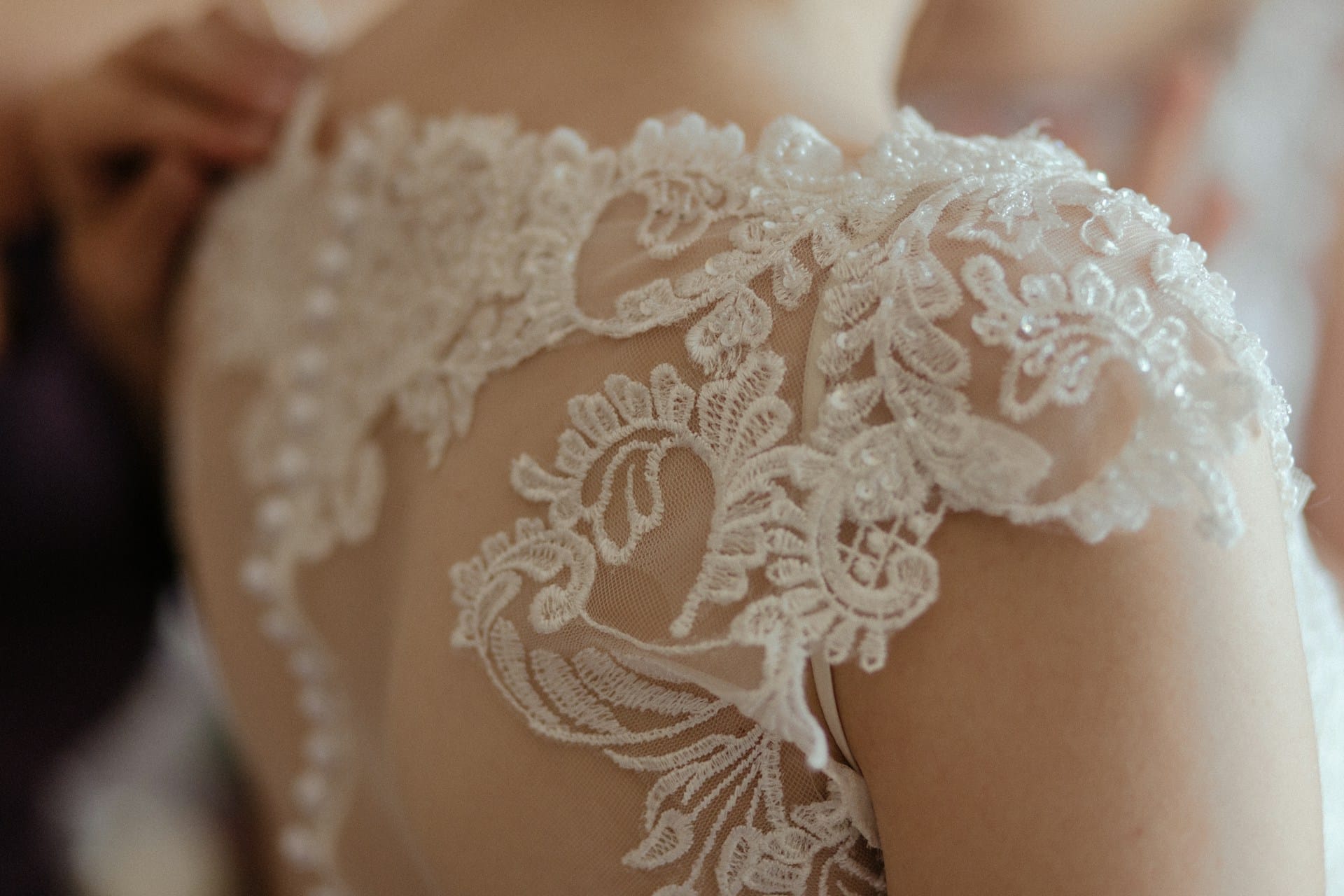
Gowns with heavy beading, sequins, or layered embellishments already carry a lot of visual information. The eye moves constantly across the surface. Adding a ring with an elaborate halo and side stones creates two competing focal points.
If your gown is heavily adorned, keep jewelry understated. Stick with one metal tone and choose streamlined shapes. A solitaire setting allows the dress to do its work while the ring remains present without fighting for attention.
Brides drawn to opulent sequins and embellishments can pair well with fancy shapes like marquise or pear cuts with hidden halo accents. The hidden halo adds depth without overwhelming the eye because the detail sits beneath the stone rather than around its perimeter.
Bohemian Gowns and Softer Stone Choices
Flowy silhouettes with empire waists, gathered skirts, and organic movement call for rings with similar energy. Oval or round cuts with unique halo accents work beautifully here. A round diamond offers soft curves, while an intricate halo captures a free-spirited mindset.
The casual elegance of a bohemian gown does not pair as naturally with sharp geometric cuts. An emerald cut against a dress with loose sleeves and cascading chiffon can feel mismatched. The formality of the stone clashes with the relaxed fabric.
Metal Temperature and Fabric Tone
White dresses are not all the same white. Ivory runs warm. Stark white runs cool. Blush tones have become increasingly popular, with The Knot 2024 Real Weddings Study showing that 36% of brides prefer pastel hues like blush over strong colors.
Rose gold echoes blush tones beautifully, while yellow gold adds contrast and warmth to gowns with subtle color. Cool-toned skin looks best with silver, platinum, or white gold jewelry. A platinum ring against stark white fabric creates visual continuity because both read as bright and cool.
Yellow gold against pure white creates more contrast. This is not wrong, but it is noticeable. If you want your ring to blend into the overall picture, match the metal temperature to the fabric temperature. If you want the ring to draw the eye, contrast can serve that purpose.
Champagne and Colored Stones
Warm metals like yellow gold and rose gold enhance champagne diamond tones beautifully. A champagne stone in a white gold setting can look slightly off because the setting fights the warmth of the stone.
Colored stones add another consideration. A sapphire or emerald will photograph as a point of color against white fabric. This can be stunning, but it requires acceptance that the stone will draw attention. Pair colored stones with simpler gown details so the ring becomes an intentional accent rather than a distraction.
Neckline and Hand Placement
High necklines and long sleeves frame the hands differently than strapless gowns. When your arms and hands are the primary exposed skin, the ring becomes more prominent in photographs. A heavily detailed ring works well here because the eye naturally travels to your hands.
Strapless and low-cut necklines draw attention upward toward the face and shoulders. The ring recedes somewhat. This allows more flexibility in ring choice because the stone competes with less visual information in the frame.
Practical Fitting Considerations
Wear your engagement ring to every dress fitting. The way your hand moves against fabric, the way the ring catches on beading or lace, the way metal looks against specific whites: none of this can be assessed from memory.
Pay attention to how the ring looks in photographs at the boutique. Take pictures of your hand against the bodice, at your side, and holding the skirt. These positions will repeat on your wedding day. Check that the ring and dress feel like they belong to the same person.
Balancing Statement Pieces
If your ring is large or elaborate, consider whether you want your dress to match that level of statement or to serve as a backdrop. Neither approach is incorrect. A ball gown with cathedral beading and a 3-carat halo ring commits fully to drama. A simple sheath dress with the same ring lets the stone command attention.
The question is intent. Know what you want people to see first. Build the pairing from that answer.