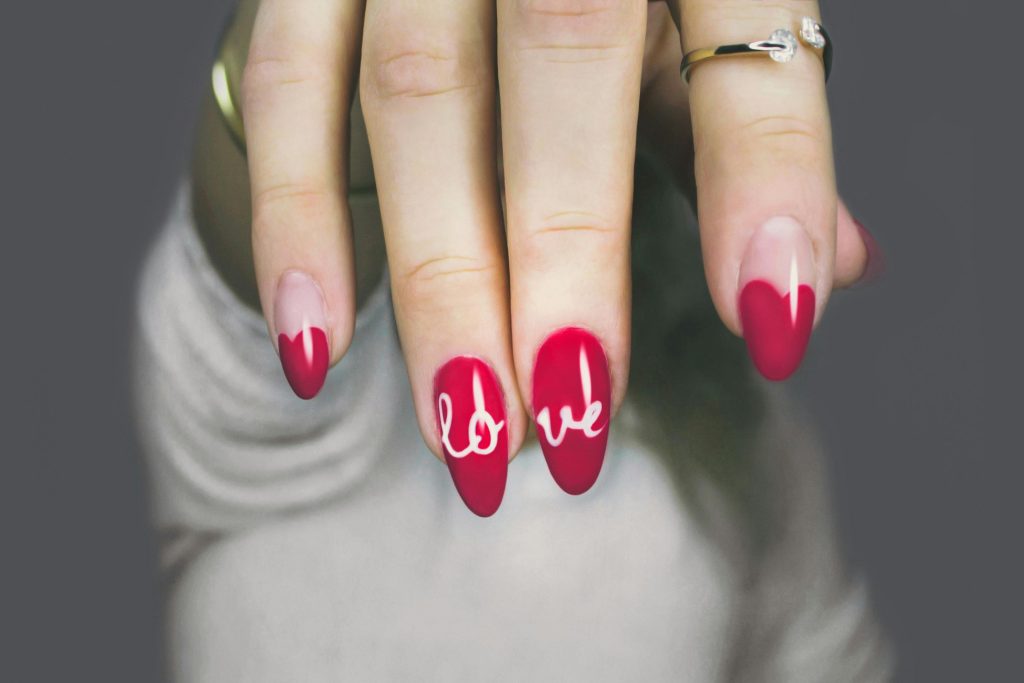



Dip powder manicures have revolutionized the nail industry, offering salon-quality results that can last up to four weeks without chipping or fading.
Their stunning shine and incredible strength make them a favorite among nail enthusiasts everywhere. However, the same durability that makes dip powder so appealing can also make removal feel intimidating.
Many people worry about damaging their natural nails or struggle with improper removal techniques that leave their nails weak and brittle.
But with the right approach and proper technique, you’ll learn “How To remove dip nail polish without damage” using a gentle method that protects the nail plate and cuticles.
What Is Dip Powder and Its Removal?
Dip powder manicures involve coating your nails with a base coat, dipping them into colored powder, and sealing everything with a topcoat. This process creates a strong, protective layer that can last 3-4 weeks.
Unlike regular nail polish, dip powder forms a much harder coating that bonds tightly to your natural nail, which means standard nail polish remover won’t work effectively.
The key to successful removal is patience and the right technique. Rushing the process or using improper methods can lead to thin, damaged nails that take weeks to recover.
How to Remove Dip Nail Polish at Home With: The Foil Method
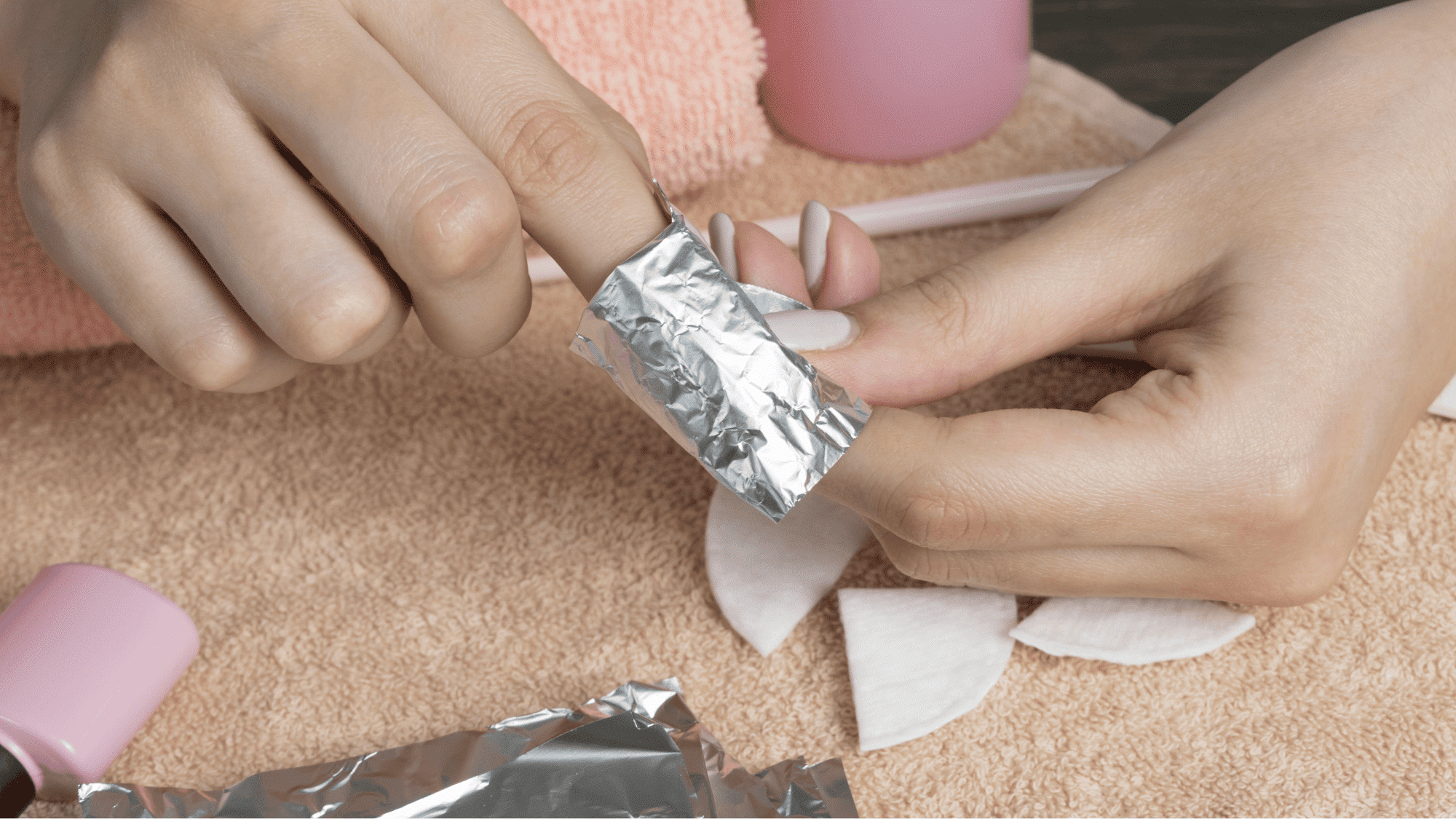
This method is widely considered the safest and most effective way to remove dip powder nails at home. It minimizes damage to your natural nails while ensuring complete removal of the product.
The foil wrapping technique creates an ideal environment for the acetone to work efficiently. When done correctly, this process leaves your nails healthy and ready for their next manicure.
What You’ll Need for Safe Removal
Before starting, gather these essential supplies:
| Item | Use |
|---|---|
| Pure acetone | Softens dip powder |
| Cotton balls/pads | Holds acetone on nails |
| Foil strips (3×3 in) | Secures cotton |
| Wooden cuticle stick | Gently removes product |
| Cuticle oil | Moisturizes nails |
| Hand cream | Prevents dryness |
Step 1: Prepare Your Nails and Materials
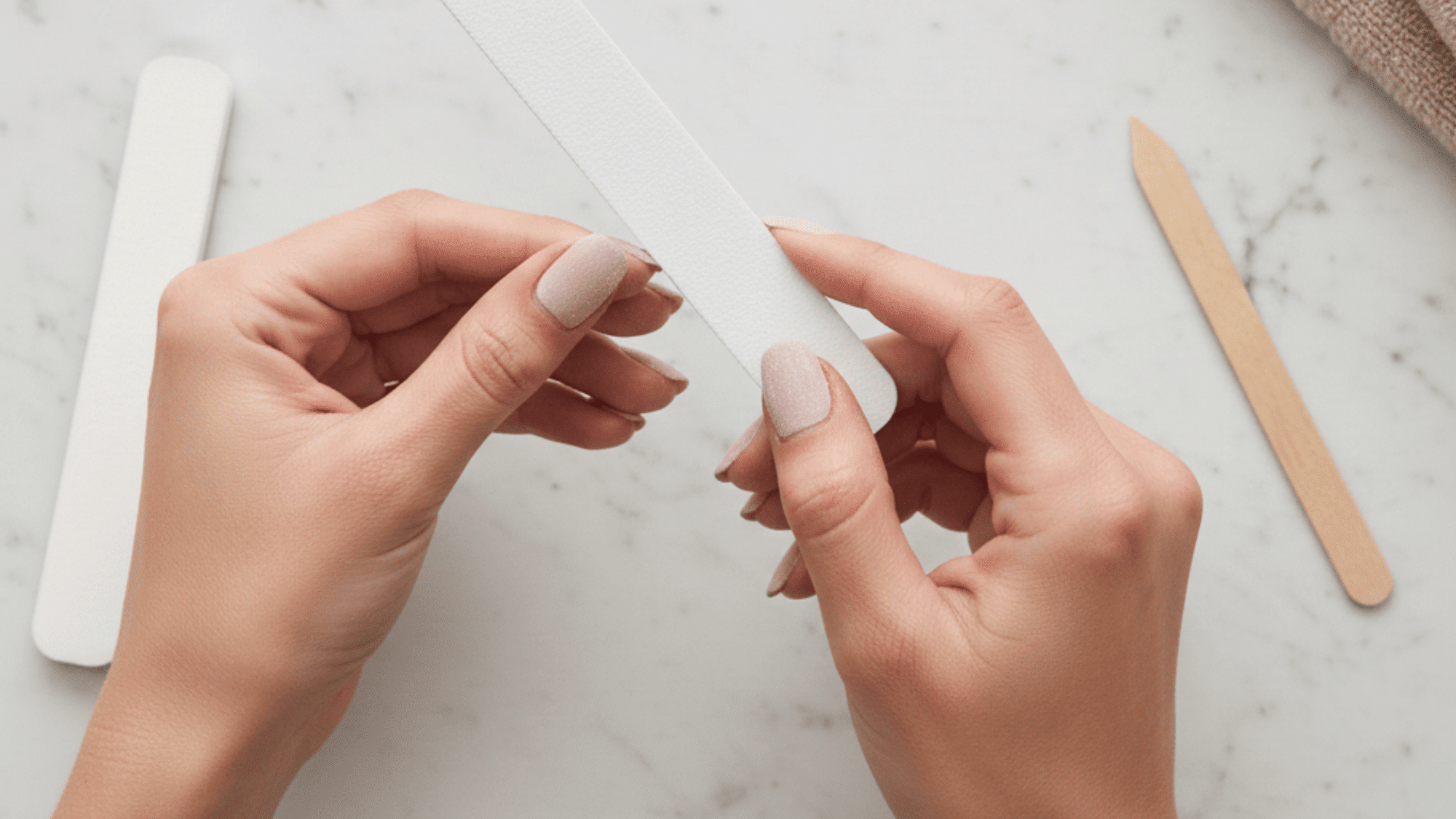
Use a coarse nail file to gently buff away the shiny topcoat of your dip manicure. Focus on breaking through the glossy seal without filing down to your natural nail.
This step is crucial because the topcoat prevents acetone from penetrating the powder layers. Use smooth strokes until the surface becomes matte.
Step 2: Apply Acetone and Wrap
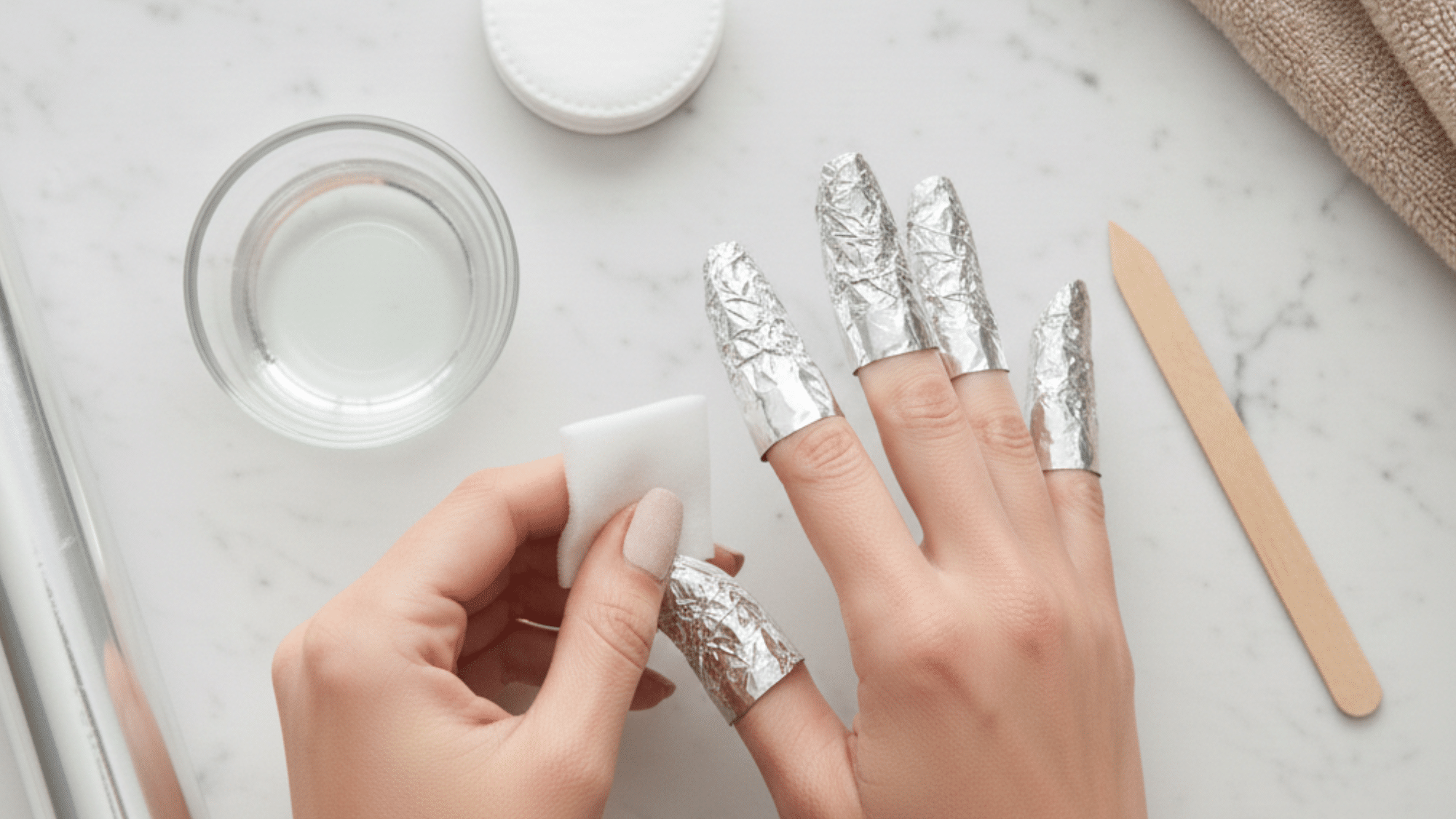
Pour pure acetone into a small dish and saturate each cotton piece thoroughly. Place one soaked cotton on top of each nail, ensuring complete coverage.
Working quickly, wrap each fingertip with aluminum foil to secure the cotton in place. The wrap should be snug but comfortable.
The foil prevents acetone evaporation and creates an environment that effectively breaks down the dip powder.
Step 3: Allow Proper Soaking Time
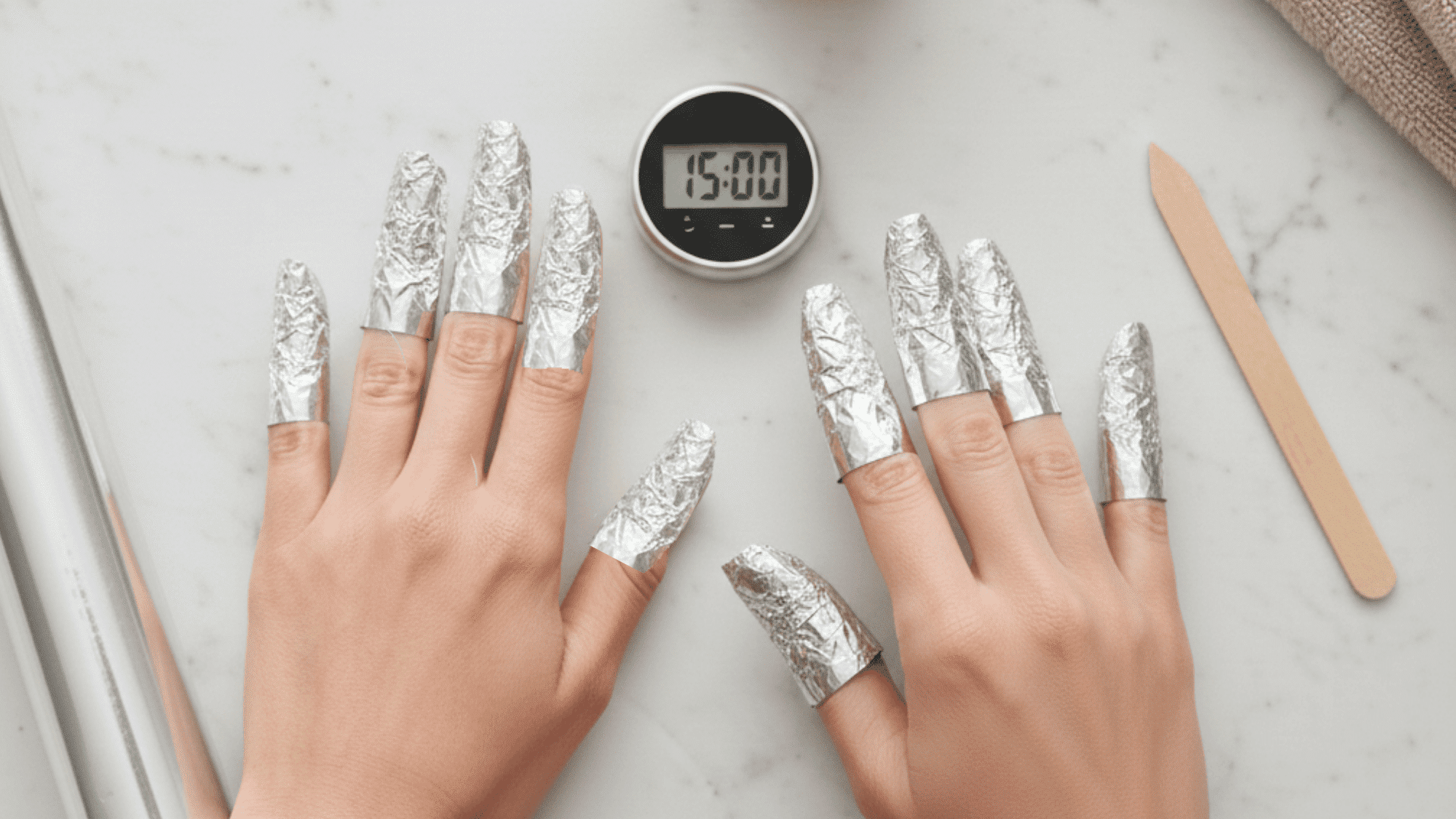
Leave the foil wraps on for 15-20 minutes. Set a timer to avoid checking too early. The acetone needs this time to dissolve the polymer bonds in the dip powder.
Thick applications may need up to 25 minutes, while fresh manicures might soften in 12-15 minutes. After 15 minutes, gently press on one wrap to check if the powder feels soft. If still rigid, wait another 5 minutes.
Step 4: Remove The Softened Powder
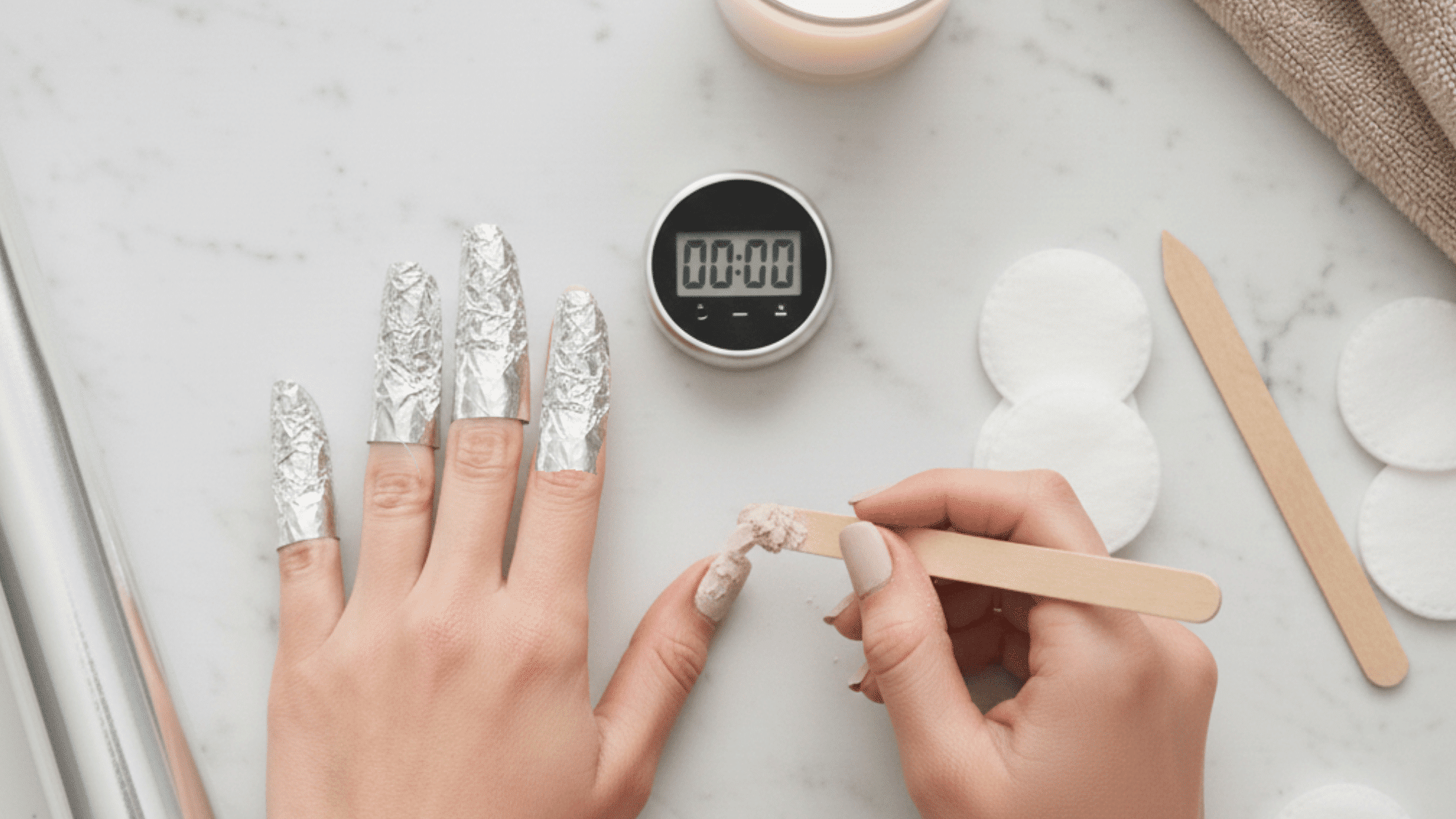
Remove one foil wrap at a time, starting with your non-dominant hand. Use your wooden cuticle stick to gently push the softened powder from the cuticle to the free edge.
It should slide off easily in soft pieces. If you encounter resistance, rewrap that nail with fresh acetone-soaked cotton and wait another 5 minutes.
Never force, peel, or scrape aggressively, as this damages your natural nails.
Step 5: Clean and Restore
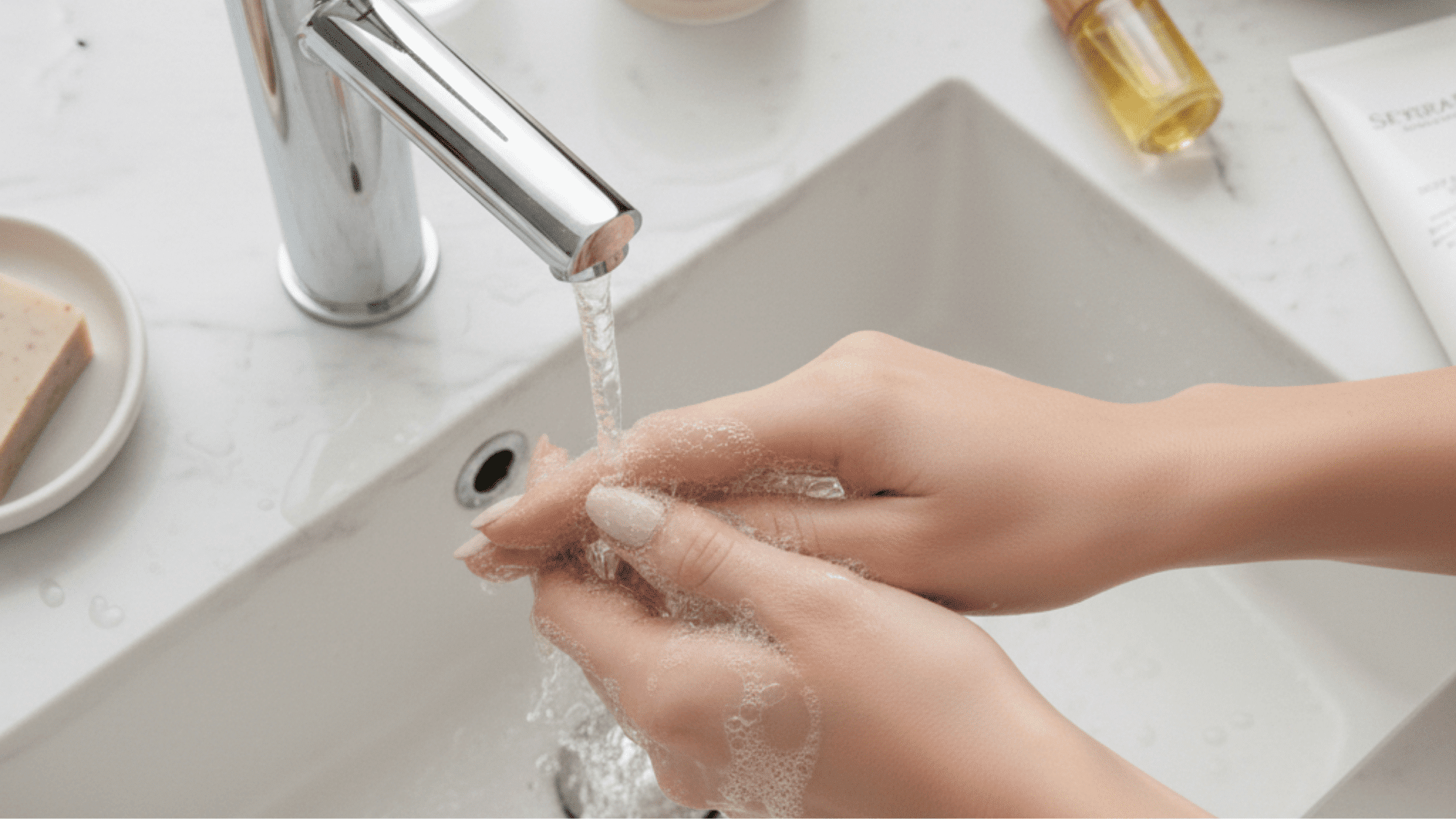
Wash your hands with warm water and soap to remove acetone residue. Use a fine buffer to gently smooth any remaining residue on your nail surface.
Apply cuticle oil generously, massaging it into your nails and cuticles. Follow with thick hand cream. Reapply cuticle oil every 2-3 hours for the next 24 hours.
Avoid excessive water exposure and give your nails 3-5 days to recover before applying new enhancements.
Alternative Method: The Acetone Soak
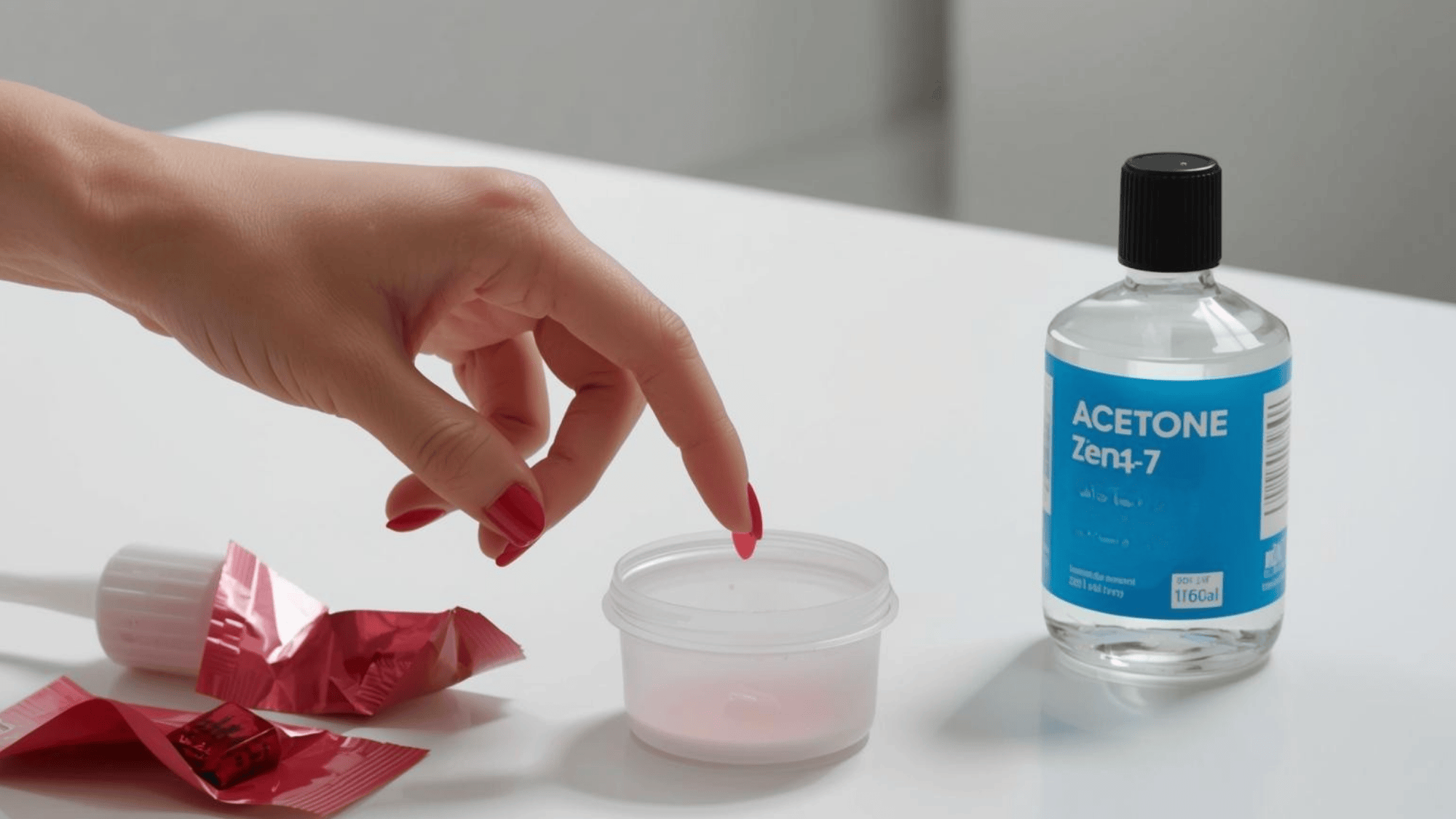
If you prefer not to use foil or find wrapping each finger too time-consuming, the bowl soak method offers a simpler alternative.
While this technique is more straightforward and requires less preparation, it does have trade-offs in terms of skin exposure and dryness.
Step 1: Prepare Your Soaking Station
Select a small glass or ceramic bowl and fill it with enough pure acetone to completely submerge your fingertips about half an inch to one inch deep.
Avoid using plastic bowls, as acetone can damage or dissolve certain plastics over time.
Just as with the foil method, start by filing down the shiny topcoat of your dip manicure until the surface becomes dull and matte.
Step 2: Use The Double Bowl Technique
For enhanced results and faster removal, try the warm water bath method. Fill a larger bowl with warm (not hot) water and place your acetone bowl inside it.
This creates a gentle heating effect that accelerates the acetone’s ability to break down the dip powder, potentially reducing your soaking time by several minutes.
The warmth also makes the experience more comfortable on your hands.
Step 3: Soak And Remove
Submerge your fingertips in the acetone and let them soak for 15-20 minutes. After soaking, use your wooden cuticle stick to gently push off the softened powder.
If any areas resist, return that nail to the acetone for another 3-5 minutes rather than forcing removal.
Comparison: Foil Method vs. Acetone Soak Method
| Feature | Foil Method | Acetone Soak Method |
|---|---|---|
| Setup | Moderate | Easy |
| Skin Exposure | Minimal | High |
| Dryness | Less drying | More drying |
| Acetone Used | Less | More |
| Convenience | More prep time | Quick setup |
| Best For | Sensitive skin | Fast removal |
According to us, The foil method is gentler but takes longer to set up. The soak method is faster but dries the skin more.
Common Mistakes to Avoid & Aftercare
Removing dip nail polish correctly doesn’t stop once the product comes off. Avoiding common mistakes during removal and caring for your nails afterward helps prevent damage, dryness, and breakage, keeping your nails healthy between manicures.
1. Mistakes to Look Out For
-
Peeling or picking the polish: This pulls off layers of your natural nail and causes weakness.
-
Using regular nail polish remover: It isn’t strong enough to break down dip powder; always use pure acetone.
-
Skipping the filing step: Without filing the topcoat, acetone can’t soak through properly.
-
Forcing the powder off: If it doesn’t slide off easily, it needs more soaking time.
-
Not moisturizing after removal: Acetone dries nails and skin, leading to brittleness and dry cuticles.
2. Immediate Aftercare
Apply cuticle oil multiple times daily for the first few days. Keep a small bottle at your desk, in your purse, and on your nightstand. This frequent application helps restore moisture quickly.
Use a strengthening base coat if you plan to apply regular nail polish. This adds a protective layer while your nails recover.
3. Long-Term Nail Health
Consider taking a break between dip powder applications. Give your nails at least a week to breathe and recover. During this time, keep them trimmed short to prevent breakage.
Take biotin supplements or eat biotin-rich foods like eggs, nuts, and salmon to support nail health from within. Stay hydrated by drinking plenty of water throughout the day.
Wear gloves when cleaning or washing dishes to protect your nails from harsh chemicals and excessive water exposure.
When To Seek Professional Help
While removing dip powder at home is generally safe, sometimes professional help is better:
- If you have very damaged or weak nails
- If you’re experiencing pain during removal
- If you notice signs of infection around your nails
- If the powder won’t come off after multiple attempts
- If you’re uncomfortable doing it yourself
A professional nail technician has specialized tools and products that can make removal faster and easier while minimizing damage.
Final Thoughts
Removing dip nail polish at home is completely achievable with the right supplies and technique. The key is patience; never rush the process or force anything.
Your natural nails are delicate and deserve gentle treatment. By this, you can safely remove your dip powder manicure without a salon visit, saving time and money while keeping your nails healthy and strong.
Remember to always prioritize nail health over speed, and don’t hesitate to give your nails breaks between applications. With proper care and technique, you can enjoy beautiful dip powder manicures.
Have you tried removing dip nail polish at home before? Tell us in the comments which method worked best for you or what challenges you faced.