


Something is shifting in the world of luxury jewelry.
It is not loud. There are no boycotts or headlines calling out the big houses. But the numbers tell a clear story. A growing number of high-spending jewelry buyers, particularly Millennials and Gen Z, are no longer reaching for the iconic blue box or the red leather pouch.
They are looking for something else entirely.
Understanding what they want and where they are finding it reveals one of the most interesting changes happening in fashion and luxury right now.
What Tiffany and Cartier Built
To understand the shift, you first need to appreciate what these brands represent.
Tiffany and Cartier are not just jewelry companies. They are cultural institutions. They built their value over more than a century through design mastery, celebrity association, and the kind of brand recognition that money alone cannot buy. A Cartier Love bracelet on a wrist communicates something without a single word. So does a Tiffany solitaire in its unmistakable box.
For decades, that communication was the product. You were not just buying jewelry. You were buying into a shared language of status and prestige.
That language still works for a significant portion of buyers. Cartier’s jewelry division reported 14 percent sales growth in the final quarter of 2025. Tiffany continues to attract strong sales as its parent company LVMH pushes it toward a higher-end positioning.
But a meaningful and growing segment of buyers is no longer fluent in that language. Or more accurately, they are fluent in it and have decided it is not what they want to say.
The Buyer Who Changed
Gen Z holds over $360 billion in global disposable income and is projected to drive more than 70 percent of global luxury sales growth by 2030. This is not a future demographic. They are spending right now.
And their criteria are completely different from previous generations.
According to Bain and Company, 48 percent of Gen Z luxury buyers prioritize self-expression over brand recognition. Nearly half of the fastest-growing luxury buyer segment does not care primarily about the name on the box. They care about what the piece means to them personally.
For Gen Z, jewelry is emotional. Whether it is a name, a specific date, coordinates, or an initial, personalized pieces are in high demand. Personal is the new luxury language.
This is not a trend driven by budget constraints. Gen Z and Millennials are willing to pay more for jewelry that feels personal, meaningful, and long-lasting. Price is not the issue. Meaning is the criteria.
Emotional value far outweighs purely financial considerations among today’s buyers, with just 14 percent citing investment potential as their main reason for purchasing jewelry. The other 86 percent are buying for what a piece represents. For how it makes them feel. For the story it carries.
That is a profound shift from the status-signaling model that built the legacy houses.
Why Logos Are Losing Their Power
There is a psychological reason this is happening now.
Younger buyers grew up in a world saturated with branded content. They developed a sharp instinct for what is genuine versus what is performed. A famous logo does not automatically pass their filter. They ask: what is the actual story here? Who made this and why? Does this piece mean something real or does it just mean expensive?
Younger buyers are rejecting mass-produced sparkle in favor of pieces with provenance, character, and personality. They want jewelry that carries a story worth telling. Not a brand story written by a marketing department, but a real human story embedded in the design, the materials, or the intention behind the piece.
Legacy brands have struggled to deliver this authentically. Tiffany has expanded its personalization range. Cartier has introduced new storytelling around heritage designs. But these moves feel like responses to a trend rather than the origin of one.
The brands that are genuinely capturing this buyer built their entire identity around meaning from the very beginning. That is a fundamentally different thing.
What Heirloom Really Means Now
Another shift worth paying attention to is how buyers think about longevity.
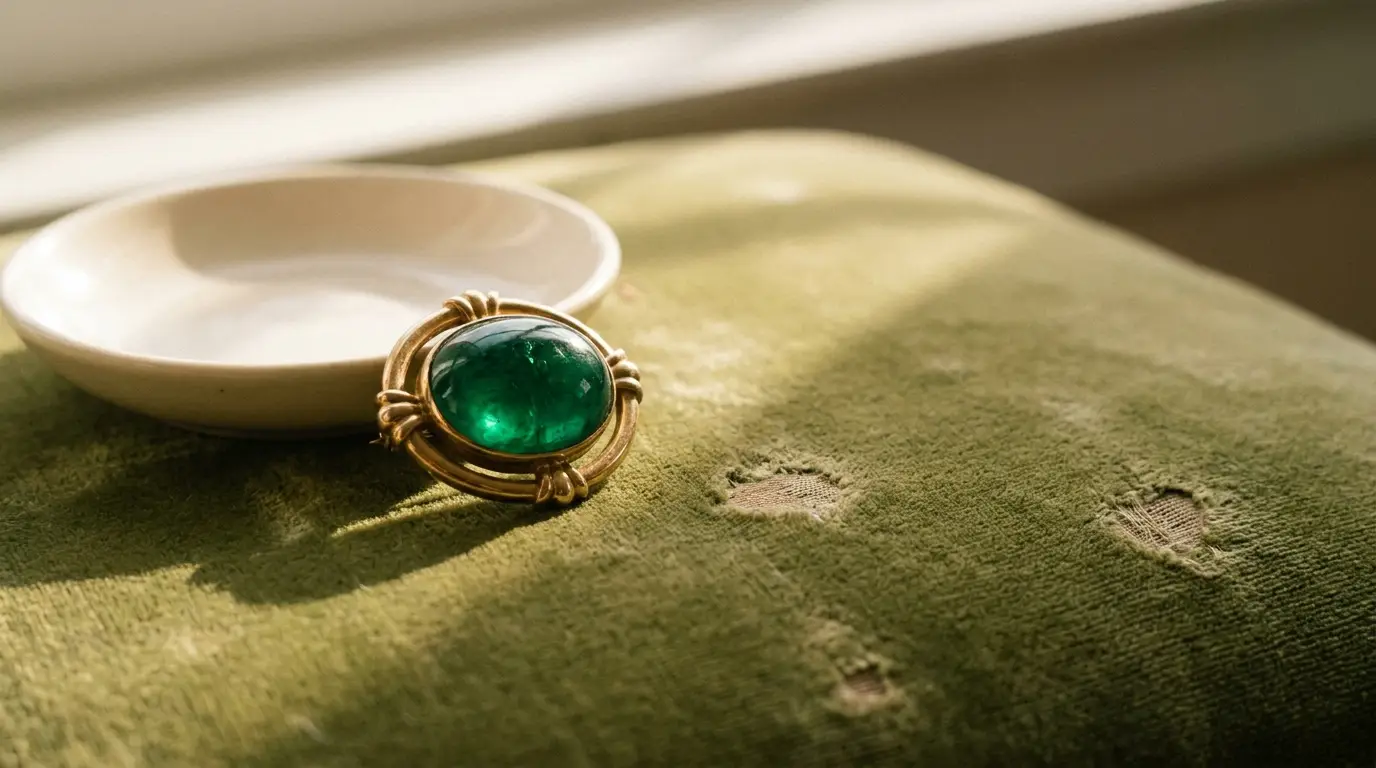
The fastest-growing segment within jewelry is not statement pieces bought for an occasion. It is pieces designed to be passed down. Younger buyers are embracing heirlooms, colored stones, and one-of-a-kind designs as wearable history.
This is a direct rejection of trend-driven purchasing. Buyers do not want something that dates in three years. They want something that carries meaning forward. Something that a daughter or granddaughter will one day hold and ask about.
Heirloom jewelry is not about age. It is about intention. A piece can be brand new and still be designed for permanence, designed to outlast the person who first wore it and to carry its story into the next generation.
Brands that understand this are not selling jewelry. They are selling permanence. And that changes the entire conversation around price, value, and desirability.
Limited to 143. And Here Is Exactly Why.
This is where a new generation of independent luxury houses is doing something the big brands genuinely cannot copy.
Real scarcity with a real reason.
A collection capped at 143 pieces is not a marketing number pulled from a spreadsheet. If 143 means something specific, if it is a number that carries a documented story, then scarcity becomes a storytelling device rather than a sales tactic. The buyer understands the difference. And it transforms ownership into something that cannot be replicated.
This is the exact territory where Aueshah is operating.
The Brand Answering the Question
Aueshah is a luxury jewelry house founded by Syed Murshad Ali Shah, built on a family legacy in fine jewelry that stretches back to 1987. The brand name encodes the founding philosophy. Au is the chemical symbol for gold. Esha means desire. Shah is both the family name and the word for crown.
The brand does not begin with design or pricing. It begins with a story. Every piece Aueshah creates starts with an emotion that needs a physical form. The craftsmanship follows that. The price follows the meaning.
For buyers who have grown frustrated with luxury that speaks in logos, this approach is deeply compelling. And for buyers actively searching for jewelry that tells a story worth keeping, Aueshah is one of the most interesting answers in the market today.
The Noor Collection: A Love Story You Can Wear
The clearest expression of what Aueshah stands for is The Noor Collection.
It is a five-piece high jewelry line inspired by Mughal jali architecture and South Asian artisanal heritage. Each piece is handcrafted in 925 silver with 18-carat gold plating, built around precision openwork detailing in the Mughal lattice tradition. The construction is technically extraordinary. But that is not what makes it remarkable.
What makes it remarkable is the story encoded into every number.
The collection is limited to exactly 143 pieces worldwide. That number is a coded declaration of love. 143 means “I love you” in a personal numerical language that carries deep meaning between two people. The production limit mirrors it deliberately.
The Noor Tiara is priced at €14,399. The 143 is there again. The 99 preserves a birthdate.
The Noor Ring is priced at €1,094. That number represents the precise geographic distance in kilometres between two people who loved each other across borders.
The Noor Earrings are priced at €2,003, the shared birth year of two people who were made for each other. The earrings come as a pair.
The Noor Bracelet is priced at €5,098, the exact count of every time the designer said “I love you” across every message and call from the moment he fell in love.
The Noor Necklace is priced at €11,009. That is her name, written in numbers. 11 is N. 00 is OO. 9 is R. Her name, worn over the heart.
This is not pricing. This is a love letter encoded in gold.
For any buyer who has ever wanted a piece of jewelry that carries something irreplaceable, something no other piece in the world contains, the Noor Collection is unlike anything currently available from the legacy houses.
Where Luxury Is Actually Going
The buyers leaving Tiffany and Cartier are not going to cheaper alternatives. They are going to more meaningful ones.
They are finding brands that started with a story and built everything else around it. They are buying pieces designed to be passed down. They are choosing jewelry that encodes real, specific, human facts rather than brand heritage created by a marketing team.
When everyone shares their style online, having a piece that nobody else has becomes more valuable than wearing a recognizable luxury brand. That sentence captures the shift perfectly. Uniqueness now outranks recognizability. Meaning outranks status.
The big houses will adapt. Some already are. But the brands built entirely on this philosophy from the beginning, like Aueshah, have an advantage that cannot be quickly replicated. They did not pivot to meaning. They started there.
That is where the most interesting jewelry in the world is being made right now.
And that is where a growing number of the world’s most discerning buyers are quietly going.
Discover Aueshah and The Noor Collection at aueshah.com.