


Have you ever watched a Jane Austen movie and wondered about those beautiful high-waisted gowns? That’s Regency era fashion.
This period brought a complete change in how people dressed. Women wore flowing dresses that looked like ancient Greek robes.
Men traded their colorful coats for darker, more fitted styles. The Regency era created fashion trends that still influence what we wear today.
From empire waist dresses to top hats and tailcoats, this was a time when simplicity met style in the most beautiful way.
Let’s look at what made Regency era clothing so special and why people still love these styles over 200 years later.
When Was the Regency Era
The Regency era officially lasted from 1811 to 1820. During these years, Prince George ruled England as Prince Regent because his father, King George III, was too ill to lead.
However, when we talk about Regency era fashion, we usually mean a longer time period.
Fashion historians include the years from about 1795 to 1825. This gives us a fuller picture of how styles changed and developed.
The fashion trends of this time actually started in the 1790s and continued beyond 1820.
By 1825, the classic Regency look had changed into something quite different. The high waistlines dropped back down, and skirts became wider and more decorated.
What is Regency Era Fashion
Regency era fashion marked a dramatic break from the past.
Before this time, women wore tight corsets and wide skirts held up by hoops. Their dresses used yards and yards of heavy fabric. Men wore bright colors, knee breeches, and wigs.
All of that changed during the Regency period. Women’s Regency era dresses became simple and flowing.
The waistline moved up right under the bust. Sleeves got shorter. Necklines dropped lower. Fabrics became lighter and softer.
Men’s clothing also changed significantly. Bright colors gave way to darker, more conservative tones. Long pants replaced knee breeches. The overall look became more fitted and streamlined.
How Culture Shaped the Regency Era’s Fashion
Fashion doesn’t change in a vacuum. Big events, powerful leaders, and new ideas all shaped Regency style.
The French Revolution (1789-1799) changed everything. People rejected the heavy clothing of the aristocracy.
New styles were simpler and more democratic. Women stopped wearing wide panniers and tight corsets. Men gave up powdered wigs and fancy silk suits.
Napoleon Bonaparte became Emperor in 1804 and made France the fashion leader. His wife, Empress Josephine, became a major icon. Women across Europe copied her style.
Interest in ancient Greece and Rome influenced clothing directly. Women’s dresses looked like Greek robes with high waists and flowing skirts. Fashion magazines spread trends, while style icons like Beau Brummell taught men that good taste meant simple, well-fitted clothes.
The Revolutionary Influence: Empire Line Fashion
The empire line was the signature look of Regency fashion. This style completely changed how women dressed. Instead of tight waists and heavy skirts, dresses became light and flowing. The waistline moved up right under the bust, creating a long, graceful silhouette.
Below is what made the empire line fashion so special:
- The High Waist Revolution: The waistline climbed all the way up to sit just below the bust, reaching its highest point around 1817 before slowly dropping back down to its natural position by 1825.
- Flowing Fabrics and Soft Colors: Light muslins, delicate silks, and fine cotton created the flowing look, with white being the most fashionable color and pastels like pink, blue, and yellow perfect for daytime wear.
- Covering Up in Style: Women wore a chemisette, a light insert that filled in low necklines during the day, allowing them to follow fashion while maintaining modesty in public settings.
- Comfort Over Constriction: Regency stays were designed to lift the bust and create smooth lines without squeezing the waist, making them far more comfortable than the tight corsets worn in earlier and later periods.
Regency Era Women’s Fashion Essentials
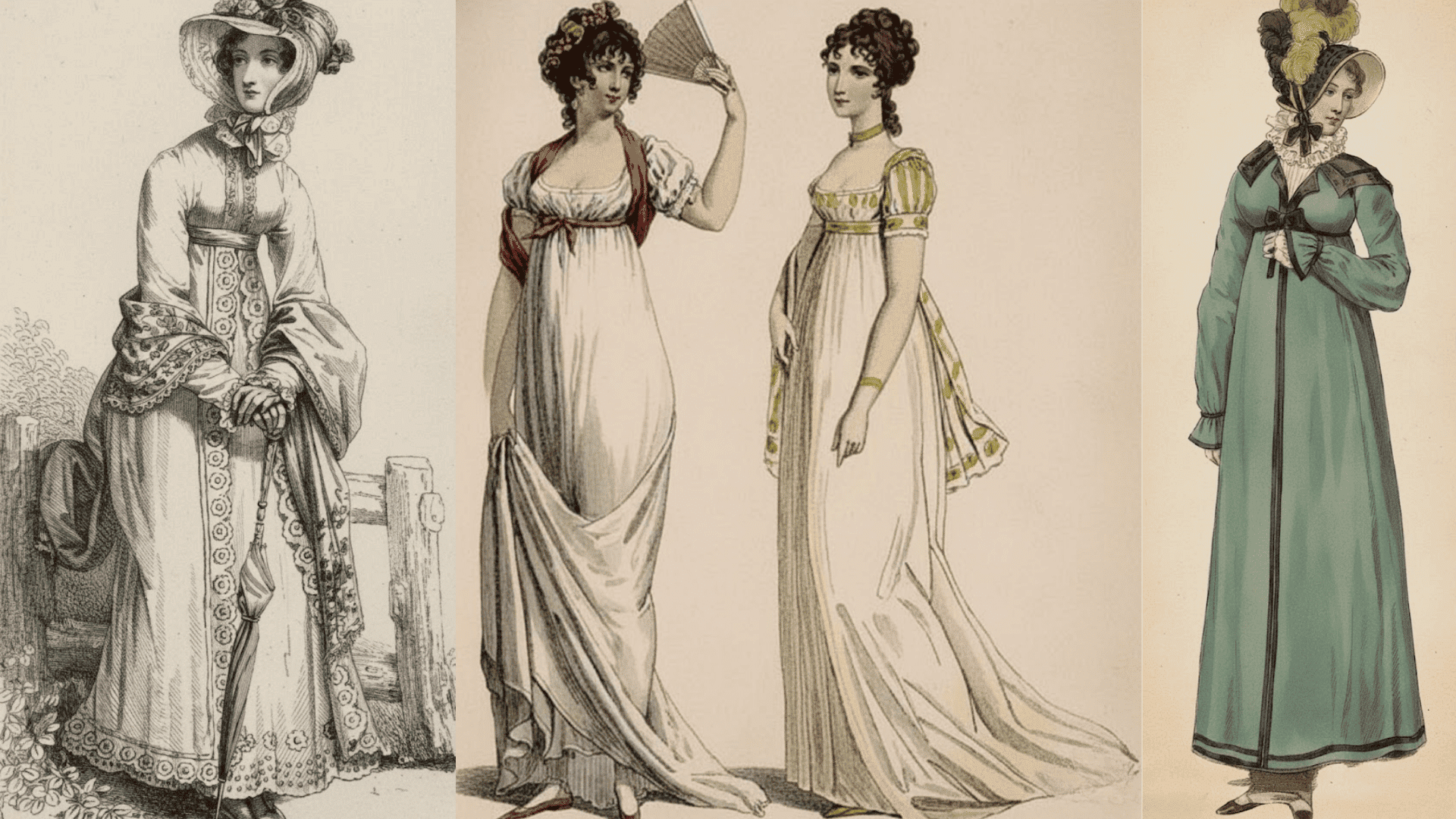
A Regency woman needed several key pieces to create a complete wardrobe. From the basic dress to outerwear and undergarments, each item served a specific purpose while maintaining the era’s signature style.
1. Empire Line Dresses
The basic dress was the foundation of every woman’s wardrobe. These featured the high empire waist, low neckline, and short sleeves with skirts falling straight and long.
Day dresses were made of cotton or linen, while evening gowns were made of silk. Embroidery decorated hems and necklines with Greek and Roman patterns.
2. The Pelisse Coat
The pelisse was an outdoor coat that followed the dress line underneath. Early versions reached the hip or knee, but after 1810 became full-length.
They featured wide collars, military-style buttons and braid, and fur trim. Women wore pelisses in rich colors like dark green, navy blue, and golden brown.
3. The Spencer Jacket
The Spencer jacket was a short jacket ending just below the bust, matching the empire line perfectly. Earl Spencer supposedly invented this style after burning his coat tails by a fire.
Made from silk, wool, or fine fabrics, Spencers were decorated with ribbons and embroidery, providing warmth without hiding dresses.
4. The Redingote
The redingote was a travel coat that started as a riding coat. Heavier than pelisses, redingotes often had shoulder capes and were practical for cold or rainy weather.
As dresses widened in the 1820s, redingotes became fuller too. They were made of heavy wool and trimmed with fur.
5. Underwear
Under their dresses, women wore several layers, starting with a chemise, then stays. Pantaloons were a new addition; before Regency times, women didn’t wear pants.
Made of flesh-toned knit fabric, they provided warmth and modesty while staying invisible under white dresses, reaching either the ankle or below the knee.
Regency Era Men’s Fashion Essentials
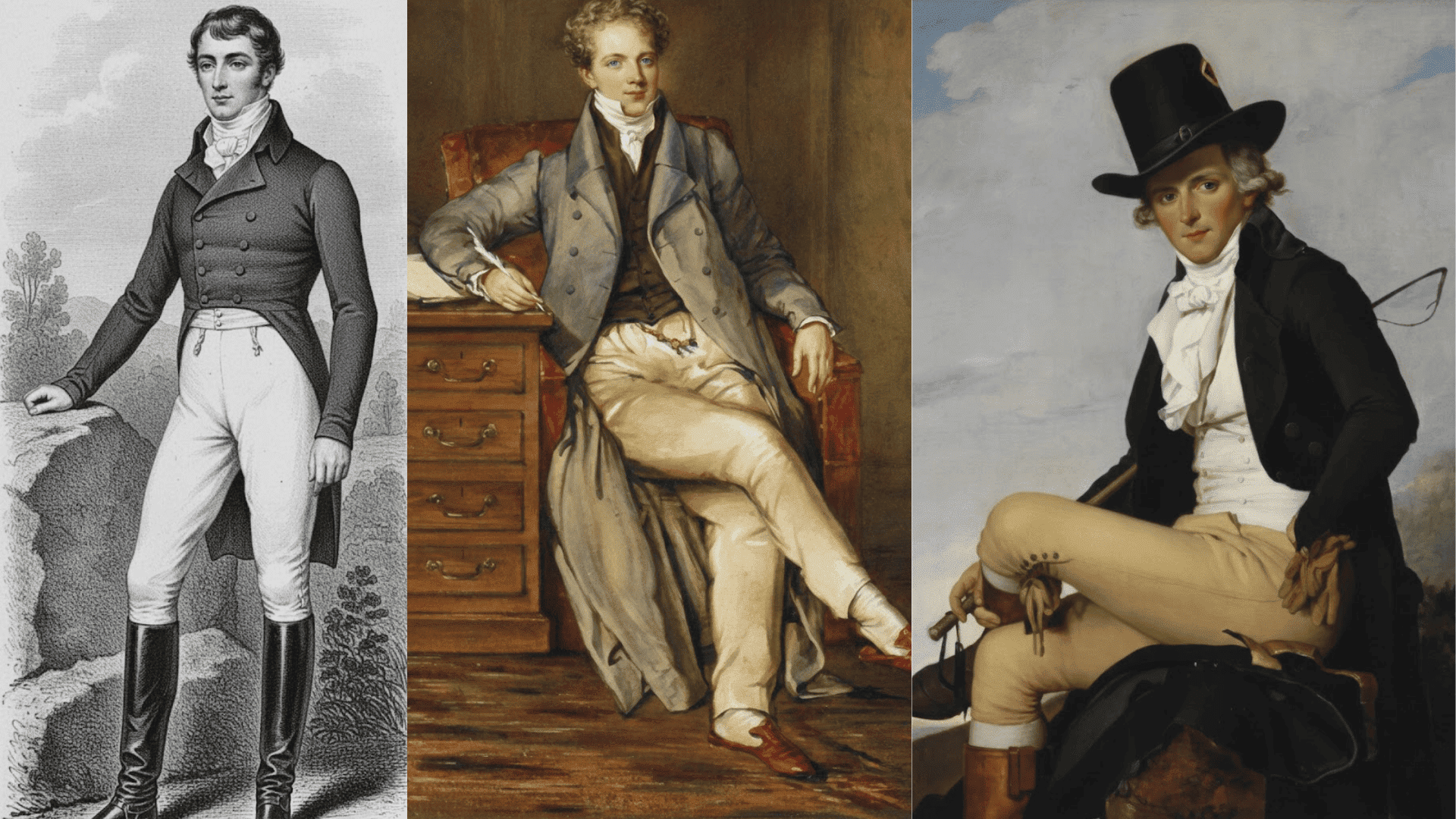
Men’s clothing changed a lot during the Regency era. Instead of bright colors and fancy decorations, men started wearing darker clothes that fit well and looked clean and simple.
1. Tailcoats
The tailcoat was the most important piece in a man’s wardrobe. It had a high collar, fit closely through the body, and had long tails in the back.
The front was cut away, showing the waistcoat underneath. Men wore various colors for daytime but chose dark navy or black for evening wear.
2. Waistcoats
Men wore waistcoats under their tailcoats. Unlike the coat, waistcoats could be colorful and patterned with stripes, brocades, and other designs.
The waistcoat had a high collar and extended below where the coat cut away, covering the top of the trousers and adding a pop of color.
3. Shirts and Neckcloths
Shirts were made of white linen or cotton with very high standing collars that came up past the jaw. They were long, reaching to mid-thigh or knee, and pulled on over the head.
The neckcloth was a long strip of fabric wrapped around the neck and tied in front in various styles.
4. Breeches, Pantaloons, and Trousers
Men’s legwear changed dramatically during the Regency era. Breeches (knee-length pants) became old-fashioned. Pantaloons fit very tightly and reach the ankle or mid-calf.
Trousers were looser, had a high waist, and were held up with braces. At first worn only during the day, trousers eventually became acceptable for the evening too.
5. Outerwear
Men wore several types of coats over their tailcoats. These had similar styling with high collars and fitted bodies.
Great coats were long and heavy for cold weather, while shorter coats worked for milder temperatures. All outerwear followed the same fitted, structured style as the tailcoat underneath.
Accessories That Ruled the Regency Era
No Regency outfit was complete without the right accessories. From bonnets to reticules for women and top hats to pocket watches for men, these finishing touches showed style and social status.
For Women
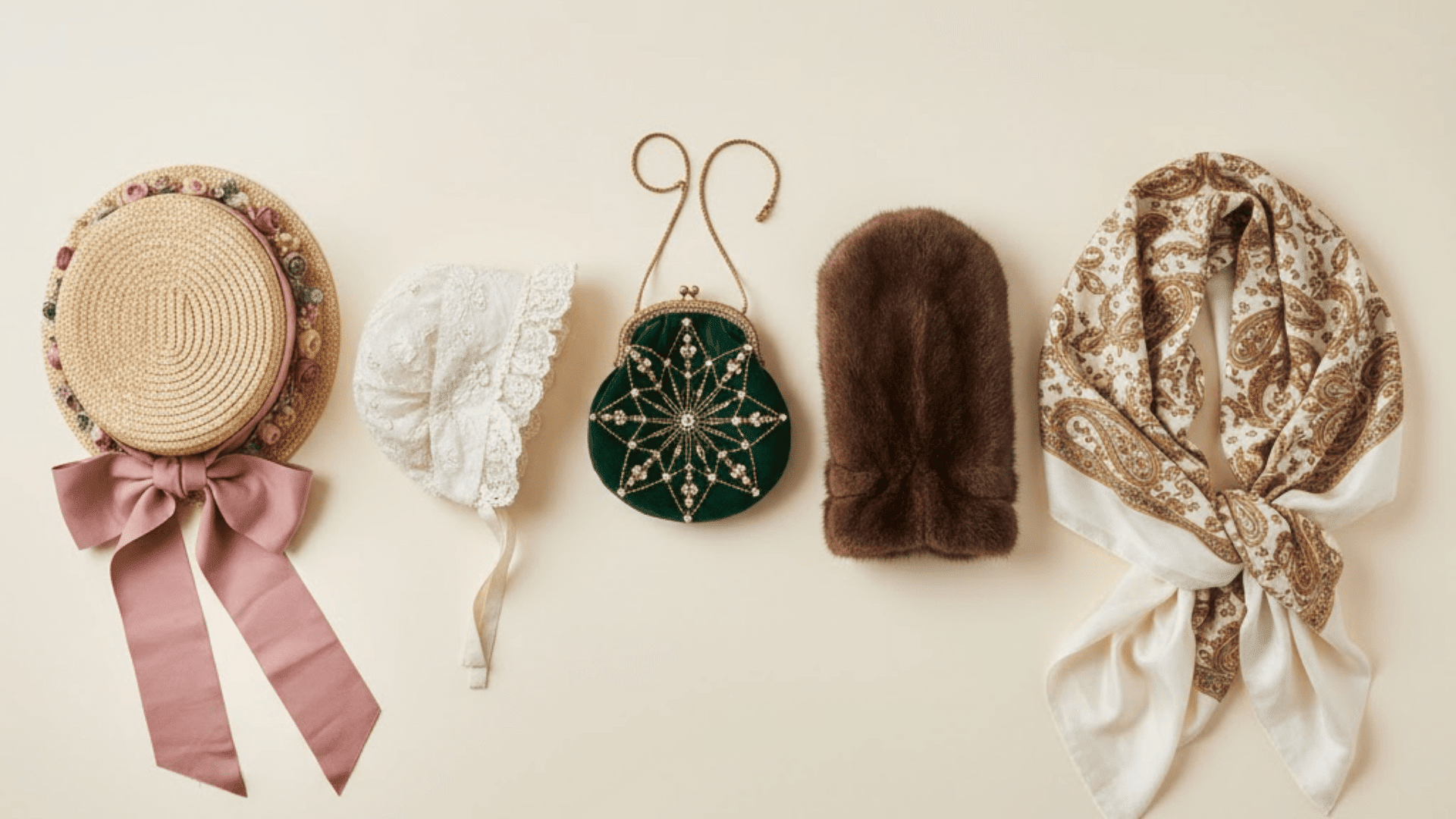
Regency women carried essential accessories that completed their outfits and showed their social standing. From bonnets to reticules, these items were both practical and fashionable necessities.
1. Bonnets and Poke Bonnets
Bonnets were essential outdoor wear. The poke bonnet had a brim that projected forward, protecting the face from the sun.
These bonnets were tied under the chin with ribbons. They were often decorated with flowers, feathers, or more ribbons.
2. Caps
Women wore small caps indoors, especially married women. These were made of lace or fine cotton and sat on the back of the head.
Even young unmarried women sometimes wore caps. The caps were purely decorative and showed modesty.
3. Reticules (Handbags)
Because Regency dresses had no pockets, women needed bags. Reticules were small purses that hung from the wrist.
They were just big enough for a handkerchief, coins, and other small items. Reticules were often beautifully embroidered or beaded.
4. Hand Muffs
Hand muffs were huge during the Regency era. These tube-shaped accessories kept hands warm in cold weather. They were made of fur or fabric and could be quite large.
The bigger the muff, the more fashionable it was.
5. Shawls and Wraps
Light dresses meant women needed extra warmth. Shawls made of silk, wool, or cashmere were very popular. Kashmir shawls from India were especially prized. Women also wore lighter wraps called fichus or scarves.
For Men
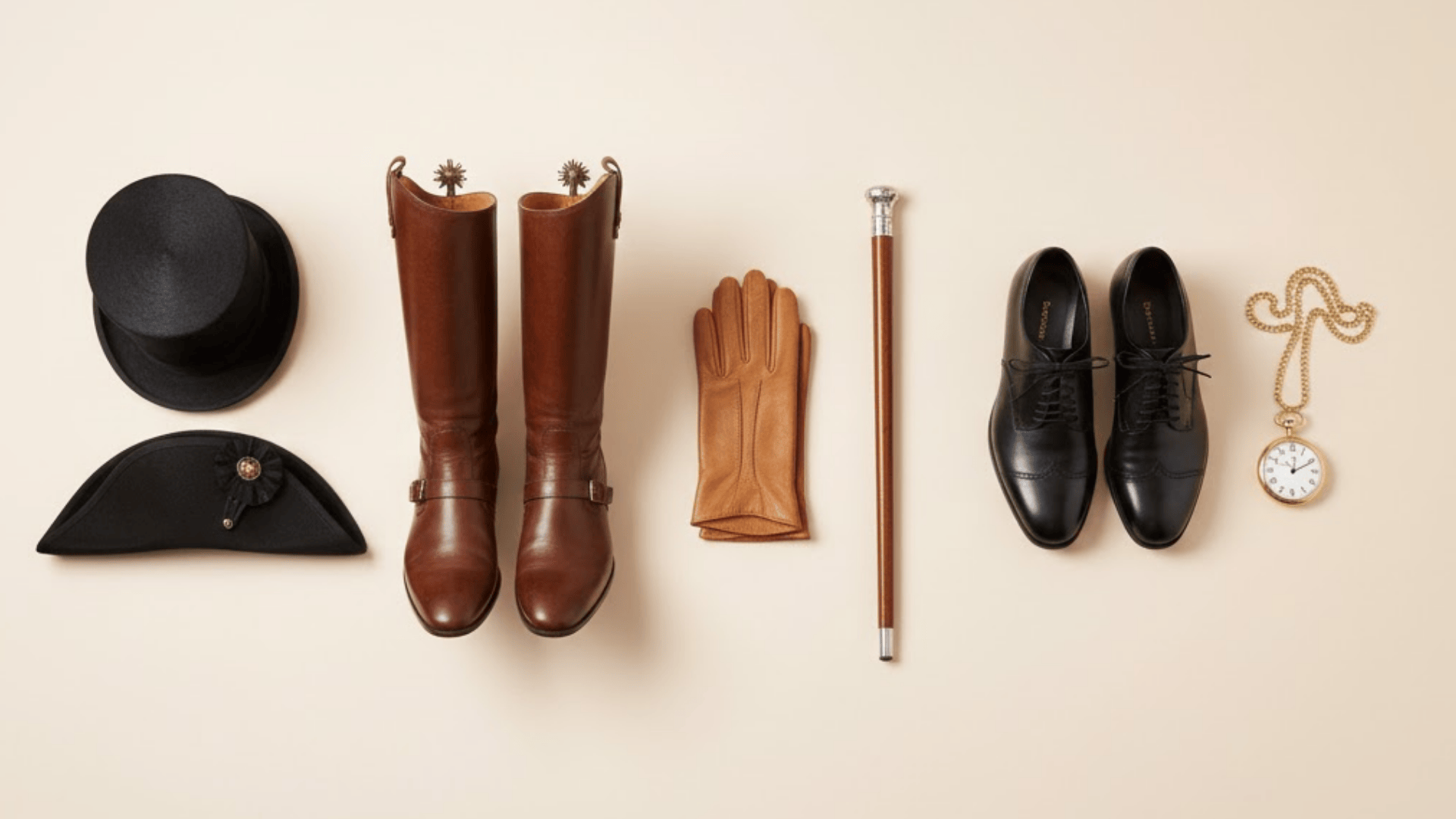
Men’s accessories demonstrated refinement and attention to proper dress codes. Every gentleman needed specific items to present himself well in society.
1. Top Hats and Bicorns
The tall top hat became the standard headwear for men. It had a high crown and a narrow brim. The bicorn was a two-pointed military-style hat that civilians also wore. Napoleon made this style famous.
2. Boots and Shoes
Men wore tall leather boots for riding and casual wear. Wellington boots and other named styles became fashionable.
For formal occasions, men chose low shoes with laces or simple slip-on styles. Black was the most common color.
3. Gloves and Canes
Every well-dressed man carried gloves and often a walking stick. These weren’t just practical; they were signs of good taste and social standing.
Gloves were usually leather, and canes could be simple or quite fancy.
4. Pocket Watches
Wristwatches didn’t exist yet. Men carried pocket watches on chains. These were both functional and fashionable. A good watch showed that you were successful and responsible.
Hairstyles and Grooming in the Regency Period
Women wore their hair short to medium length, styled close to the head in styles inspired by ancient Greek and Roman art. Hair was curled and pinned up, with some curls left hanging near the face and ears.
Women used pomade to keep hair in place and added headbands, ribbons, or decorative combs. In the evening, they might add feathers or jeweled ornaments.
Men’s most fashionable hairstyle had short sides and back with longer hair on top, often brushed upward for height. Wigs had gone out of fashion completely.
Almost all men were clean-shaven, though sideburns became increasingly popular. Beards and mustaches were rare, worn only by a few military officers.
The Evolution of Regency Silhouettes (1800-1825)
Regency fashion didn’t stay the same throughout the era. Over 25 years, styles evolved from pure classical simplicity to more decorated and structured looks.
- Classical Grecian Decoration (1800-1803): Dresses stayed close to ancient Greek inspiration with geometric patterns, Greek key designs, and simple borders on hems and necklines.
- Egyptian Ornament (1804-1807): Napoleon’s expeditions to Egypt brought exotic patterns and elaborate borders to dresses and shawls, adding variety without changing the basic silhouette.
- Military and European Influence (1808-1814): The Napoleonic Wars inspired military details like braiding, frogging, and cord trim, while sleeves lengthened dramatically into the “à la mameluke” style.
- Gothic Revival Touches (1811 onwards): Interest in medieval history brought more structure, pointed Vandyke hems, and fuller decorated sleeves as the pure classical line began to fade.
- The Rise and Fall of the Waistline (1815-1825): The empire waist peaked around 1816-1817 directly under the bust, then dropped about an inch yearly until reaching its natural position by 1825.
Regency Fashion in Modern Times

Regency fashion remains popular today thanks to modern entertainment and dedicated fans.
TV shows like “Bridgerton” have introduced the empire waist and beautiful gowns to new audiences, even if they take creative liberties with historical accuracy. The elegant style appeals to viewers worldwide.
Jane Austen wrote during the Regency era, and her novels capture the period perfectly.
Fans participate in Regency events and balls, creating or buying period-accurate Regency era clothing to wear at these gatherings. This keeps the fashion alive and helps people connect with history.
The empire waist design never completely disappeared. It returns to fashion every few decades. Today, you can find empire waist dresses in stores, maternity wear, and formal gowns for a classic, romantic look.
The Lasting Legacy of Regency Style
Regency era fashion changed clothing forever.
Men’s formal wear, the suit, tie, dark colors, and fitted style, all started during this period. Women’s fashion gained freedom and comfort that hadn’t existed before.
The Regency era proved that fashion could be both comfortable and beautiful.
You didn’t need heavy fabrics, tight corsets, or complicated structures to look good. Simple, well-made clothing worked just as well.
Today, when we see empire waist dresses or watch period dramas, we’re looking at a style that began over 200 years ago.
Regency era fashion has left its mark on how we dress and think about style.