


Two of the most powerful skincare ingredients sit in your bathroom cabinet. But can vitamin C and retinol actually be used together?
If you’ve heard scary stories about irritation, peeling, or these two “canceling each other out,” you’re not alone. These fears stop many people from getting the full benefits of both ingredients.
But here’s the truth: the idea that they ‘cancel each other out’ is mostly a myth. The real concern is irritation, and you can avoid it with the right timing and routine.
We’ll explain if vitamin C and retinol can work as a team. More importantly, you’ll learn the exact sequence to use them in your skincare routine.
From total beginners to those with sensitive skin that reacts to everything, we’ve got a routine that works for you.
Let’s clear up the confusion once and for all.
What Is Retinol?
Retinol is a form of vitamin A that belongs to the retinoid family. You’ll find it in many anti-aging serums and creams. It helps with fine lines, rough texture, acne, clogged pores, and uneven skin tone.
How? Retinol boosts your skin’s cell turnover, like encouraging your skin to refresh itself faster. Over time, it also supports collagen production for firmer-looking skin.
If you have very sensitive skin or a damaged barrier, start slow. Avoid retinoids during pregnancy; if breastfeeding, check with your OB/derm before using.
You’ll see different forms out there: retinol (most common), retinal (stronger), and prescription retinoids like tretinoin (strongest). Beginners should stick with regular retinol.
What Is Vitamin C?
In skincare, vitamin C usually comes as ascorbic acid or gentler derivatives. It’s a powerful antioxidant that protects your skin from damage.
Vitamin C helps brighten dull skin, fade dark spots, even out skin tone, and fight free radicals from pollution and UV rays. It gives your skin a healthy, natural glow.
Most people use vitamin C in the morning because it pairs perfectly with sunscreen. Together, they provide extra protection against sun damage throughout the day.
L-ascorbic acid is the strongest form but can irritate some skin types. Gentler options like sodium ascorbyl phosphate work better for sensitive skin, as they are less potent but also less likely to sting.
Can You Use Vitamin C and Retinol Together?
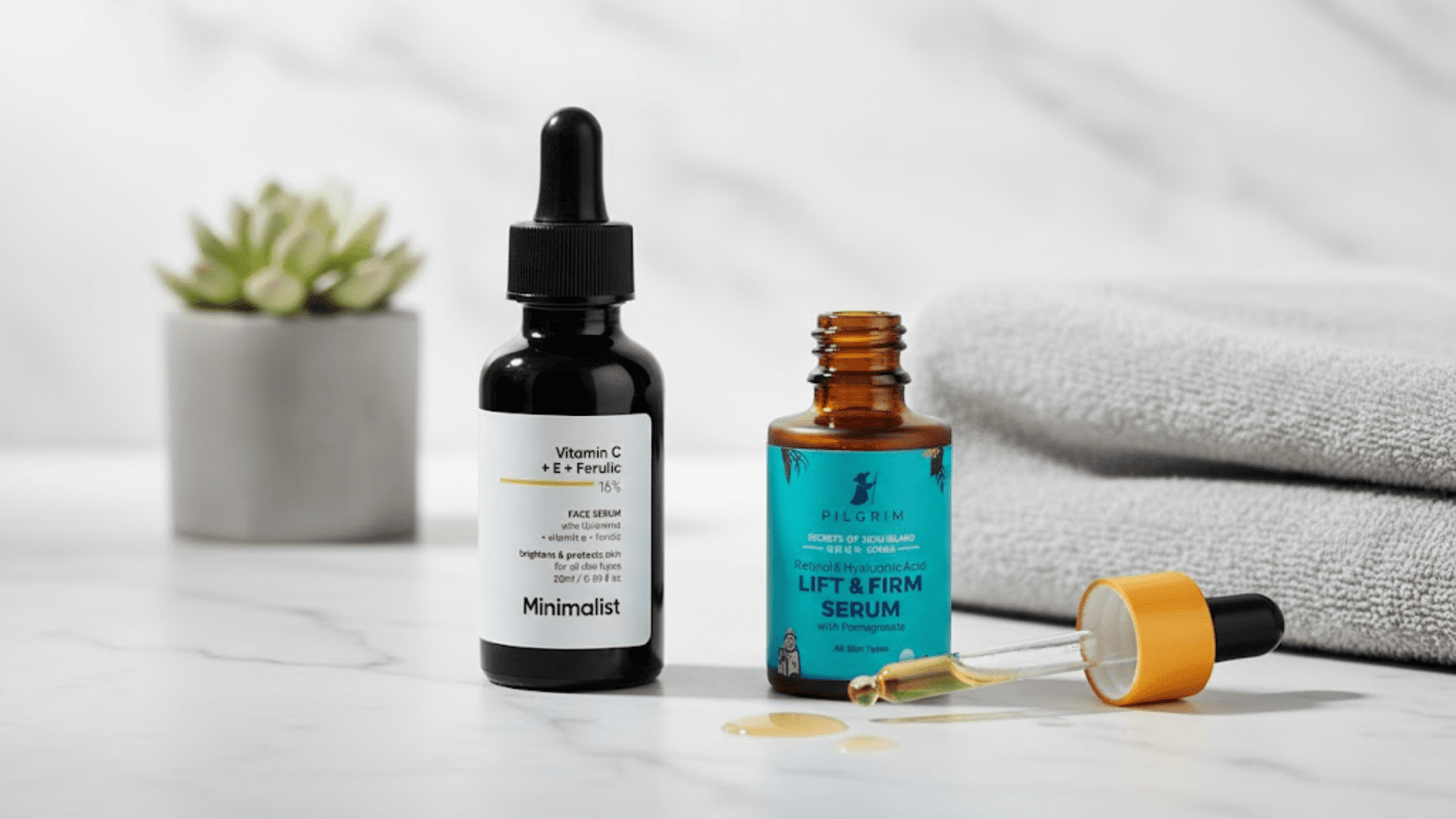
Yes, many people can use vitamin C and retinol together if they do it correctly.
The real challenge isn’t that these ingredients “cancel each other out.” That’s a myth. The issue is managing irritation, especially when you’re new to either one.
The best approach for most people is simple: vitamin C in the morning and retinol at night. This AM/PM split is effective and gentle on your skin.
Advanced users with healthy skin barriers can try using both in the same routine. But go slow and use low-strength products.
Best approach by skin type:
- Beginners: Split AM/PM
- Sensitive skin: Alternate days
- Experienced users: You may be able to tolerate them well in the same week, but many people still prefer separating them (AM/PM) or alternating nights to reduce irritation.”
Benefits of Using Vitamin C and Retinol Together
When you use vitamin C and retinol together (in separate routines), they complement each other beautifully.
Vitamin C Handles the Daytime Shift
It provides powerful antioxidant protection against environmental stressors like pollution and free radicals.
Vitamin C also boosts your skin’s natural glow, helping you look more awake and radiant. When paired with sunscreen, it creates a strong defense against UV damage throughout the day.
Retinol Takes the Night Shift
While you sleep, retinol gets to work promoting skin cell renewal and repair. It smooths out rough texture over time and supports collagen production for firmer-looking skin.
Nighttime is ideal because retinoids can increase sun sensitivity, so they’re typically used at night, and sunscreen the next day is essential.
Combined Benefits
You can expect brighter, more even-looking skin tone, improved texture with fewer rough patches, reduced appearance of fine lines, and an overall more refreshed, healthy look.
Keep in mind that results take time. Stick with your routine for at least 6 to 12 weeks. And always wear sunscreen to protect your skin.
How to Layer Vitamin C and Retinol

This is the core of your routine. Let’s break it down step by step. The AM/PM Split method works best for most people. Use vitamin C in the morning and retinol at night.
Morning Routine (Vitamin C):
- Wash your face with a gentle cleanser.
- Pat skin dry with a clean towel.
- Apply 3 to 4 drops of vitamin C serum to your face and neck.
- Give it a moment to absorb.
- Apply your moisturizer.
- Finish with sunscreen SPF 30 or higher. Never skip this step.
Night Routine (Retinol):
- Wash your face with a gentle cleanser.
- Pat skin dry and wait 5 to 10 minutes. Your skin must be completely dry.
- Apply a pea-sized amount of retinol to your face. Avoid the eye area.
- Let it absorb for a minute or two.
- Apply your moisturizer to lock in hydration.
Are There Any Side Effects of Vitamin C and Retinol?
Like any skincare ingredient, vitamin C and retinol can cause side effects, especially when you’re just starting. Common reactions include dryness, peeling, redness, stinging (with vitamin C), and tightness or sensitivity (with retinol).
Side effects usually happen when you use too much too soon, mix retinol with other strong ingredients like AHA or BHA, or have a damaged skin barrier.
If you notice burning, persistent redness, swelling, or a rash-like reaction, stop using these products right away. Go back to basics for a few days: gentle cleanser, simple moisturizer, and sunscreen.
Let your skin fully heal before trying again.
Dos and Don’ts of Using Vitamin C and Retinol Together
Want quick tips you can follow right away? This table breaks down the essential dos and don’ts for using vitamin C and retinol safely and effectively.
| Dos | Don’ts |
|---|---|
| Use vitamin C in the morning | Use both at full strength from day one |
| Use retinol at night | Apply retinol to damp skin |
| Start with low concentrations | Mix retinol with AHA/BHA in the same session |
| Introduce one product at a time | Skip sunscreen while using retinol |
| Wait for skin to dry before applying retinol | Expect results overnight |
| Always wear SPF 30 or higher daily | Use multiple strong treatments together |
| Patch test new products first | Ignore signs of irritation |
| Give your skin 6 to 12 weeks to adjust | Push through burning or persistent redness |
Keep this table handy as a quick reference. When in doubt, go slow and let your skin lead the way.
Sensitive Skin and Barrier Repair Approach

This section is for you if you have rosacea-prone, dry, reactive, or over-exfoliated skin.
Step 1: Build a Barrier-First Routine
Before adding any treatments, get these basics right:
- Use a gentle, fragrance-free cleanser.
- Apply a ceramide-rich moisturizer to strengthen your skin barrier.
- Wear sunscreen every single day with no exceptions.
Tip: Stick with this simple routine for at least one week before introducing treatments.
Step 2: Introduce Vitamin C Slowly
- Choose a gentler derivative like sodium ascorbyl phosphate.
- Pick a lower strength (around 10% or less).
- Apply every other morning, not daily.
- Watch for any redness or stinging for over 2 weeks.
Step 3: Add Retinol Carefully
- Start with once a week only.
- Use a low-strength formula (0.25% or less).
- Always apply to completely dry skin.
- Build up slowly over 4 to 6 weeks.
Be patient. Sensitive skin needs extra time to adjust; slow and steady wins.
Conclusion
So, can you use vitamin C and retinol together? Absolutely, when you do it the right way.
The best routine for most people is simple. Use vitamin C in the morning to brighten and protect. Use retinol at night to renew and smooth. And wear sunscreen every single day to preserve your results.
Start slow, stay consistent, and give your skin 6 to 12 weeks to show real changes. Don’t rush the process.
Ready to build your perfect routine? Drop a comment below with your skin type, and we’ll help you out. Or check out our resources on choosing the best vitamin C serum and finding the right retinol strength for beginners.