


Denim lovers often hear the term “selvedge” thrown around, but what does it actually mean? What is selvedge denim, and why do enthusiasts swear by it?
There’s something special happening at the edges of this fabric. It’s not just another marketing buzzword; the difference lies in how it’s made and why it lasts.
Readers will learn about the craftsmanship behind selvedge denim, the process that makes it stand out, and what all the fuss is really about for serious denim enthusiasts.
What is Selvedge Denim?
Selvedge denim gets its name from “self-edge,” referring to the tightly woven band running along both edges of the fabric. This edge prevents fraying and unraveling, which regular denim can’t do on its own.
Traditional shuttle looms create this sealed edge during the weaving process. The fabric comes off the loom as a continuous piece with finished sides.
Most mass-produced denim uses modern projectile looms that cut the fabric, leaving raw edges that need treatment. Selvedge denim stands apart because those clean edges signal old-school manufacturing methods and superior durability that denim fans recognize instantly.
How to Identify Selvedge Denim
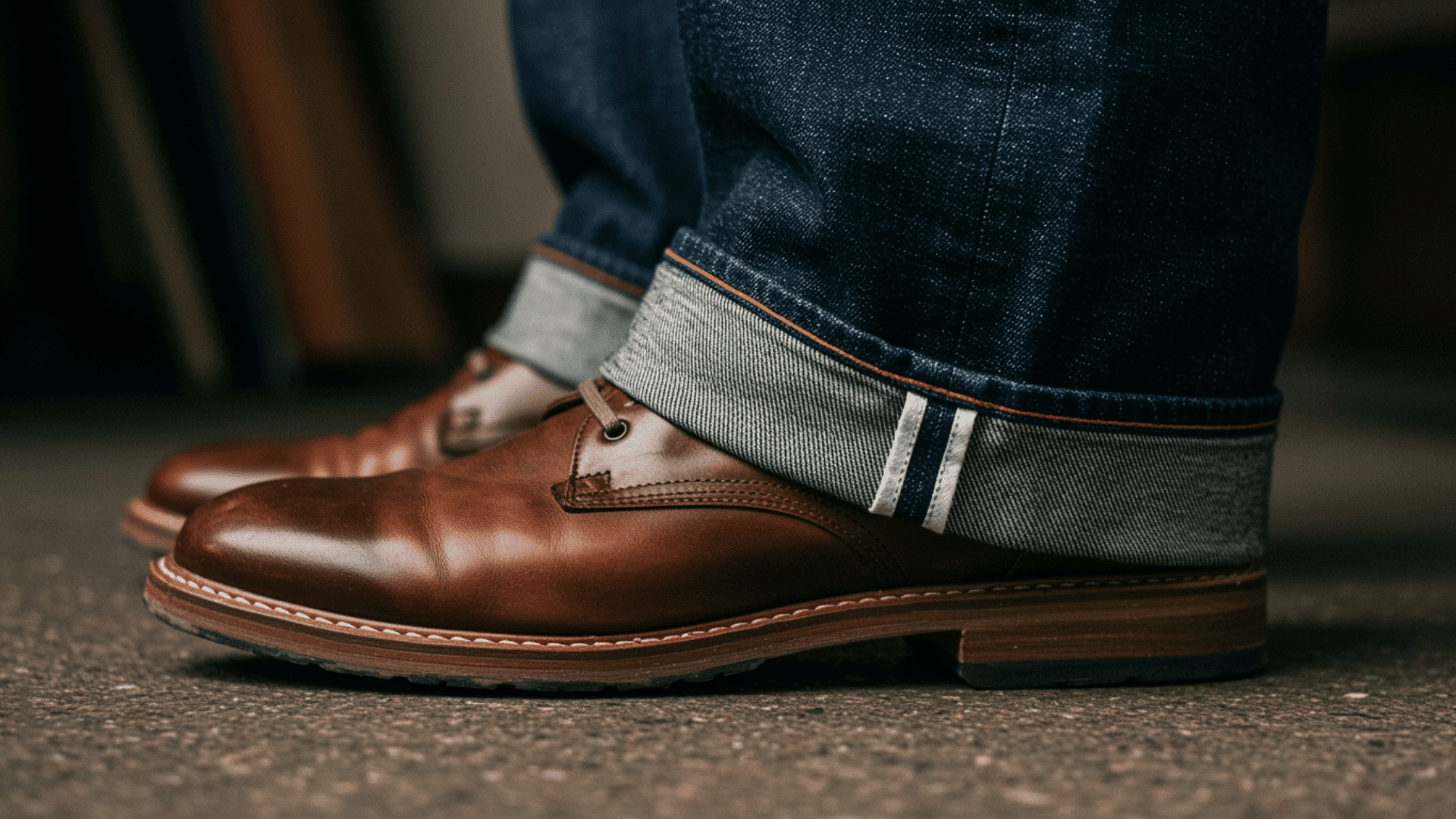
Spotting authentic selvedge denim doesn’t require expert knowledge. A few telltale signs separate the real deal from regular jeans, and they’re easier to find than most people think.
- Look for the colored selvage line: Turn up the cuff and check the outseam for a colored thread running along the edge, typically red, but sometimes white, blue, or yellow.
- Check the hem construction: Authentic selvedge jeans feature a clean-finished edge without additional stitching or overlocking on the outseam.
- Feel the fabric weight: Selvedge denim typically weighs more than mass-produced options, ranging from 12 to 21 ounces per square yard.
- Examine the denim weave: Hold it up to light and notice the tighter, more uniform weave pattern compared to standard denim.
- Read the label: Manufacturers proudly advertise selvedge construction, often mentioning shuttle loom production or Japanese mills
History of Selvedge Denim
Selvedge denim has roots stretching back over a century. The fabric’s journey from workwear staple to premium material reflects changing manufacturing practices and cultural shifts in fashion.
| Era | Development | Impact |
|---|---|---|
| Late 1800s | Shuttle looms produce narrow-width denim with self-finished edges | Creates durable workwear for miners and laborers |
| 1950s-1960s | American mills dominate production using traditional methods | Denim becomes mainstream fashion beyond workwear |
| 1970s-1980s | Projectile looms replace shuttles for faster, cheaper production | Selvedge denim nearly disappears from the market |
| 1990s | Japanese mills revive shuttle loom techniques | Collectors and enthusiasts drive the premium denim movement |
| 2000s-Present | Global resurgence of artisanal denim brands | Selvedge becomes a symbol of quality craftsmanship |
How Selvedge Denim is Made
The magic of selvedge denim happens on looms that most manufacturers abandoned decades ago. Understanding the weaving process reveals why this fabric commands premium prices and dedicated followers.
1. Traditional Shuttle Looms
Vintage shuttle looms date back to pre-1950s technology, yet they’re still the gold standard for quality denim. A wooden shuttle carries the weft thread back and forth across the warp threads, creating interlocking patterns.
This motion produces the self-finished edge as threads loop back continuously rather than being cut. The process runs significantly slower than modern alternatives, about 150 picks per minute compared to 1,000-plus on projectile looms.
2. Modern Projectile Looms
Projectile looms revolutionized denim production through speed and efficiency. Metal grippers shoot the weft thread across at lightning pace, dramatically increasing output but leaving raw, frayed edges. Manufacturers must cut and finish these edges separately, removing the self-sealed quality.
Selvedge denim carries a distinct character and durability that projectile-loomed fabric can’t match. Mass-market brands favor this method because it produces jeans faster and cheaper, sacrificing traditional craftsmanship for volume.
3. The Japanese Revival
Japan rescued shuttle loom technology when American mills discarded it during the 1970s-1990s. Visionaries purchased vintage looms and mastered techniques Western manufacturers had abandoned.
The “Osaka 5” designers, including brands like Evisu and Studio D’Artisan, spearheaded this revival, moving denim to art form status.
Japanese mills now produce the world’s finest selvedge because they have perfected slow weaving methods, premium cotton selection, and natural indigo dyeing processes that create unmatched texture and fading patterns.
Difference Between Selvedge and Regular Denim
The gap between selvedge denim and regular denim goes beyond price tags. Manufacturing methods, durability, and fabric characteristics create distinct experiences that separate these two types of denim fundamentally.
| Feature | Selvedge Denim | Regular Denim |
|---|---|---|
| Loom Type | Vintage shuttle looms | Modern projectile looms |
| Edge Finish | Self-sealed with colored thread | Cut and overlocked edges |
| Production Speed | 150 picks per minute | 1,000+ picks per minute |
| Fabric Weight | 12-21 oz per square yard | 8-12 oz per square yard |
| Durability | Exceptionally long-lasting, improves with age | Wears out faster, prone to fraying |
| Price Range | $150-$500+ per pair | $30-$100 per pair |
How to Style Selvedge Denim
Selvedge denim deserves styling that shows off its quality without overthinking the look. These jeans work across different occasions and seasons, making them surprisingly evergreen.
1. Casual Weekend Looks

Pair selvedge jeans with plain white tees or Henley shirts for effortless weekend style. Sneakers or boots complete the relaxed vibe without trying too hard. Roll up the cuffs to display that signature selvage line.
It’s a subtle detail that denim enthusiasts appreciate. Layer with denim jackets or flannel shirts when temperatures drop, creating classic Americana looks that never go out of style.
2. Smart-Casual Office Wear

Dark-wash selvedge denim transitions smoothly into business-casual environments when styled thoughtfully. Button-down shirts in solid colors or subtle patterns instantly elevate the look.
Leather dress shoes or clean minimalist sneakers keep things professional yet comfortable. Add a blazer or sport coat for meetings, and suddenly those jeans work in settings where regular denim wouldn’t belong at all.
3. Streetwear and Urban Style

Streetwear culture perfectly accepts selvedge denim’s real heritage and quality construction. Oversized hoodies, graphic tees, or vintage band shirts create contemporary urban looks.
High-top sneakers or chunky boots add edge while maintaining comfort for all-day wear. Accessorize with caps, chains, or crossbody bags to complete the aesthetic without overdoing it or looking costume-like.
The beauty of selvedge denim lies in its adaptability. These jeans move from coffee shops to concerts to casual Fridays without missing a beat. Invest in quality, and the styling options multiply effortlessly.
Why Selvedge Denim is Special
Selvedge denim fans aren’t just following trends; they’re investing in fabric that performs differently than mass-produced alternatives. The premium reputation stems from tangible benefits that become more apparent over time and with wear.
- Exceptional durability that outlasts regular jeans: The tightly woven construction and self-finished edges resist fraying and blowouts, meaning these jeans survive years of hard wear while cheaper options fall apart.
- Unique fading patterns tell personal story: High-quality indigo dye creates personalized wear marks, whiskers, and honeycombs that reflect individual movement patterns and lifestyle habits over months.
- Superior fabric density feels substantial: Heavier weight cotton (12-21 oz) provides structure and comfort that improves as the denim breaks in and molds to body shape naturally.
- Real craftsmanship preserves textile heritage: Shuttle loom production supports traditional manufacturing skills and artisan knowledge that modern fast fashion has nearly eliminated from the industry.
- Long-term value justifies higher cost: Spending $200-400 once beats replacing $50 jeans every six months, making selvedge a smarter investment for wardrobes.
Selvedge Denim Brands to Consider
Several brands have mastered the art of producing great selvedge denim, each bringing unique approaches to fabric and fit. From Japanese heritage mills to everyday options, these manufacturers offer the best choices across budgets and styles.
| Brand | Price Range | Known For |
|---|---|---|
| Pure Blue Japan | $300-$450 | Slubby textures and natural indigo dyeing |
| Studio D’Artisan | $250-$400 | Osaka 5 heritage and vintage reproductions |
| Momotaro | $300-$500 | Premium craftsmanship and signature pink inseam |
| Levi’s Clothing | $150-$300 | Real archive reproductions from original patterns |
| Todd Shelton | $200-$350 | Made-to-measure fits with domestic production |
| Naked & Famous | $150-$250 | Experimental fabrics and accessible pricing |
| A.P.C. | $200-$300 | French minimalism with Japanese denim |
| UNIQLO | $50-$100 | Kaihara Mill Partnership brings affordable quality |
| Kato | $250-$400 | Japanese fabric with California design sensibility |
| 3sixteen | $200-$300 | Clean cuts and versatile washes |
How to Care for Selvedge Denim
Proper care extends the life of selvedge denim and develops those coveted fading patterns. These jeans need different treatment than regular denim, but the maintenance routine stays surprisingly simple once established.
- Wait 6-12 months before the first wash to let raw selvedge mold to body shape and create natural wear patterns.
- Wash inside-out in cold water to preserve indigo dye and prevent excessive fading during cleaning cycles.
- Skip the dryer completely and air-dry jeans flat or hung to maintain shape and prevent shrinkage.
- Spot-clean minor stains with damp cloth and mild soap rather than washing after every wear.
- Hang or fold properly between wears in cool, dry places away from direct sunlight, which fades indigo.
- Welcome the natural aging process and let creases, fades, and whiskers develop organically over time.
The Bottom Line
Now the answer to what is selvedge denim becomes clear, it’s fabric that refuses to compromise on quality or craftsmanship. The self-finished edges, shuttle loom production, and superior construction create jeans that improve with age instead of falling apart.
Understanding these differences helps make smarter wardrobe investments that last years, not months. Those unique fading patterns tell your story while the durability keeps up with daily wear.
Quality costs more upfront, but replacing cheap jeans every season adds up fast. Ready to experience the difference firsthand? Invest in real selvedge jeans and know why denim enthusiasts won’t settle for anything less.