


You start taking creatine to improve your workouts, and a few weeks later, a new breakout appears. Naturally, one question comes to mind: does creatine cause acne?
I’ve seen this concern come up often among gym-goers, athletes, and people who are new to supplements.
While some users report skin changes after starting creatine, personal experiences do not always match what scientific research shows.
Acne is influenced by many factors, including hormones, genetics, skincare habits, diet, and training routines. Before blaming your supplement, it helps to look at the available evidence.
Understanding the facts can make it easier to decide what may actually be affecting your skin.
What Is Creatine and How Does It Work?
Creatine is a natural compound that helps your muscles produce energy during short, intense activities such as weightlifting, sprinting, and high-intensity workouts.
It works by helping your body replenish adenosine triphosphate (ATP), the primary energy currency of cells. When ATP levels are restored more quickly, your muscles can continue performing at a high level for longer periods.
Your body naturally produces creatine in the liver, kidneys, and pancreas, and you also get small amounts from foods like red meat and fish.
Creatine supplements, most commonly creatine monohydrate, provide additional creatine to increase muscle stores and support strength, power, and exercise performance.
Does Creatine Cause Acne? What Science Actually Says

Current scientific evidence does not show that creatine directly causes acne.
Although some people notice breakouts after starting creatine, researchers have not found human studies proving a cause-and-effect relationship.
The discussion continues because a small study reported that creatine supplementation increased dihydrotestosterone (DHT) levels, a hormone linked to acne in some individuals.
However, subsequent research has not confirmed that creatine consistently raises DHT levels or causes acne.
Most experts believe acne is influenced by factors like genetics, hormones, diet, and skincare habits. Based on the available research, creatine is not considered a proven trigger of acne, but individual experiences may vary.
For instance, a 2025 randomized controlled trial found that 12 weeks of daily creatine supplementation had no significant effect on DHT levels – a hormone linked to acne – in young men, challenging this suspected mechanism.
Benefits of Creatine Beyond Building Muscle
Creatine is one of the most researched sports supplements available today. While it is best known for supporting muscle growth, its benefits go beyond building muscle mass.
- Increased Strength and Power: Creatine helps your muscles produce energy more efficiently during short, intense activities. This can help improve strength and power during training.
- Better Exercise Performance: Higher creatine stores may help you perform more repetitions, lift heavier weights, or maintain workout intensity for longer.
- Improved Recovery: Some studies suggest creatine may help reduce muscle damage and support recovery after tough workouts.
- Brain and Cognitive Support: Creatine also plays a role in brain energy production and may support memory, focus, and mental performance.
- Strong Safety Record: Creatine has been studied for decades and is generally considered safe for healthy adults when used as recommended.
Although creatine offers several benefits, questions about its possible effects on skin health continue to spark debate, leading many people to ask whether it could contribute to acne breakouts.
Who Might Notice Breakouts While Taking Creatine?
Not everyone who takes creatine will experience breakouts. However, some people may be more likely to notice skin changes because of their existing acne risk factors rather than the supplement itself.
| GROUP | WHY THEY MAY NOTICE MORE BREAKOUTS |
|---|---|
| People with Naturally Oily Skin | Excess oil can clog pores more easily, increasing the likelihood of acne. |
| Teenagers and Those with Hormonal Acne | Hormonal fluctuations already make this group more prone to breakouts. |
| People Using Multiple Supplements | Products such as whey protein or pre-workouts may contribute to skin issues, making it harder to identify the cause. |
| People with a History of Frequent Acne | Those who regularly experience breakouts may be more sensitive to changes in diet, exercise, or supplement routines. |
These factors can increase the risk of acne even without creatine. If breakouts appear after starting the supplement, it’s worth considering your diet, skincare habits, and other supplements as possible contributors.
Other Reasons Your Skin Breaks Out on Creatine
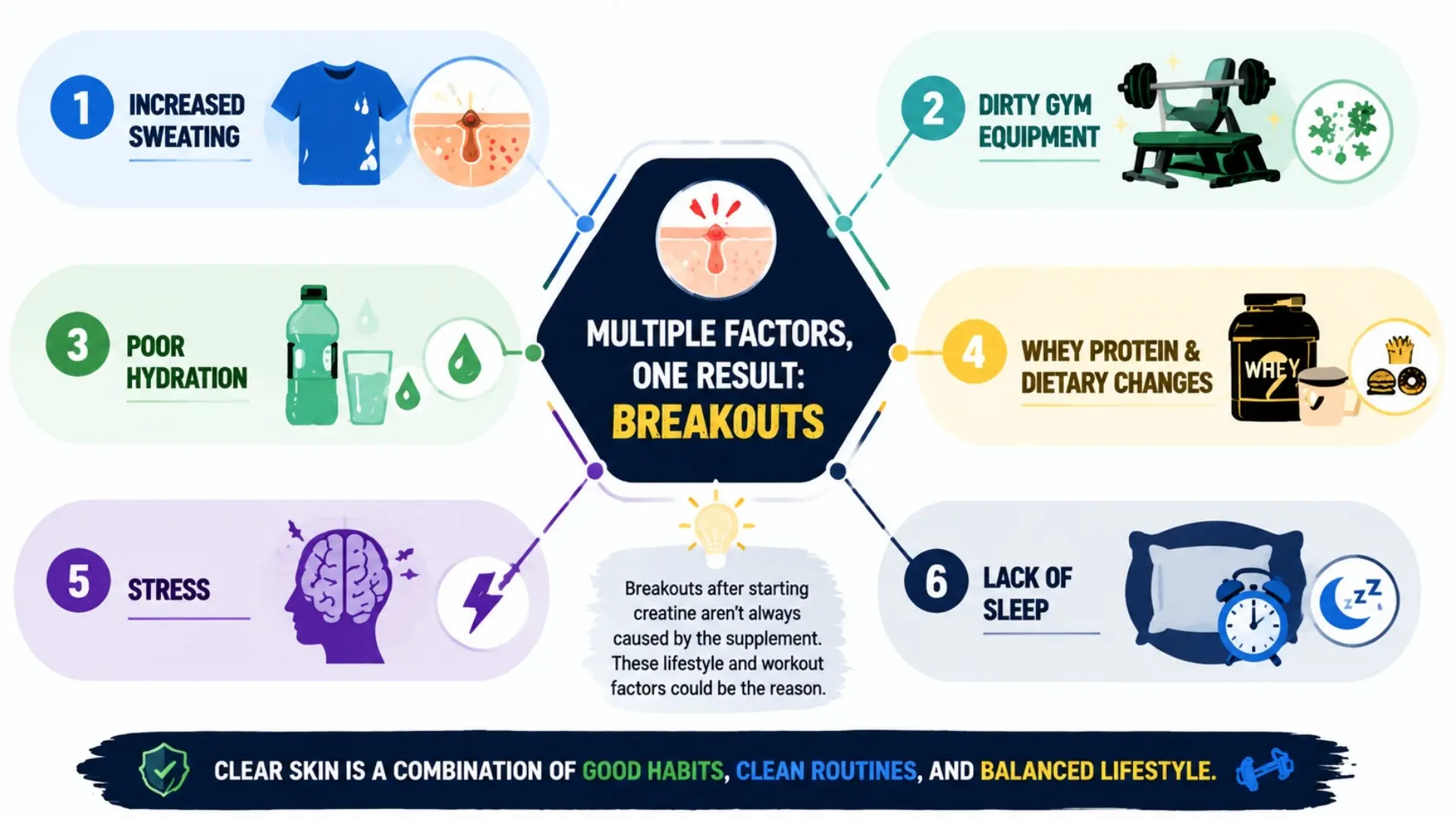
Breakouts that appear after starting creatine are not always caused by the supplement itself.
Many lifestyle and workout-related factors can affect skin health. Increased sweating during exercise can allow oil, dirt, and bacteria to build up on the skin, especially if workout clothes are not changed promptly.
Using gym equipment that is not cleaned regularly may also contribute to clogged pores. Poor hydration, infrequent cleansing, and irregular sleep are among the everyday habits that support healthy skin, and when any of these slip, breakouts can follow.
In addition, stress, lack of sleep, and more intense training can influence hormone levels, which may increase the likelihood of breakouts in acne-prone individuals.
How to Prevent Acne While Using Creatine Safely?
If you’re concerned about breakouts, a few simple habits can help support healthy skin while using creatine. Since acne is often influenced by multiple factors, focusing on your overall routine is usually more effective than stopping creatine right away.
- Follow Recommended Dosages: Stick to the dosage suggested on the product label or by a healthcare professional. Taking more creatine is unlikely to provide extra benefits.
- Shower After Workouts: Wash away sweat, oil, and bacteria as soon as possible after exercising to help keep pores clear.
- Manage Sweat and Oil Buildup: Use clean towels, avoid frequent face touching, and change out of sweaty clothes promptly.
- Support Skin Through Diet: Eat a balanced diet rich in fruits, vegetables, and other nutrient-dense foods that support overall skin health.
- Stay Consistent With Skincare: Cleanse your face regularly and use products suited to your skin type to help prevent clogged pores.
These habits cannot guarantee acne prevention, but they can help reduce common triggers that contribute to breakouts. If acne persists or becomes severe, consider speaking with a dermatologist for personalized advice.
Alternatives to Creatine: What Can You Take Instead?
Creatine is one of the most effective sports supplements available, but it is not the only option for supporting workout performance.
Depending on your goals, several alternatives may help with endurance, recovery, focus, or muscle growth.
| ALTERNATIVE | WHAT IT IS | PRIMARY BENEFIT | BEST FOR |
|---|---|---|---|
| Beta-Alanine | An amino acid that helps increase muscle carnosine levels | Helps reduce muscle fatigue during intense exercise | Endurance and high-intensity training |
| Citrulline Malate | A compound made from citrulline and malic acid | Supports blood flow and may reduce muscle soreness | Workout performance and recovery |
| Caffeine | A natural stimulant found in coffee, tea, and supplements | Improves energy, alertness, and focus | Training intensity and mental focus |
| Protein Powder | A concentrated source of dietary protein | Supports muscle repair and growth | Muscle building and recovery |
| Essential Amino Acids (EAAs) | Amino acids the body cannot produce on its own | Helps support muscle protein synthesis | Recovery and muscle maintenance |
No supplement works exactly like creatine, but these alternatives may support specific fitness goals.
Should You Stop Creatine If You Get Acne?
Not necessarily. If you develop mild acne after starting creatine, it may be worth improving your skincare routine and monitoring your skin for a few weeks before making any changes.
For moderate acne, consider other possible triggers first, such as diet, whey protein, stress, sleep habits, or increased training intensity, and look into targeted ingredients that calm skin inflammation before deciding to stop creatine altogether.
Since there is no strong evidence that creatine directly causes acne, stopping it may not solve the problem.
However, if your acne becomes severe, painful, or continues to worsen, consult a dermatologist for professional advice. In most cases, it makes sense to look at the bigger picture before deciding to stop using creatine.
The Ending Note
So, does creatine cause acne? Based on current research, there is no strong evidence that creatine directly triggers acne.
While some people may notice breakouts after starting supplementation, other factors such as hormones, oily skin, diet, stress, sleep habits, and workout routines are often involved.
If acne develops, it may be worth reviewing your overall lifestyle and skincare routine before deciding to stop creatine. Paying attention to patterns can help you identify the most likely cause.
Have you noticed any skin changes while taking creatine?
Share your experience, questions, or tips in the comments below and join the conversation.
Frequently Asked Questions
Is It Safe to Take Creatine Every Day for My Skin?
Yes, daily creatine at 3–5 grams is considered safe for healthy adults. It does not harm skin and may support recovery. Always stay hydrated and maintain good hygiene to prevent sweat-related breakouts.
If I Sweat More During Workouts, Will That Clog My Pores and Cause Acne?
Yes. Creatine helps you train harder, increasing sweat. Sweat mixed with bacteria and oil can clog pores. This workout-related factor, not the supplement itself, is likely the real reason for breakouts.
Does the Brand or Form of Creatine Affect Acne Risk?
No. Pure creatine monohydrate is the most researched form. Acne concerns are not linked to brand or form but rather to hygiene, sweat, and other supplements, such as whey protein taken alongside creatine.