



You’ve probably noticed it. A few days of good sleep, low stress, and some intentional evening habits — and your skin just looks different. Clearer. More even. Like something quietly reset overnight.
That’s not a coincidence. Think about what the two hours before bed look like for most people and whether any of it gives skin a real chance to recover.
What Happens to Your Skin at Night
Daytime skin is essentially on guard duty. UV, pollution, temperature swings, friction — it’s managing all of it simultaneously. Cortisol keeps the whole system in reactive mode, and one thing cortisol quietly does is push repair down the priority list. Maintenance gets shelved when the body thinks it’s still dealing with threats.
Once the sun goes down, the chemistry shifts. Cortisol backs off. Body temperature at the skin surface nudges upward, circulation picks up, and cell turnover accelerates. Growth hormone — the stuff that drives actual tissue repair and collagen production — releases in its biggest surge during early deep sleep. There’s also a less-discussed overnight quirk worth knowing: the skin loses moisture faster at night than during the day. The barrier becomes more permeable, water escapes more readily, and by morning skin can feel tight and depleted if nothing was applied to slow that process.
The gap between finishing your day and falling asleep is when you either support all of this or work against it.
Why Stress Is a Skin Problem
Cortisol doesn’t just slow repair — it actively damages. Collagen breaks down faster under chronic cortisol exposure. Barrier integrity drops. Oil production increases. Inflammation runs higher. The result shows up on the face in ways that no topical product fully corrects: persistent dullness, unexpected breakouts, a texture that looks rough regardless of what’s been applied.
Reducing cortisol in the evening isn’t a wellness indulgence. It’s a functional skincare decision — probably more impactful than half the products in most people’s routines. The problem is that most evenings don’t actually wind down. Screen time, mental to-do lists, late emails — it’s the same stress load wearing a different hat. Cortisol stays high long past the point where the body should have shifted gears, and the repair window shrinks accordingly.
Rituals that create a genuine physiological shift matter here. Temperature is one of the most reliable levers — soaking in warm water raises skin surface temperature briefly, then the cooling that follows afterward nudges the nervous system toward the parasympathetic state. Heart rate drops. Cortisol follows.
The Bath as a Skincare Step
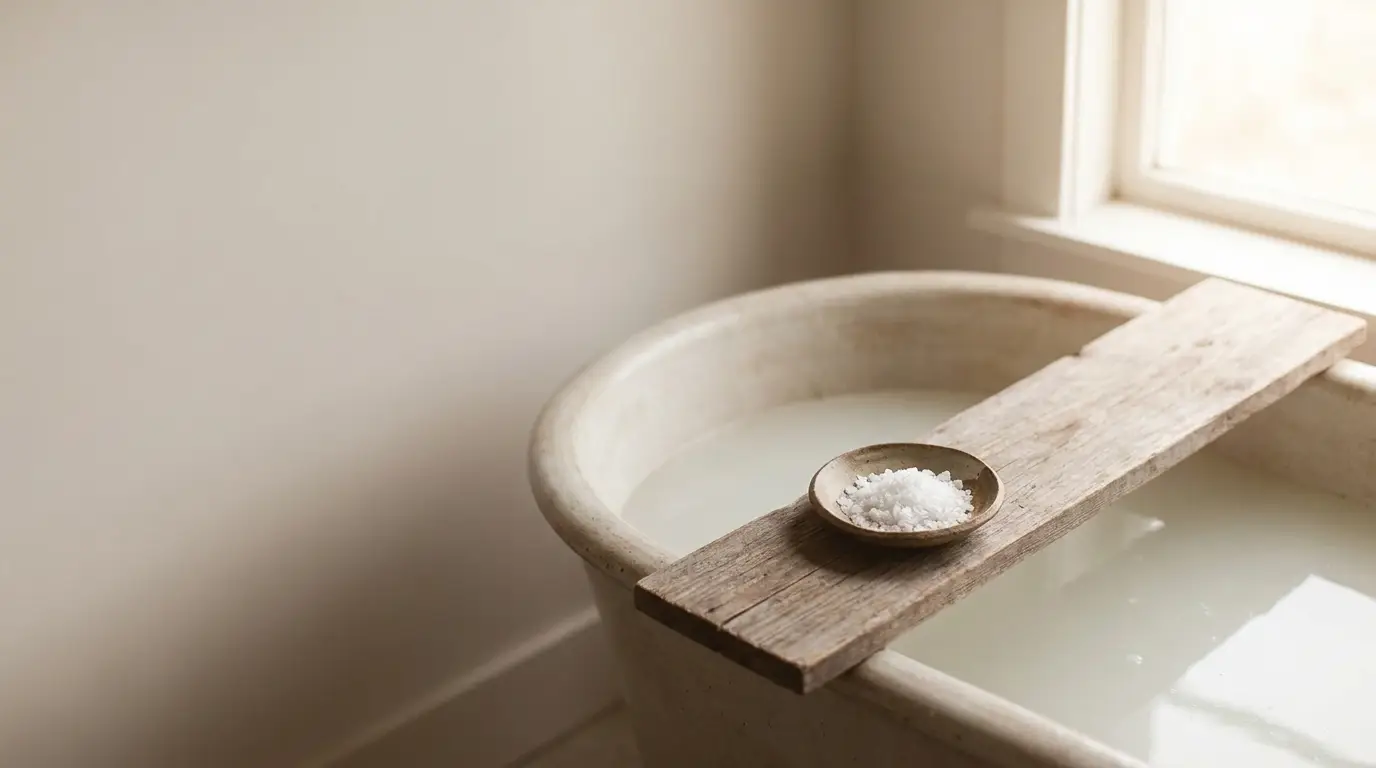
This is where epsom salt soaks become relevant beyond simple relaxation. Magnesium sulfate — what epsom salt actually is — has a documented relationship with skin barrier function. Transdermal magnesium absorption is real, if modest, and skin that’s chronically reactive or inflamed tends to respond to mineral soaking in ways that purely topical treatments don’t replicate. Magnesium plays a role in regulating inflammatory pathways and supporting the proteins that hold the barrier together. It’s not a miracle — it’s a missing input that many people aren’t getting enough of.
Water temperature shapes how much benefit you actually get. Around 38–40°C softens the outermost skin layer just enough to improve what absorbs afterward, without the barrier disruption that comes from water that’s too hot. Keep it to around twenty minutes. Past that point, the lipid layer starts taking damage — hot water dissolves the natural oils holding the surface together, and extended soaking tips from beneficial into depleting.
Timing the post-bath step is where most people lose the advantage. Damp skin absorbs significantly better than dry skin — the surface is temporarily more permeable and receptive. A body oil or rich moisturizer applied within a minute or two of stepping out locks in that hydration window. Wait until the skin is fully dry and you’ve missed it.
Easy habit to stack: Keep your post-bath moisturizer on the bathroom shelf, not in the bedroom. The two-minute walk gives skin time to cool but not fully dry — exactly the right moment to apply it.
Building the Routine Around Sleep
The bath is one piece. What surrounds it either compounds or cancels the benefit.
Late-night screen use is the most common saboteur — blue light suppresses melatonin, but the bigger issue is that scrolling keeps the brain in an alert, reactive state. Cortisol doesn’t drop on command; it needs the mental input to actually stop. Eating late is a less-obvious factor: digestion raises core body temperature and keeps metabolic activity elevated at exactly the point when the body should be cooling down for sleep. A cooler bedroom — somewhere around 16–19°C — supports the natural temperature drop that anchors deep sleep and extends the growth hormone window overnight.
One small shift that makes a real difference: apply your evening skincare after the full wind-down ritual, not during the busy part of the evening. Products applied while you’re still half-distracted, phone nearby, mentally elsewhere — they’re going onto skin that hasn’t shifted modes yet. The absorption is the same, but the hormonal conditions for repair haven’t been set. A few minutes of genuine quiet between your routine and sleep isn’t wasted time. It’s part of the protocol.
What Consistent Evenings Do Over Time
One good night doesn’t change skin visibly. But three to four weeks of evenings that genuinely lower cortisol, support the barrier, and protect deep sleep — that accumulates into something product routines rarely achieve on their own.
The skin that looks effortlessly clear and rested on certain people usually traces back here. Not better genes or more expensive serums. Just evenings that are actually doing their job.