

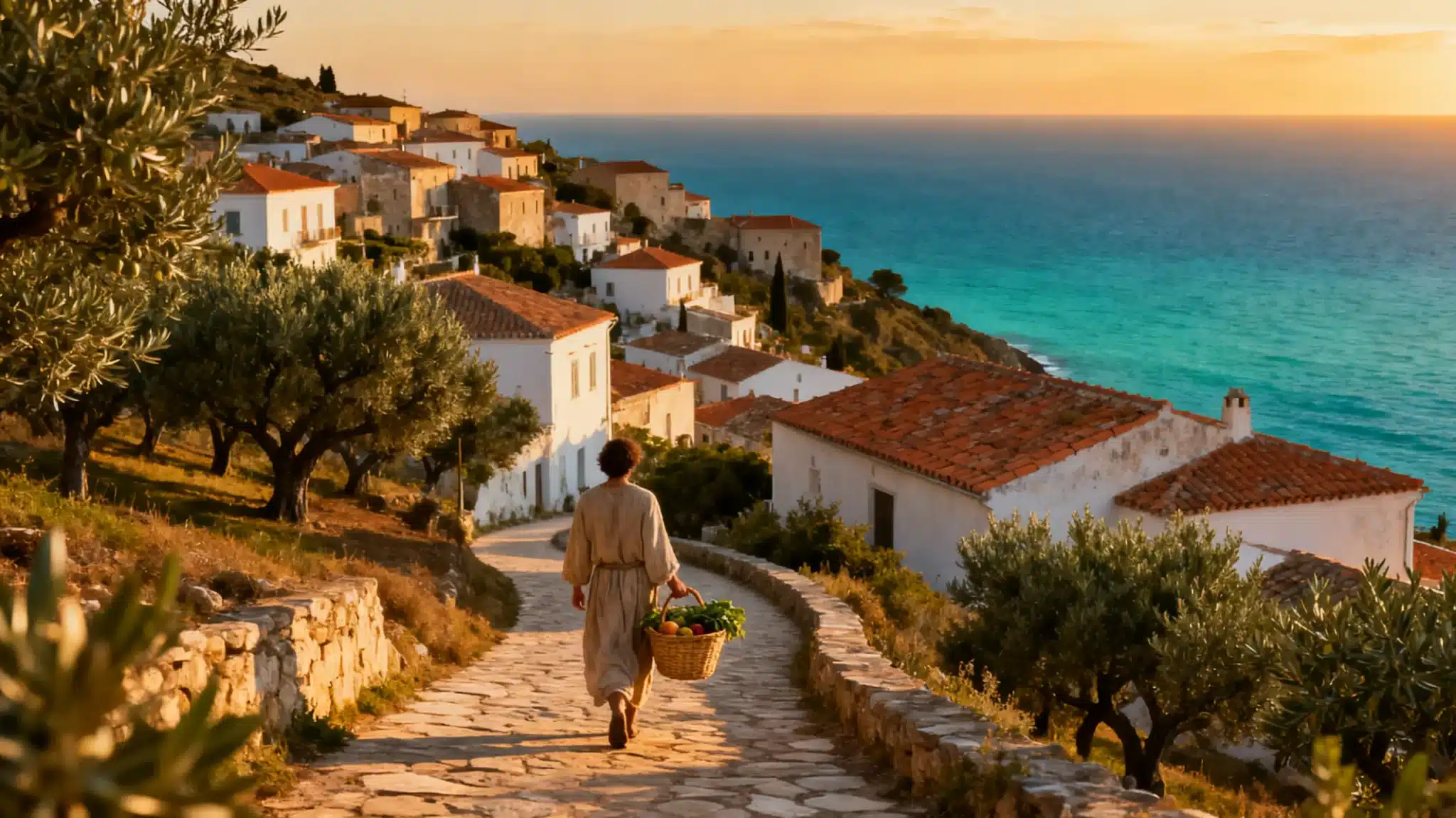

Most people imagine slow living as a retirement fantasy — somewhere warm, unhurried, and vaguely Mediterranean. But the reality in 2026 looks quite different. Slow living abroad has quietly become a deliberate lifestyle strategy, one that combines lower-stress routines, genuine community, environmental awareness, and smart long-term residency planning.
It is not about escaping your life. It is about designing a better one.
And increasingly, that means asking a different set of questions. Not just “where is cheapest?” but “where can we actually build something sustainable — for our health, our family, and our future mobility?”
That is a much harder question to answer. So here are seven countries that answer it well.
Why Slow Living Is Rising Right Now
The shift started gaining real momentum during the remote work revolution, but it has deepened considerably since. Research on digital nomadism published through 2025 consistently points to the same pattern: people are moving away from constant travel and toward slower rhythms, temporary home bases, and genuine community integration.
The “hustle everywhere” model burns people out. And for families especially, the appeal of a quieter, more grounded international life has become less idealistic and more practical. Lower cost of living, better access to nature, stronger neighborhood culture — these things have measurable effects on wellbeing that are hard to replicate in a high-pace urban environment.
The other driver is residency planning. Golden visa programs and residence-by-investment routes have matured considerably, making it far more accessible to build a legal, long-term home base abroad rather than just visiting for 90 days at a time.
How to Evaluate a Destination Beyond Aesthetics
Pretty Instagram photos are not a residency strategy. When evaluating a slow-living destination seriously, the variables that actually matter are more practical than most lifestyle articles admit.
Healthcare access is arguably the most important filter — both the quality of public systems and the realistic cost of private insurance. For families, international school availability and quality follows closely behind. Digital infrastructure matters more than people expect; patchy internet in a rural paradise becomes a real problem within a week.
Then there are the residency mechanics: minimum investment thresholds, physical presence requirements, renewal cycles, and the pathway (if any) toward permanent residency or citizenship. These details determine whether a destination is a lifestyle choice or a lifestyle trap.
The best slow-living destinations score well across all of these dimensions — not just the aesthetic ones.
The 7-Country Shortlist
1. Portugal — The Atlantic Pace
Portugal keeps appearing at the top of these lists for good reason. It combines coastal lifestyle appeal, genuinely compact cities, and one of Europe’s most established residency-by-investment frameworks.
Outside Lisbon and Porto, Portugal feels remarkably unhurried. The Alentejo region, the Silver Coast, the Algarve — all offer a slower tempo with strong local food culture, walkability, and affordable cost of living by Western European standards.
Portugal’s Golden Visa continues to operate in 2026, with routes focused on qualifying investment funds (from €500,000), cultural support (from €250,000), science, and job creation. Real estate no longer qualifies. The permit is renewable — two years initially, then in three-year cycles — with citizenship eligibility after five years.
For remote workers and families seeking long-term EU residency without sacrificing quality of life, Portugal remains arguably the strongest single option on this list.
2. Greece — Sea, Pace, and Sense of Place
Greece is not just cheap. That framing undersells it considerably. What Greece actually offers is something harder to quantify: a lifestyle density that is genuinely low. More sea, more outdoor culture, more time at the table. Island communities and mainland villages retain a rhythm that larger Mediterranean countries have largely lost to tourism.
Greece’s Golden Visa grants a five-year renewable residence permit. The entry threshold for specialized real-estate conversions and restorations starts at €250,000, with higher thresholds applying to standard residential property in most areas.
For families or couples who want the Mediterranean pace without constant crowds, Greece — particularly off-season and outside Athens — delivers something very close to the slow-living ideal.
3. Malta — Compact, Efficient, and English-Speaking
Malta is the outlier on this list in the best possible way. It is tiny, exceptionally well-connected, and one of the few EU member states where English is an official language — which dramatically reduces the administrative friction that makes life abroad genuinely difficult.
The Malta Permanent Residence Programme is a permanent residency route for non-EU nationals. Requirements include either a property purchase (€375,000) or an annual lease (€14,000), a government contribution of €37,000, an administrative fee of €60,000, and a €2,000 charitable donation. Applicants must also demonstrate total assets of at least €500,000, including €150,000 in financial assets.
For families who want Mediterranean weather and culture but need strong infrastructure, international schooling, and easy travel connectivity, Malta fills a gap that larger countries simply cannot.
4. Cyprus — Sun-Led, Low-Friction Living
Cyprus combines a mild climate, beach-oriented daily routines, and one of the more accessible EU-adjacent residency pathways currently available. The permanent residency route is real-estate based, with a minimum investment of approximately €300,000, plus proof of income and maintenance conditions.
What makes Cyprus genuinely compelling for slow living is its scale. It is a small island with smaller cities — Limassol, Paphos, Nicosia — that offer strong services without the noise and density of larger capitals. Healthcare access is solid, the expat community is established, and the day-to-day pace is noticeably more relaxed than mainland European alternatives.
For readers who want a sun-led, family-friendly base with low bureaucratic friction, Cyprus is consistently underrated.
5. Italy — Where Slow Living Is a Cultural Default
Long lunches. Local markets. Heritage towns where the architecture itself slows you down. Italy does not need to be branded as a slow-living destination — it simply is one, at a cultural level that predates the lifestyle trend by centuries.
The real story for international residents in Italy is rural living: the deep south, the hilltowns of Umbria and Le Marche, the villages of Calabria and Basilicata where €1 house schemes once attracted global attention. Italy’s appeal is localism — food systems rooted in regional identity, craftsmanship, and a relationship with place that few countries can match.
Italy’s residency-by-investment options exist and are evolving, so exact program thresholds should always be verified with a specialist before planning. The lifestyle case, however, needs no verification.
6. Spain — Social Slow Living
Spain is the “social” entry on this list — the destination for people who want slow living but not isolation. The neighborhood culture in Spanish cities and coastal towns is genuinely strong. People gather, eat late, walk everywhere, and spend time together in ways that feel structurally built into daily life rather than aspirational.
Spain offers lifestyle diversity that few countries can match: urban Barcelona and Madrid for those who want vibrancy, the Canary Islands and Balearics for year-round warmth, and quieter regions like Extremadura and rural Andalusia for those seeking genuine calm.
Spain’s residency landscape continues to evolve, but it remains one of the most relevant long-stay destinations for remote workers, retirees, and internationally mobile families seeking Mediterranean life with strong expat infrastructure.
7. Costa Rica — The Sustainability Benchmark
Every list like this needs one destination that challenges the Mediterranean frame entirely. Costa Rica is that destination.
It runs on over 98% renewable electricity. It has legally protected over a quarter of its land as national parks and reserves. The concept of “Pura Vida” — pure life — is not a tourism slogan; it is a genuine cultural orientation toward simplicity, nature, and community that aligns almost perfectly with the slow-living philosophy.
Costa Rica offers accessible residency options, including pensionado and rentista categories with relatively modest income requirements. For readers who prioritize environmental values as much as residency mechanics, Costa Rica is the standout choice outside of Europe.
Comparing Your Residency Options
Residency-by-investment programs are not interchangeable. They differ significantly in investment type, minimum thresholds, physical presence requirements, processing timelines, and pathways toward permanent status or eventual citizenship.
Portugal and Greece offer strong EU residency routes with relatively low physical presence requirements — making them particularly attractive for people who want a legal European base without committing to full-time relocation immediately. Malta offers permanent residency rather than a time-limited permit. Cyprus offers faster processing. Spain and Italy require more active engagement with the local tax and residency system.
Getting the right program matched to your actual lifestyle intentions — not just your investment budget — is where the real planning work happens. Firms like Global Residence Index, which specializes in residence- and citizenship-by-investment programs across all seven countries discussed here, are well-positioned to help you navigate that matching process. Their pre-screening approach is particularly useful for identifying potential complications before they become expensive problems. Vancis Capital, their parent company, brings additional depth for clients with more complex cross-border investment structures.
A Practical Checklist for Families and Remote Workers
Before committing to any destination, work through these filters honestly:
- Healthcare: What is the realistic cost of private health insurance? Is the local public system accessible to residents?
- Education: Are there quality international schools nearby, or will your children need to integrate into a local-language system immediately?
- Internet and infrastructure: Test actual broadband speeds, not advertised ones. Check coworking availability if you work remotely.
- Tax residency: Understand what triggers tax residency in your chosen country and how that interacts with your home country obligations.
These are not glamorous questions. But they are the ones that determine whether slow living abroad actually stays slow — or becomes a logistical obstacle course.
Final Thoughts
Slow living abroad is not a trend that is going away. If anything, the combination of remote work normalisation, rising urban stress, and maturing golden visa programs has made it more structurally viable than at any point in recent history.
The seven countries on this list — Portugal, Greece, Malta, Cyprus, Italy, Spain, and Costa Rica — each offer a genuinely different version of sustainable international life. The right one depends entirely on your priorities: EU mobility, family needs, environmental values, social culture, or simply the pace of a particular place.
The lifestyle is the easy part to imagine. The residency strategy is where specialist guidance pays for itself. For tailored advice on which program fits your specific situation, you can visit here at Global Residence Index to explore your options with a team that has worked through all seven of these programs in detail.