Formal pieces often sit in the back of the wardrobe waiting for an occasion that rarely arrives. Tailored blazers, silk blouses, and structured midi dresses tend to be treated as event-only investments, when in reality they can do a great deal of work in everyday rotation.
The shift has been gradual but unmistakable. As workplaces relax and social calendars blur the line between dressed and undressed, the question is no longer whether to wear formal clothing casually but how to do it without looking either over-prepared or carelessly thrown together.
Why Dressing Down Is a Skill, Not a Shortcut

Source: https://unsplash.com/photos/a-woman-sitting-in-front-of-a-building-gPaT3qVyvBk
Dressing down a formal outfit is not the same as simply making it less formal. Stylists describe the process as moving a piece a few notches along a dressiness scale rather than dragging it from one end to the other. A formal dress, viewed as a ten on that scale, will never become a one, and the attempt usually backfires.
The objective is to take a piece out of its event-specific context and place it into a cooler, more relaxed setting. That requires balance rather than reduction. Stripping away every formal element typically leaves an outfit looking confused, while keeping the original piece intact and adjusting what surrounds it tends to produce a more coherent result.
Start With the Shoes
Footwear changes the register of an outfit faster than any other element. A pair of heels reads as formal almost regardless of what sits above them, while a flat or a sandal pulls the entire look toward the everyday end of the spectrum.
The trick is choosing a casual shoe that still has polish, rather than defaulting to the most informal option available. Loafers, ballet flats, clean white sneakers, and structured sandals all do this well, depending on the silhouette of the original piece. A tailored midi dress paired with a clean leather loafer reads as deliberate, while the same dress with worn-out trainers reads as an afterthought.
Australian label Billini has built much of its reputation on this kind of versatile middle ground, sitting between sleek occasion footwear and outright casual wear. A pair from the Billini women’s shoes and sandals range, for instance, can soften a structured blazer dress without flattening it entirely, which is precisely the effect a successful dress-down hinges on.
The Power of the Third Piece

Source: https://unsplash.com/photos/woman-in-blue-denim-jacket-standing-beside-red-and-white-wall-CLC3g7Qlnn4
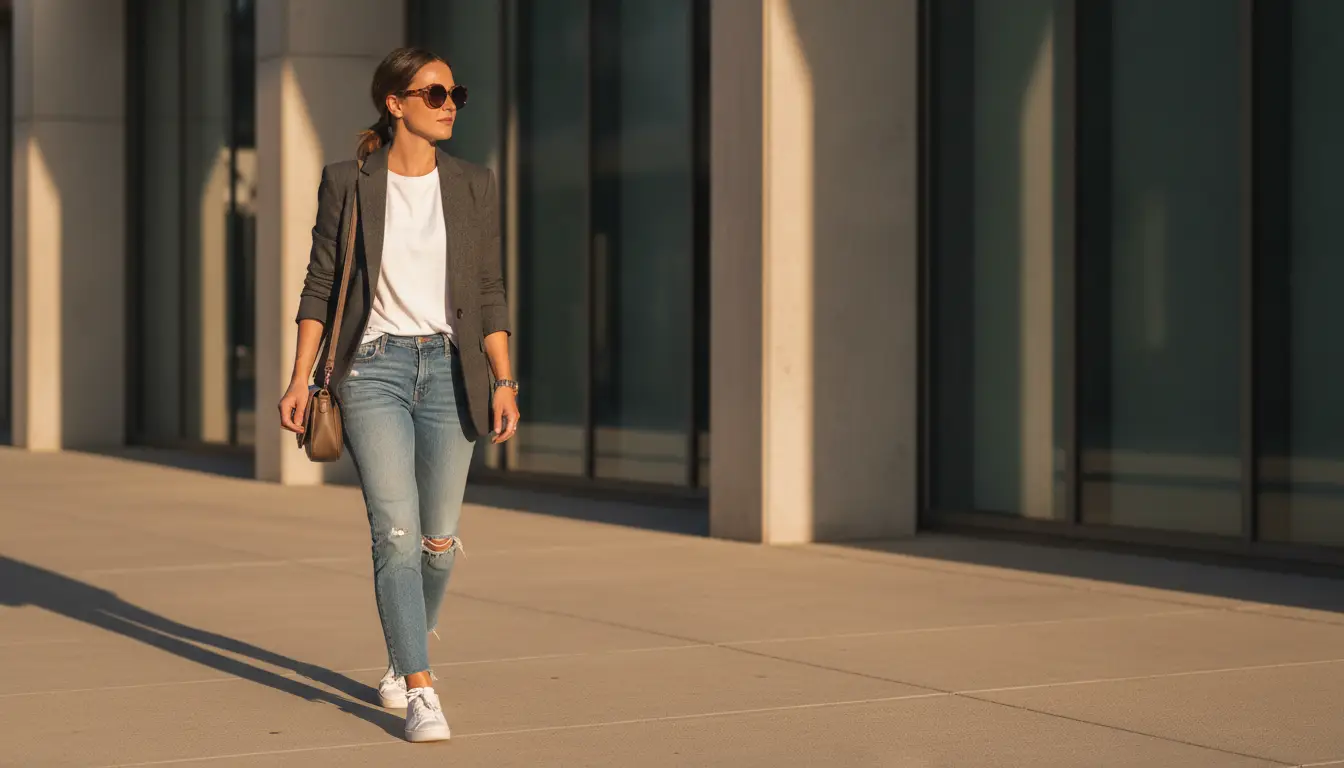
Adding a casual outer layer is one of the most effective ways to shift a formal outfit into everyday territory. A denim jacket layered over a fancy dress is often cited as the simplest trick for making an outfit more casual, and the principle scales to other pairings: a leather jacket over a slip dress, a chunky knit thrown over silk trousers, or a relaxed blazer over a printed blouse and jeans.
The category of garment styled writers call a “third piece” does most of the heavy lifting here. It bridges the formal item and the wearer’s everyday context, and it gives the eye something to land on that signals the outfit was not meant for a gala.
Choosing the third piece carefully matters. An oversized version of the same garment will often read as sloppy, while one with a tighter, more flattering cut will preserve the intentionality of the look. The goal is to layer something casual that still looks chosen rather than borrowed.
Rethink the Accessories
Accessories carry a surprising amount of formality on their own. A small structured clutch or a fine chain necklace reads as event-ready, while a slouchy crossbody bag or a chunkier piece of jewelry pulls the same outfit toward the casual end of the scale.
Swapping these elements is often quicker and cheaper than rebuilding the rest of the outfit. A tote bag, a leather belt with visible hardware, or a pair of everyday sunglasses can recontextualize a formal piece without requiring the wearer to change anything else. Light, natural makeup and undone hair work in the same direction, since polished beauty styling tends to amplify formality even when the clothing itself has been adjusted.
The general rule is that an outfit needs more than one casual element to read as deliberately dressed down. A single sneaker swap rarely balances a fully formal look, but a sneaker plus a denim jacket plus a relaxed bag will.
High and Low, Together
The underlying principle behind successful dressing down is sometimes described as high-low styling. The idea is to combine a polished, tailored piece with something casual or rugged, allowing each element to soften the other.
A wax jacket over a shirt and tie is one menswear example, producing an outfit that looks at home in both an office and a pub without straining in either direction. The feminine equivalents play out across wardrobes daily: a silk camisole tucked into jeans, a tweed blazer layered over a t-shirt, a satin skirt worn with a sweatshirt.
The aesthetic works because contrast keeps either element from dominating. Pure formality reads as costumey outside its setting, and pure casualness wastes the investment in the formal piece. The combination does what neither extreme can do alone.
Build Around Versatile Foundations
The garments that lend themselves best to dressing down tend to share a few traits. They are usually well-cut but not overly ornate, in fabrics that read as elevated without being precious, and in colors that work with multiple casual companions.
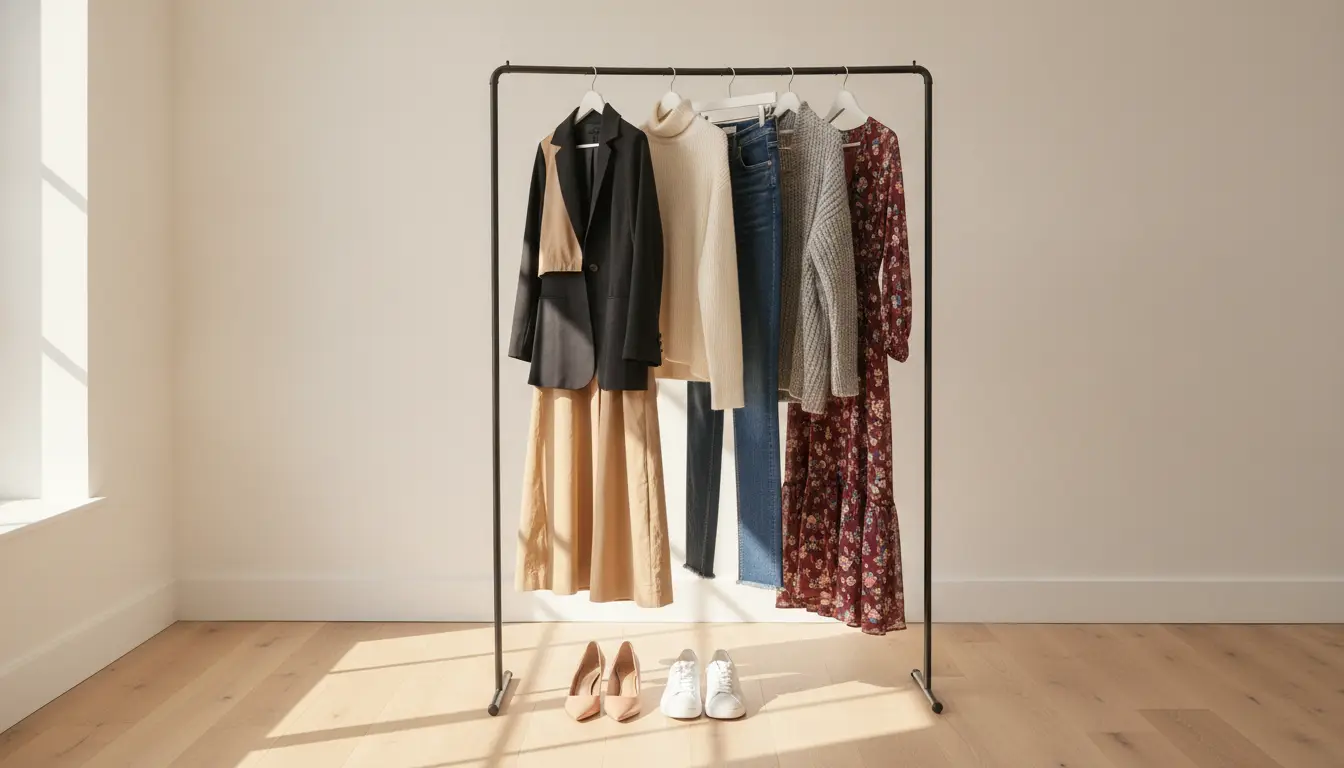
A tailored blazer in navy or charcoal, a midi dress in a neutral or subtle print, a silk-blend blouse, and a pair of structured trousers form a core that can pivot in either direction with minimal effort. Heavily embellished pieces, by contrast, tend to resist casual styling regardless of what is added to them, since their detail demands an equally formal context.
Selecting future wardrobe purchases with this flexibility in mind expands what each piece can do. A dress that only works for weddings will sit unworn for most of the year, while one that pairs equally well with strappy heels and flat sandals justifies its place in the closet many times over.
The Confidence to Make It Look Effortless
The final element is harder to articulate but easier to recognize. Outfits that successfully bridge formal and casual tend to look unfussy rather than carefully engineered, which is partly a matter of confidence and partly a matter of restraint.
Adding too many casual elements at once can make the formal piece look out of place. Pulling back, letting one or two thoughtful adjustments do the work, and committing to the resulting look tends to produce a stronger impression than overcorrecting.
Dressing down a formal outfit is ultimately about giving good pieces more occasions to be worn. Done well, it expands a wardrobe without requiring a single new purchase, and it turns garments once reserved for special events into reliable staples of everyday life.