
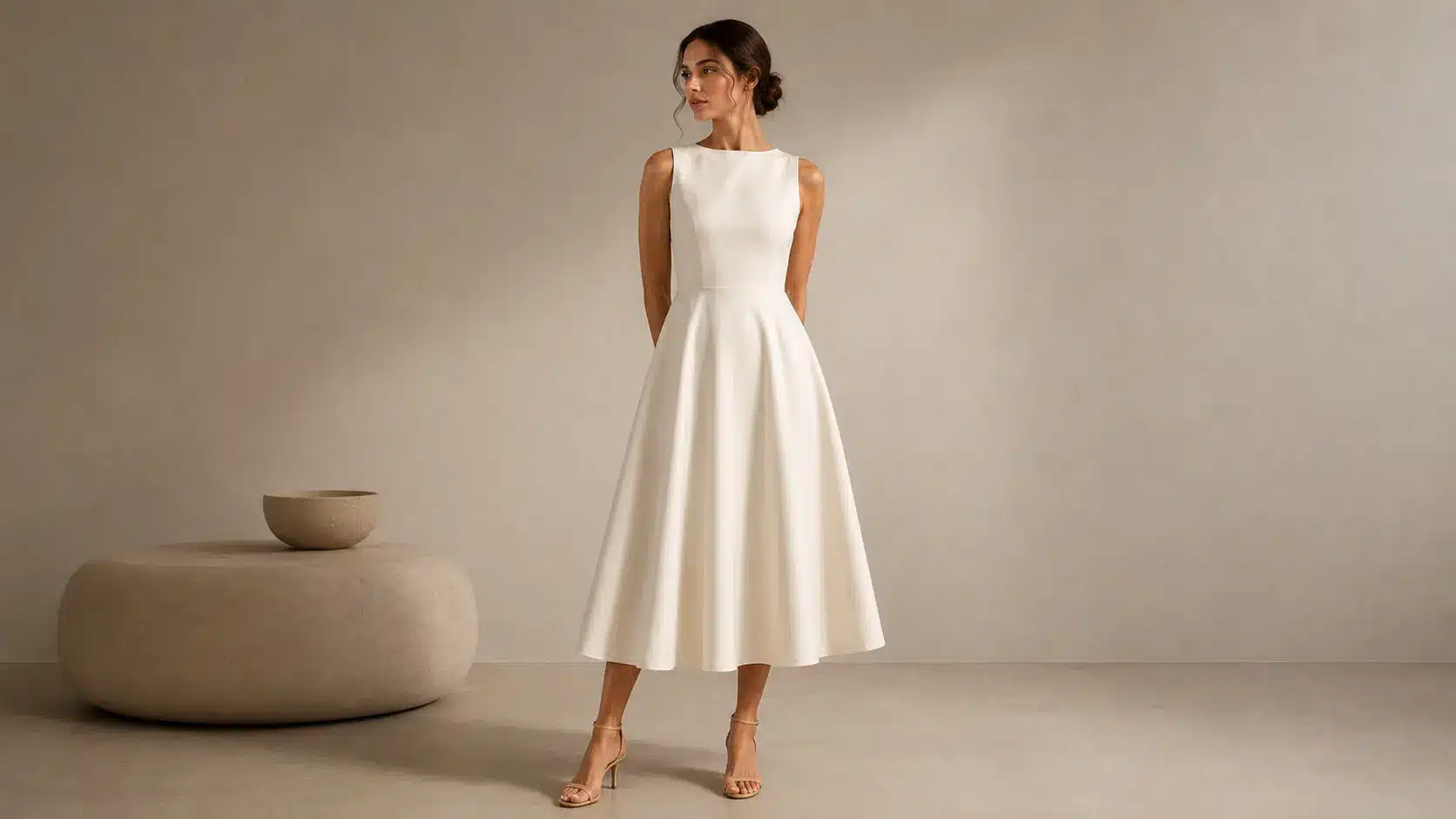

An A-line dress is one of the most widely worn silhouettes, and for practical reasons, too.
It fits closer through the shoulders and bodice, then gradually widens toward the hem, creating balance without relying on a tight fit.
That balance is why the same shape shows up in casual daywear and A-line wedding dresses alike.
Let’s understand what defines the silhouette, how it fits different body types, and how to choose and style one confidently for any occasion.
What Is an A-Line Dress and Why It’s Called That?
An A-line dress is a style that is controlled at the top and flares at the bottom. It fits closer through the shoulders and bodice, then gradually flares out from the waist or hips, creating a clean, triangular silhouette – like the letter “A.”
The term comes directly from Christian Dior, who named the shape after its geometry in his 1955 spring collection, which he called the “Ligne A.”
It was a deliberate departure from the hourglass shapes of the late 1940s – less structured at the waist, easier to move in, and more wearable across body types
The name comes directly from the shape. When you trace a line from each shoulder down to the hem, the space between them forms the two diagonal sides of the letter A.
Dior named the silhouette for exactly that geometry in his 1955 spring collection.
A Brief History of the A-Line Dress
The A-line has been a mainstream silhouette for over seven decades, reinterpreted across every fashion era without losing its core proportion.
After Dior introduced the shape in 1955, Yves Saint Laurent extended it in 1958 with his “Trapeze” collection, linking the shape to youth culture and the mod movement.
It moved between day dresses and formal gowns in the 1970s and 1980s without structural changes.
By the 1990s and 2000s, A-line wedding dresses had overthrown ball gowns as the most requested bridal silhouette, beloved for its combination of structure and all-day wearability. Today, the shape is everywhere at every price point, stable enough for fast fashion and refined enough for couture.
Features That Actually Define an A-Line Dress
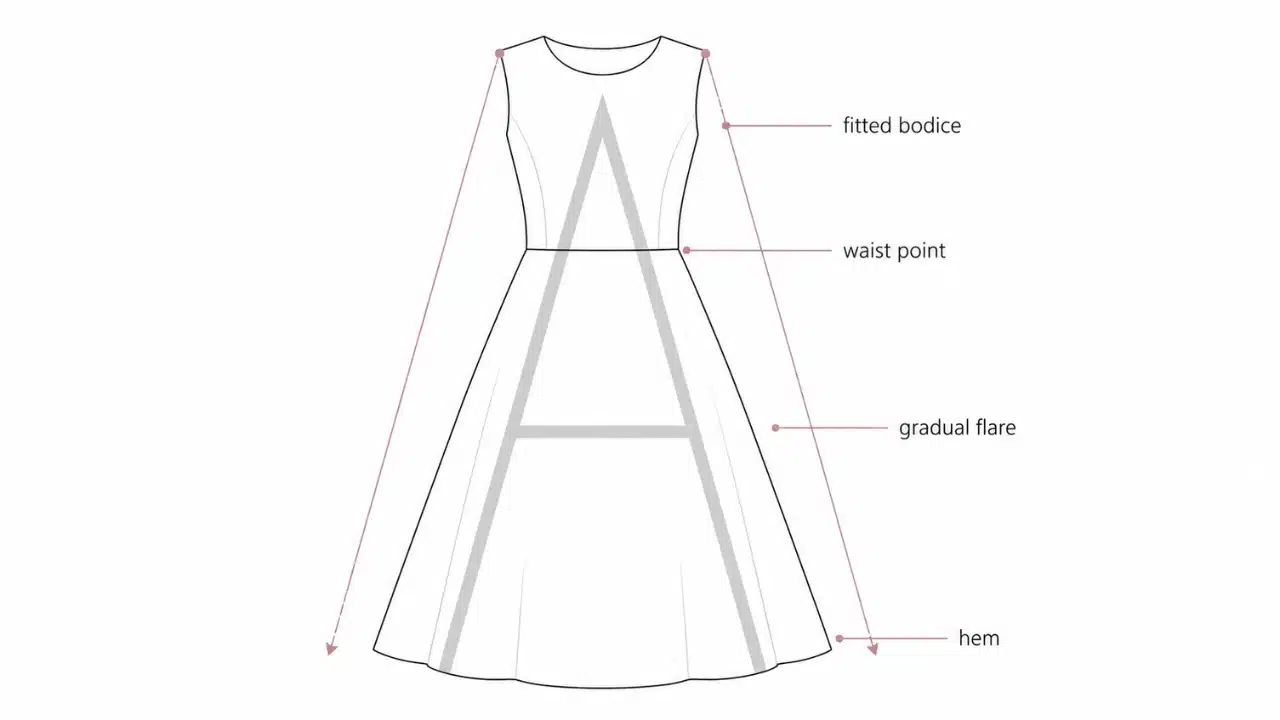
An A-line dress isn’t defined by just one detail – it’s a combination of subtle design choices working together. These features are what actually create that balanced, recognizable shape.
- Fitted upper body: A-line dresses are shaped through the bodice to create definition rather than volume.
- Gradual flare: the shape is typically achieved through darts and seams rather than pleating or gathering.
- No waist suppression required: Unlike bodycon styles, it doesn’t rely on tightness to create shape.
- Fabric-dependent structure: Stiffer fabrics create a sharper A-shape, while softer fabrics produce a more fluid, relaxed fall.
This same balance makes it a natural choice for formalwear, especially A-line wedding dresses that need both structure and ease.
A-Line vs. Other Popular Dress Silhouettes
Most of the confusion around A-line dresses stems from how closely they resemble other styles at first glance.
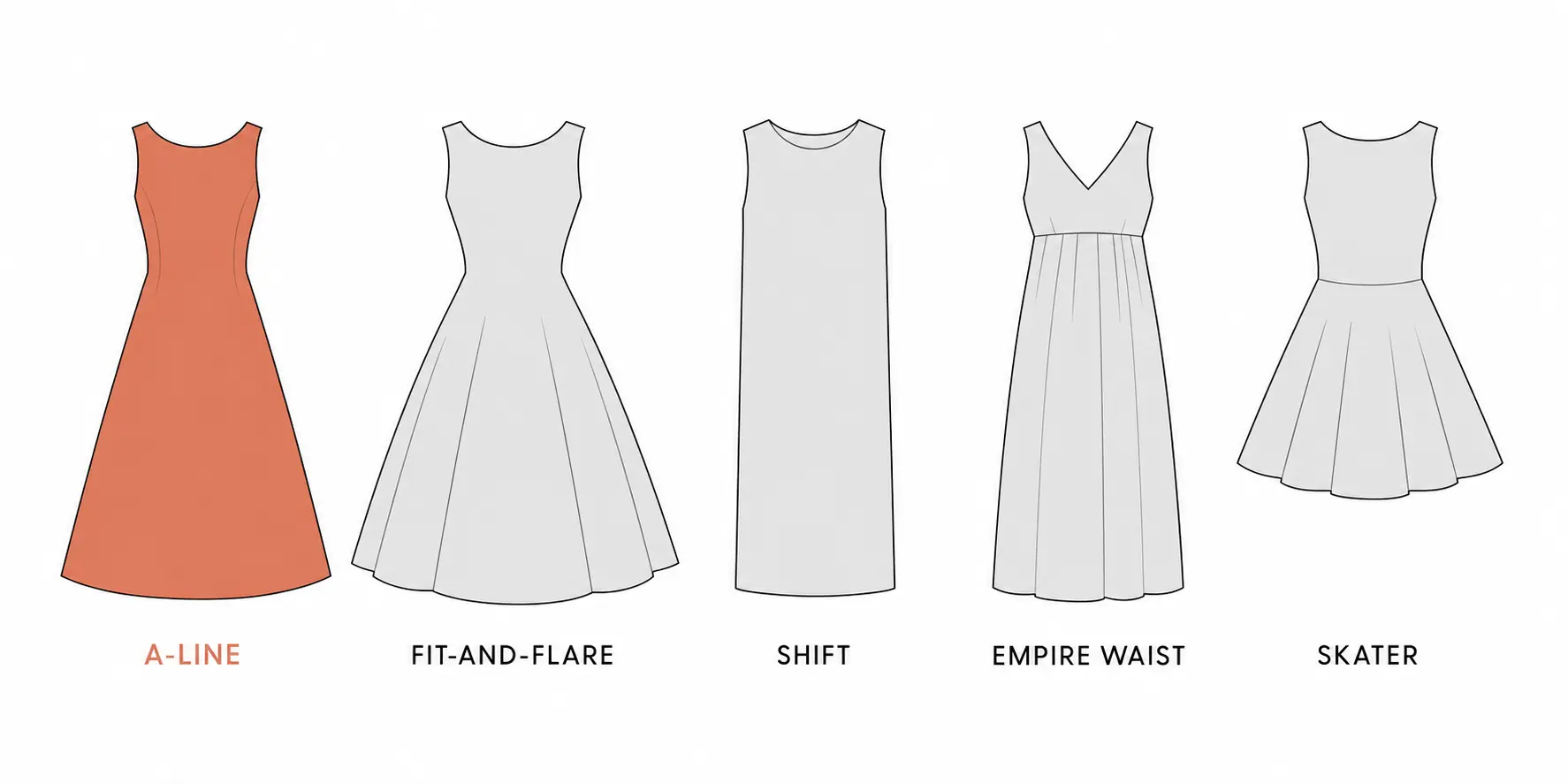
| Silhouette | Shape | Waist Treatment | Volume | Best For |
|---|---|---|---|---|
| A-line | Fitted top, gradual outward flare | No cinching required | Low to moderate | Most occasions, most body types |
| Fit-and-Flare | Tightly cinched waist, dramatic flare | Strong definition | Moderate to high |
Defined waist, hourglass shapes |
| Shift | Straight, minimal shaping | None | None | Minimal, clean looks |
| Empire Waist | Fitted above the bust, loose below | Seam above natural waist | Low | Relaxed fit, maternity styling |
| Skater | Short hem, pronounced flare from waist | Moderate definition | High at hem | Casual and playful settings |
The A-line does not demand one specific body type. Get the length and fit right for your frame, and the silhouette takes care of the rest.
How the A-Line Works Across Different Body Types
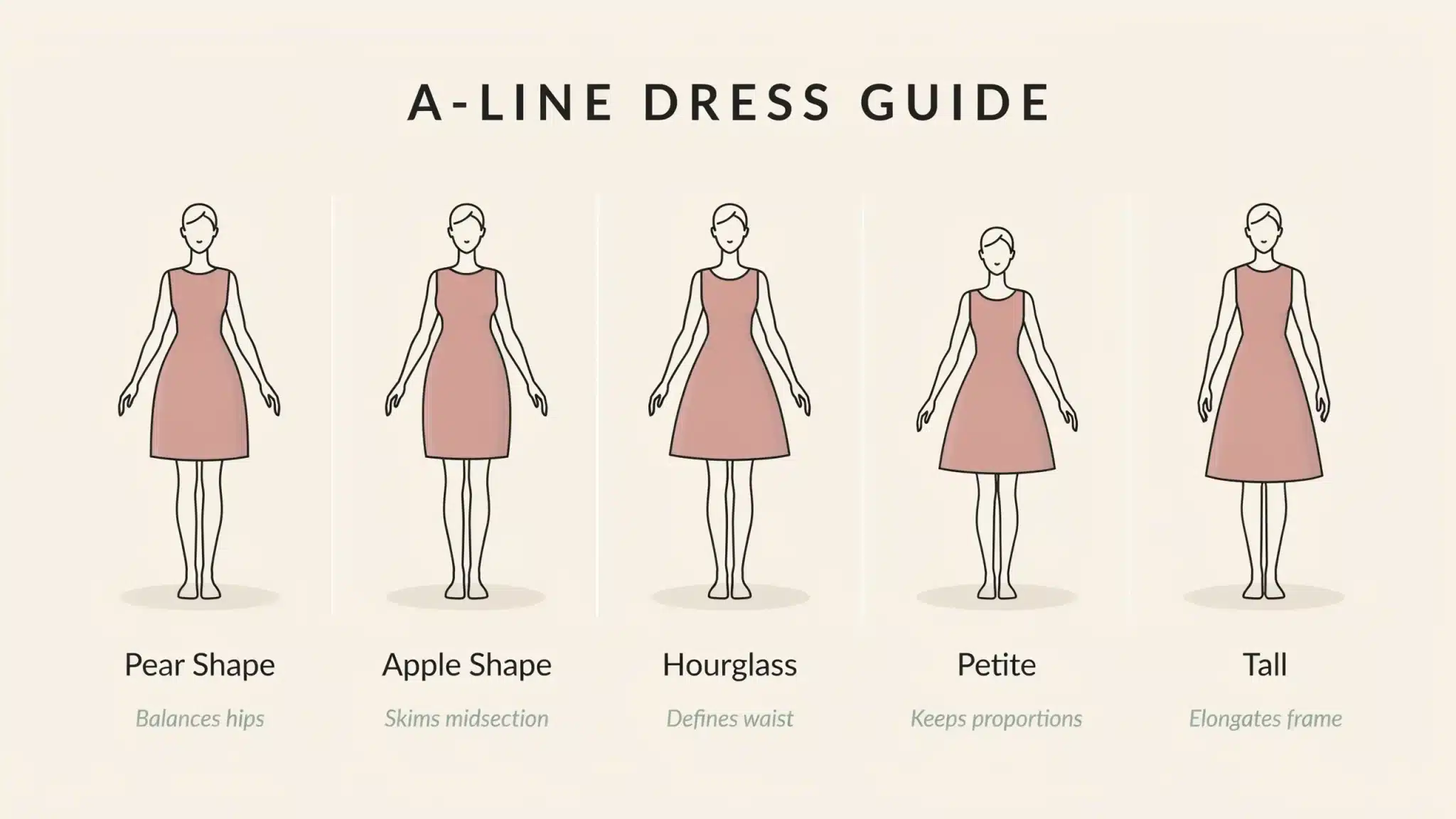
The A-line works across a wide range of body types, but the way it works varies by body type. Here is what to know before you choose.
1. Pear Shape
The gradual flare skims the hips rather than pulling tight, which reduces visual contrast between the upper and lower body. This creates a more balanced overall proportion without needing any structural tricks.
A structured or detailed bodice adds visual weight at the top, aligning the silhouette. The more defined the bodice, the better the balance.
2. Apple Shape
The A-line passes over the midsection without clinging, which makes it one of the more practical choices for this body type. Instead of drawing attention to the midsection, the skirt falls cleanly away from it.
Empire-waist versions work especially well because the flare begins before the widest point, bypassing it altogether.
3. Hourglass
The flared skirt maintains proportion below without adding additional breadth, and the fitted bodice naturally follows the waist. Instead of opposing this body type, it uses its advantages.
The most important thing to keep an eye on is fabric weight since strong fabrics can give the skirt unnecessary bulk.
4. Petite Frames
Midi and knee lengths create a balanced, proportionate look without overwhelming a shorter frame. Maxi lengths tend to visually compress the body by covering too much of the leg.
A clear waist seam helps anchor the silhouette and prevents the dress from reading as shapeless or oversized on a smaller frame.
5. Taller Frames
Longer lengths look naturally proportionate on taller frames and elongate the overall line without any extra effort. Styles that might feel excessive on shorter figures sit comfortably here.
Taller forms look good in floor-length A-lines, which allow the skirt to reveal its entire shape without appearing too short.
What Makes an A-Line for a Wedding Dress?
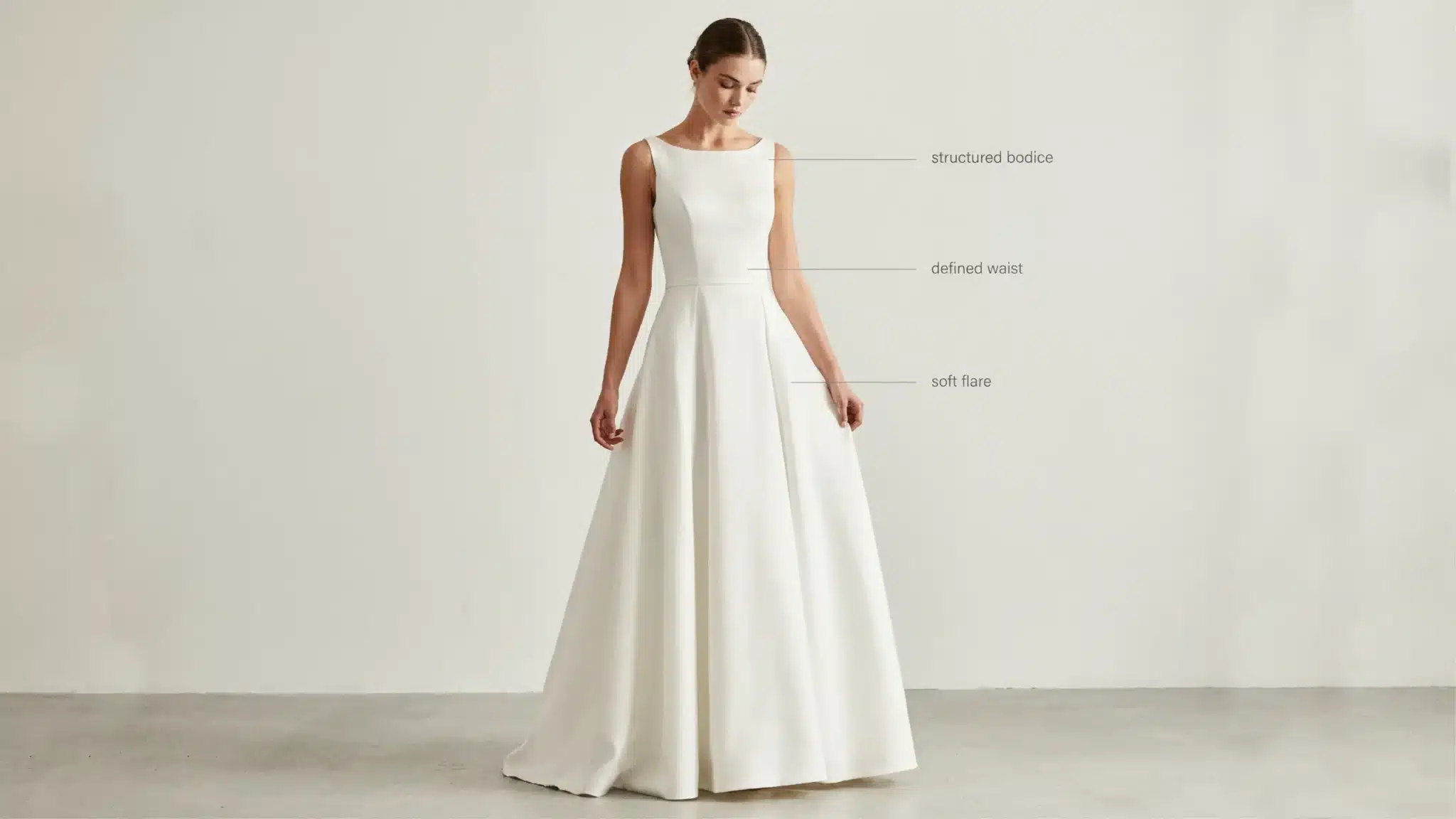
What makes an A-line dress especially suited for bridal wear comes down to a few practical design advantages. It’s not just about how it looks, but also how it balances structure, movement, and overall presence.
- Structured top, easy bottom: The bodice adds definition, while the skirt allows movement. Like a satin A-line with a fitted bodice and clean, flowing skirt
- Works across fabrics: holds shape in stiff fabrics and softens in lighter ones.
Like Mikado for a sharp look, tulle for a softer, romantic feel. - Looks formal without excess volume: Doesn’t need heavy layers to feel bridal.
Like a minimal A-line gown that still looks complete without embellishment.
Together, these details make the A-line feel complete without needing extra volume or effort. It’s a silhouette that naturally delivers structure and elegance. Exactly what most bridal looks aim to achieve.
A-Line vs Ball Gown for Bridal
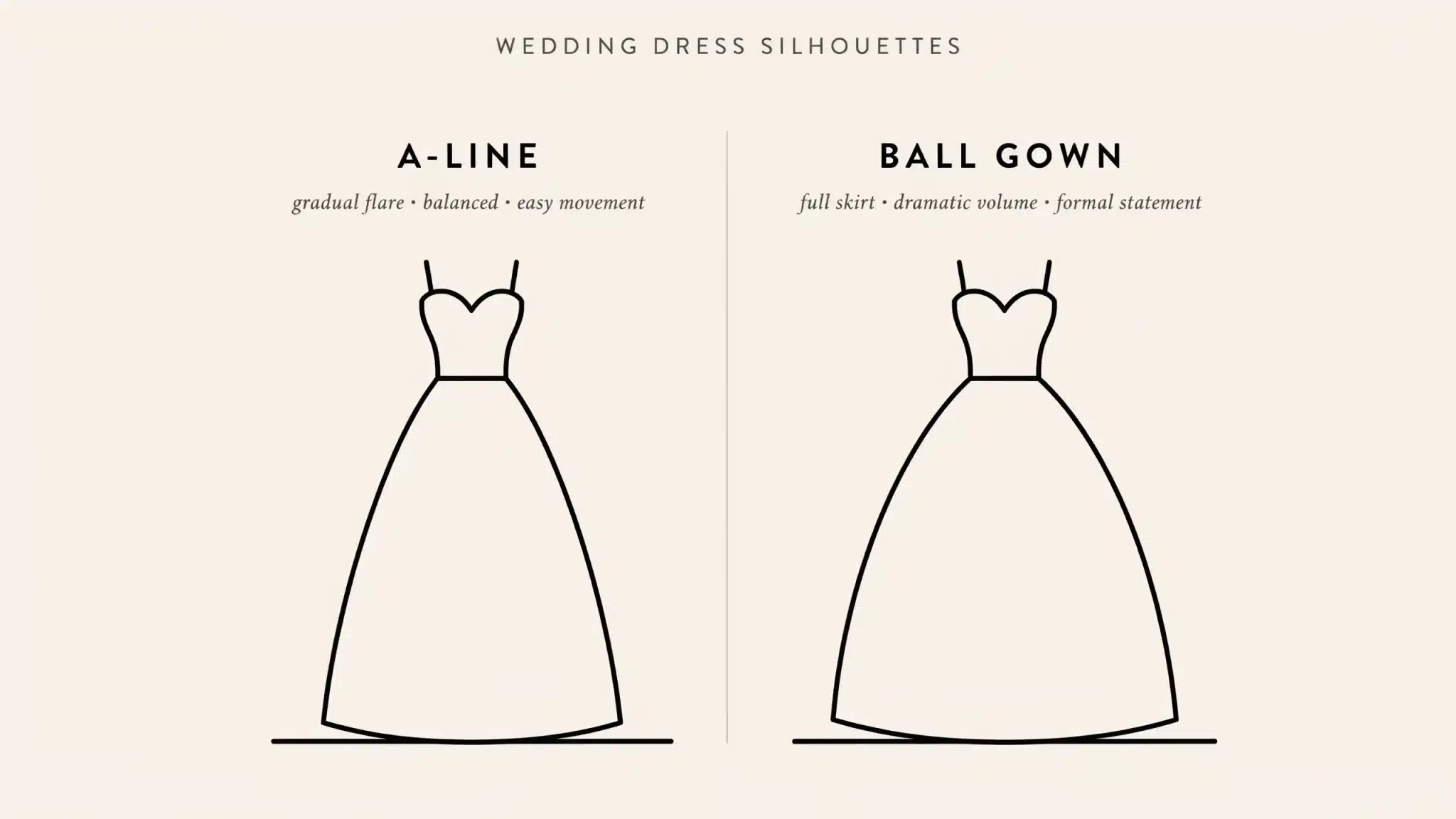
The difference between an A-line and a ball gown comes down to skirt volume and wearability.
An A-line wedding dress has a fitted bodice and a gradual flare, creating a clean, balanced shape. It has structure but isn’t too bulky, making it easy to move around, sit in, and wear all day.
A ball gown also has a fitted bodice, but the skirt flares dramatically from the waist. The volume is created with layered fabrics such as tulle or crinoline for a more traditional, statement look.
An A-line is more practical and versatile, while a ball gown is designed for maximum impact. The right choice depends on whether you prioritize comfort or drama.
How to Choose the Perfect A-Line Dress?
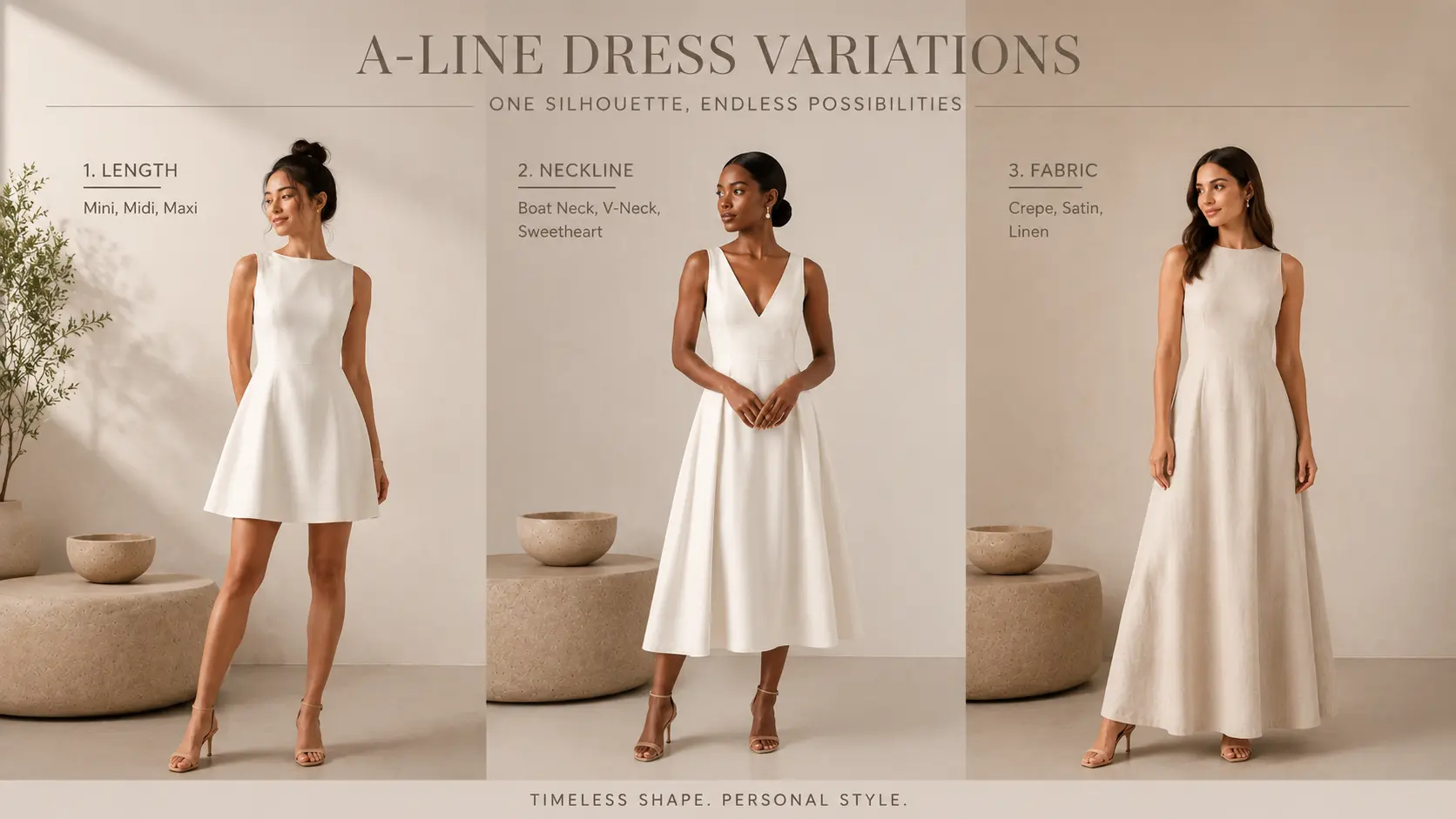
Choosing the right A-line dress today is not only about the silhouette. Small details like length, fabric, and neckline shape how the dress actually looks and feels on your body.
-
Mini lengths feel youthful and casual but can lose the elegance of the A-line shape. Midi lengths are the most balanced and versatile option for most occasions.
-
Structured fabrics like cotton blends, denim, or jacquard hold the A-shape better and look more polished. Softer fabrics like jersey or chiffon create a relaxed, fluid version that is comfortable but less defined.
-
V-necks and scoop necklines open up the upper body and balance the flare below. The goal is visual balance between the top and the bottom of the dress.
-
High necklines create a more modest, structured look but can feel heavier if the skirt is too wide. Pair them with a narrower or subtle flare to keep the proportions even.
-
The right combination of length, fabric, and neckline works together rather than independently. Getting all three right is what makes the silhouette feel effortless rather than just adequate.
Get these details right, and the dress works on its own. Get even one of them wrong and the silhouette can feel off, regardless of how well it fits everywhere else.
Accessories for an A-Line Dress: Shoes, Bags, and Jewelry
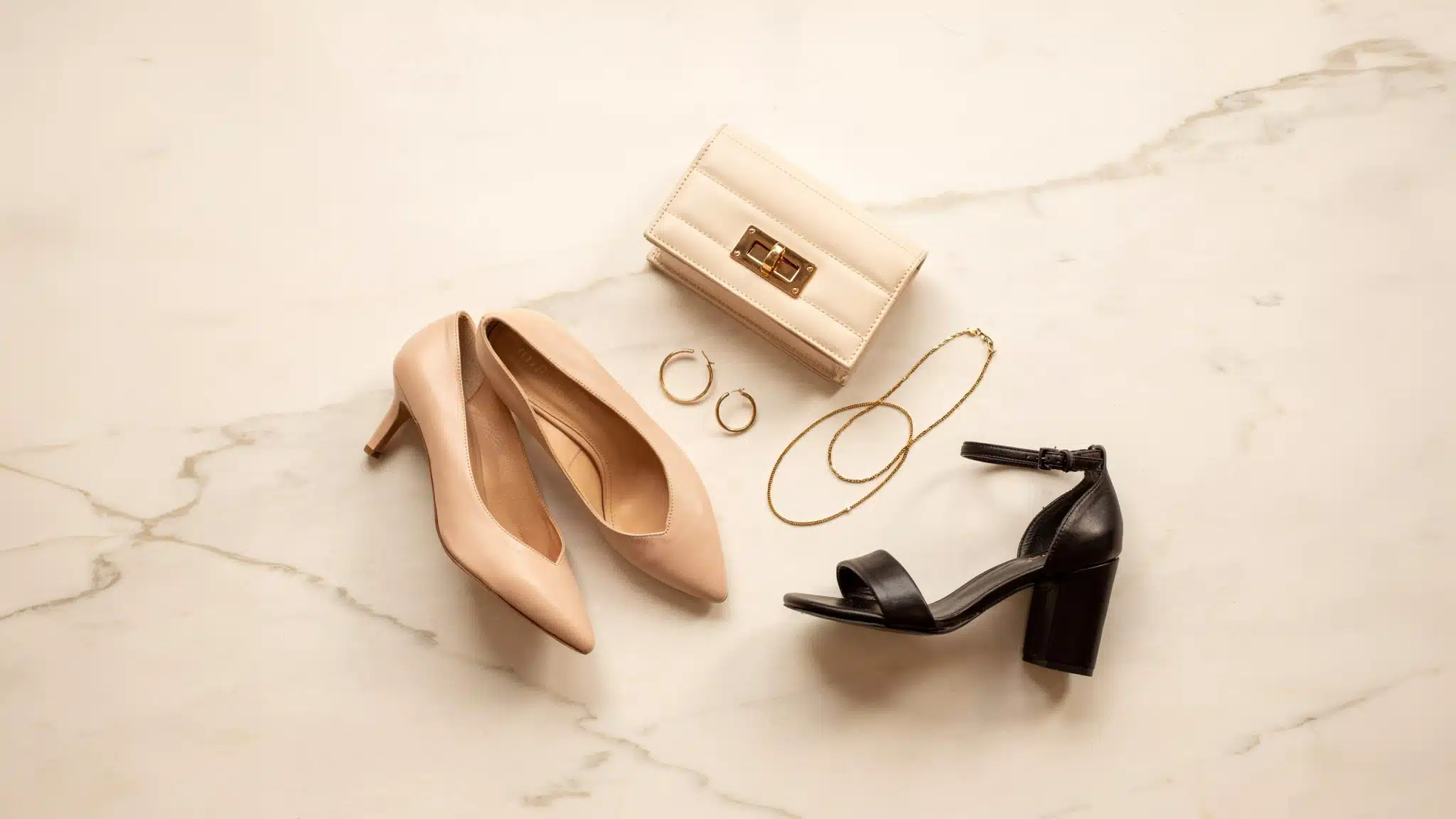
Accessories work best when they support the shape rather than compete with it.
- Shoes: Pointed-toe heels or block heels will work equally well and will elongate the leg without adding bulk at the hem. Flat sandals are great for casual wear, but can make midi or maxi lengths look shorter visually. Chunky boots go with mini A-lines, but look heavy with a full skirt.
- Bags: A clutch or small structured bag is the most reliable choice for formal and semi-formal settings. Crossbody bags suit casual styling. Wide, slouchy bags add horizontal weight that works against the clean downward line of the silhouette.
- Jewelry: A basic dress looks great with a layered necklace or bold earrings. Don’t wear more than one simple piece of jewelry if your clothing is textured or decorated. When it comes to A-line wedding dresses, focus on one focal piece, either necklaces or earrings, but not both.
The simpler the dress, the bolder you can go with one accessory. The more detailed the dress, the more minimal the accessories should be.
How to Style an A-Line Dress for Every Occasion
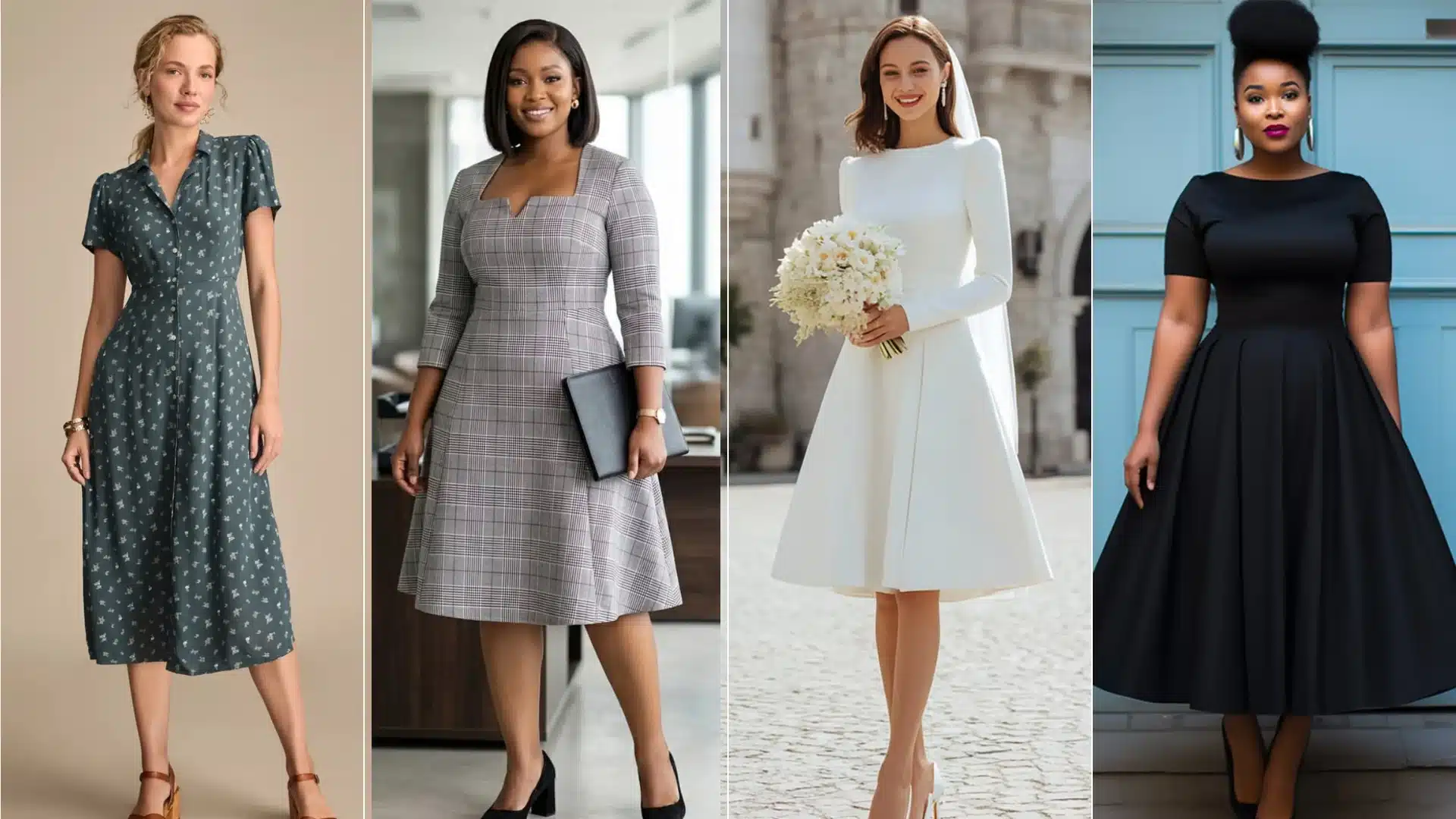
Styling an A-line dress is less about adding more but about maintaining balance. Since the silhouette already creates shape, your choices should support it and not compete with it.
For casual wear, choose breathable fabrics, simpler cuts, and shorter or midi lengths. Minimal structure keeps it easy and wearable for everyday use.
For work or smart settings, go with midi lengths, subtle flare, and structured fabrics. Clean lines and neutral tones make the silhouette look intentional rather than relaxed.
For weddings, choose richer fabrics like satin or silk blends, longer lengths, and sharper tailoring. This is where the silhouette overlaps with A-line wedding dresses, where elegance, structure, and flow need to coexist.
For a wedding-guest occasion, a midi A-line in silk, chiffon, or polished crepe blend reads as appropriately formal without crossing into bridal territory. Avoid white, ivory, and champagne tones. A clean neckline and one accessory keep the look intentional for a ceremony or reception setting.
Common Styling Mistakes to Avoid
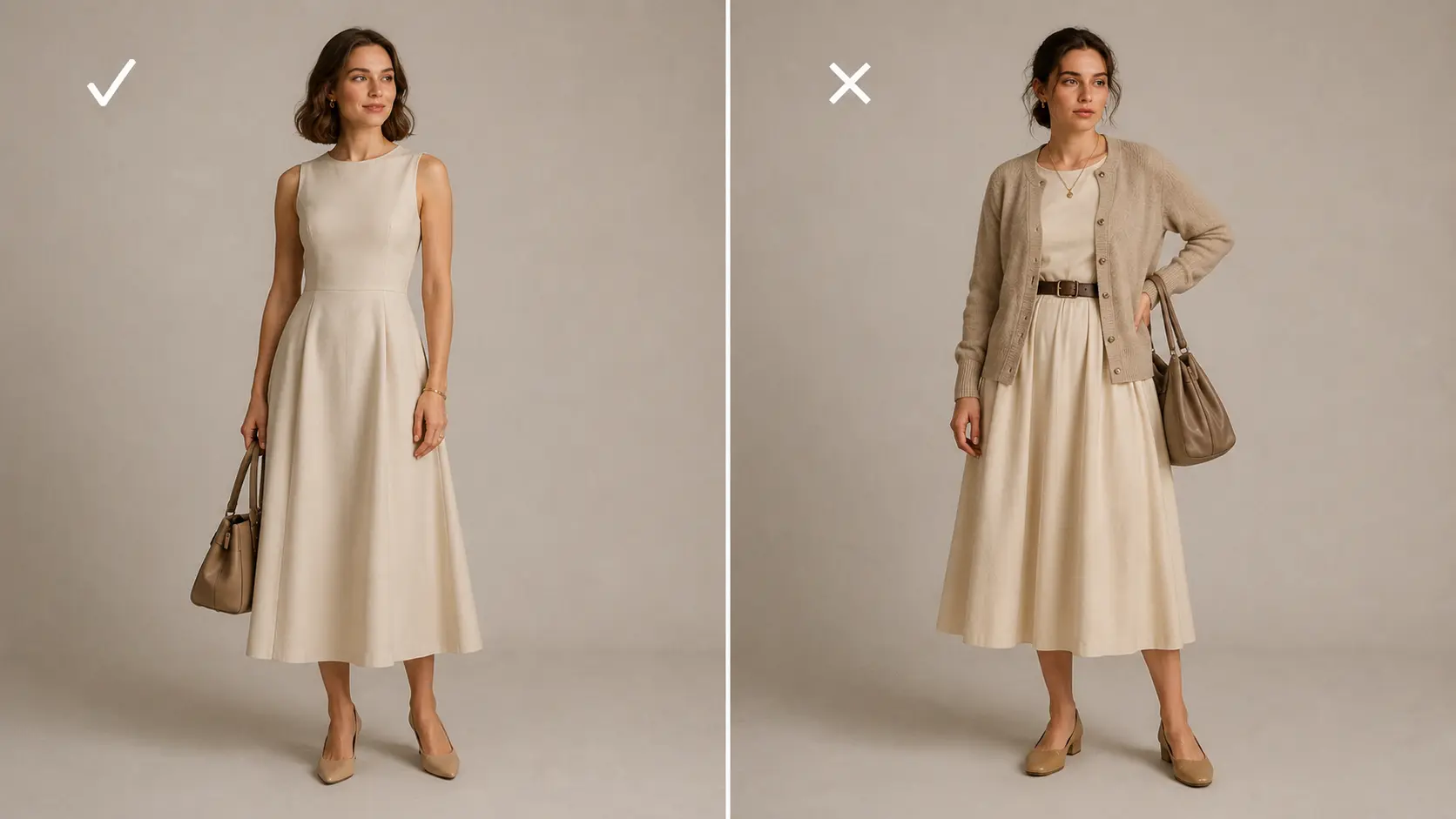
These are a few common mistakes you can avoid to get the most out of your look.
Overpowering silhouette: Heavy layers or oversized pieces can hide the A-line shape completely
Ignoring proportion: wide skirts and bulky shoes look visually heavy.
Forcing waist definition: Not every A-line needs a belt; sometimes it can break the natural flow.
Choosing the wrong frame length: A length that does not suit your height can throw off the dress’s overall proportions, regardless of how well everything else works.
Final Thoughts
The A-line dress holds up because its proportions are practical rather than trend-driven.
A fitted top and a gradual flare create balance without requiring a tight fit, which is why the shape works across body types, fabrics, and occasions.
You’ve also seen why it continues to work across both everyday wear and A-line wedding dresses.
If you’re drawn to something that feels balanced, easy, and not overly fitted, there’s a good chance the A-line will work for you.
The best way to know? Try one. When it fits right, you’ll feel it instantly.
Frequently Asked Questions
How Do I Know if a Dress is Truly A-Line?
Check the shape, not the label. It should fit more closely at the top and gradually widen toward the hem, without heavy gathers or dramatic volume. If the flare feels subtle and controlled, it’s likely A-line.
Can A-Line Dresses Work for All Body Types?
They can work for many, but not in the same way. The shape creates balance, which suits most people – but the final look still depends on fit, fabric, and length. It’s less about body type and more about proportions.
What Length of an A-Line Dress Is Most Flattering?
Midi length works for the widest range of frames and occasions. It gives the skirt enough room to clearly show its full shape and reads as polished across casual, smart-casual, and semi-formal contexts.