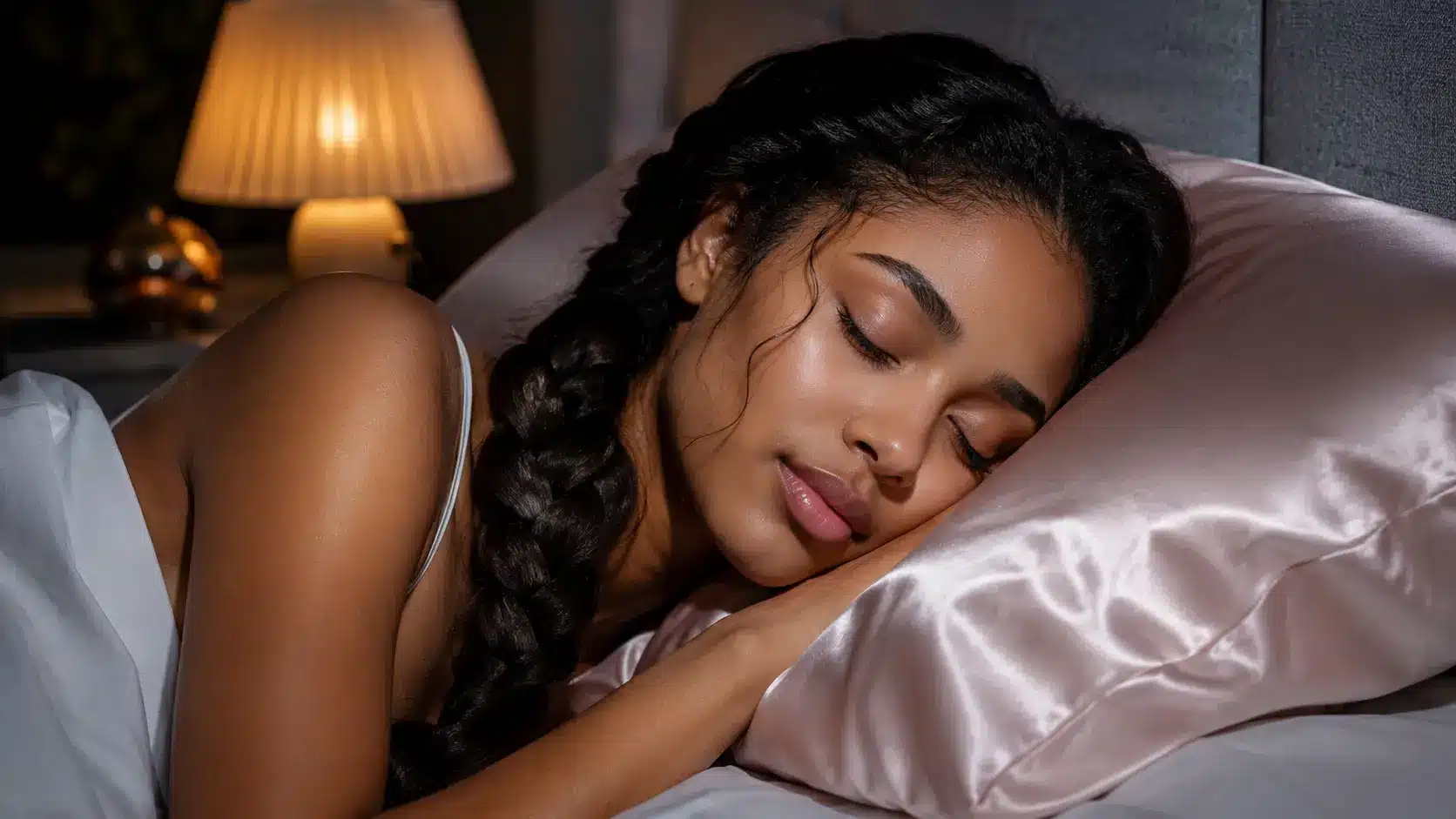
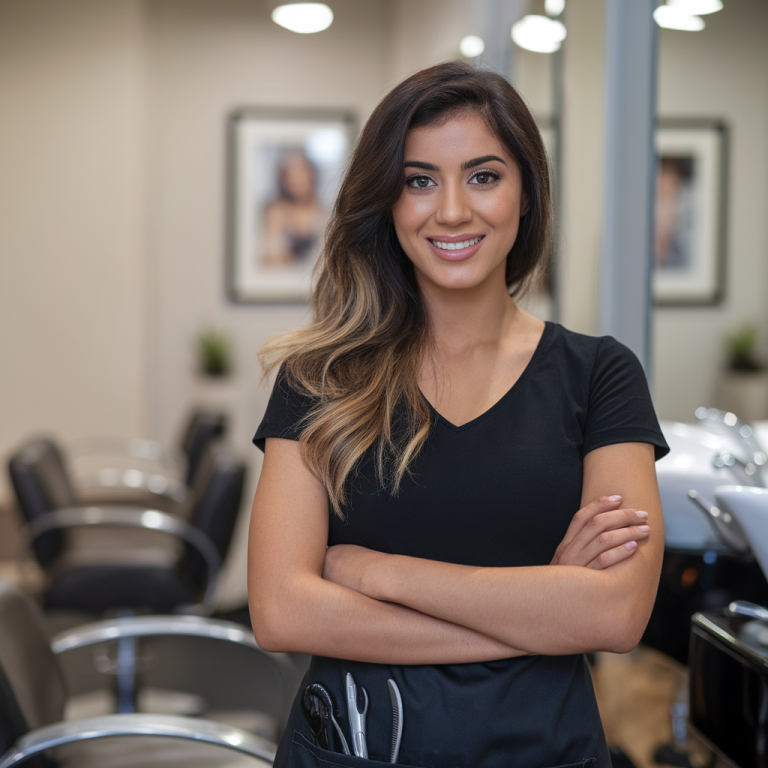
Your hair goes through a lot while you sleep. Tossing and turning all night creates friction that leads to breakage, frizz, and dry ends by morning.
The right protective hairstyle before bed can stop most of that damage before it starts. From loose braids and buns to twists and the pineapple method, there are simple styles that work for every hair type.
Protective hairstyles for sleeping are low-tension styles, such as braids, buns, or twists, that reduce friction and help prevent overnight hair breakage.
Read on to find the best protective hairstyles for sleeping, how to do each one, and what accessories make them work even better.
Why Protective Hairstyles for Sleeping Are Important
Protective hairstyles are essential for preventing overnight hair damage. Sleeping on cotton pillowcases can create friction, weakening the hair shaft and causing hair cuticle damage, tangles, frizz, and moisture loss.
Wearing a protective style keeps strands bundled and reduces rubbing against the pillow, helping hair retain moisture and stay healthier over time.
Signs your current sleep routine may be causing damage include excess hair on your pillow, frizz or roughness in the morning, worsening split ends, and hair that feels dry or brittle even after washing.
How to Choose the Right Protective Hairstyle for Your Hair Type
Not every sleep style works the same way for every hair type. Knowing what your hair needs at night helps you pick a style that actually protects it.
- Straight Hair: Straight hair is more prone to grease buildup and breakage. A loose low braid or low bun works well to keep it from rubbing against the pillow too much.
- Wavy Hair: Wavy hair tends to frizz easily. Two loose braids or a low ponytail with a satin scrunchie can help keep the wave pattern intact and reduce frizz by morning. If your texture falls between straight and curly, understanding your naturally wavy hair pattern can help you choose the most effective overnight style.
- Curly Hair: Curly hair dries out faster than other types. Styles that keep the curls clumped together, like the pineapple or two-strand twists, help hold moisture and protect the curl shape.
- Coily and Natural Hair: Coily and natural hair are the most fragile hair types when it comes to friction and dryness. According to the American Academy of Dermatology, avoiding tight hairstyles is especially important, making flat twists, loose cornrows, and silk scarf wraps excellent options that keep hair protected without excessive pulling.
- Hair Extensions and Protective Styles: If you wear extensions or already have a protective style like box braids, a loose bun, or a silk scarf wrap, it will help keep the style neat and reduce tension on the roots while you sleep.
Choosing the right protective hairstyle ensures your hair stays healthy, moisturized, and tangle-free every morning.
Best Protective Hairstyles for Sleeping
There are many ways to protect your hair at night, and the best one depends on your hair type and how much time you have before bed. The styles below cover every hair type and skill level, from a quick one-minute bun to a more detailed twist style.
1. Loose Low Braid
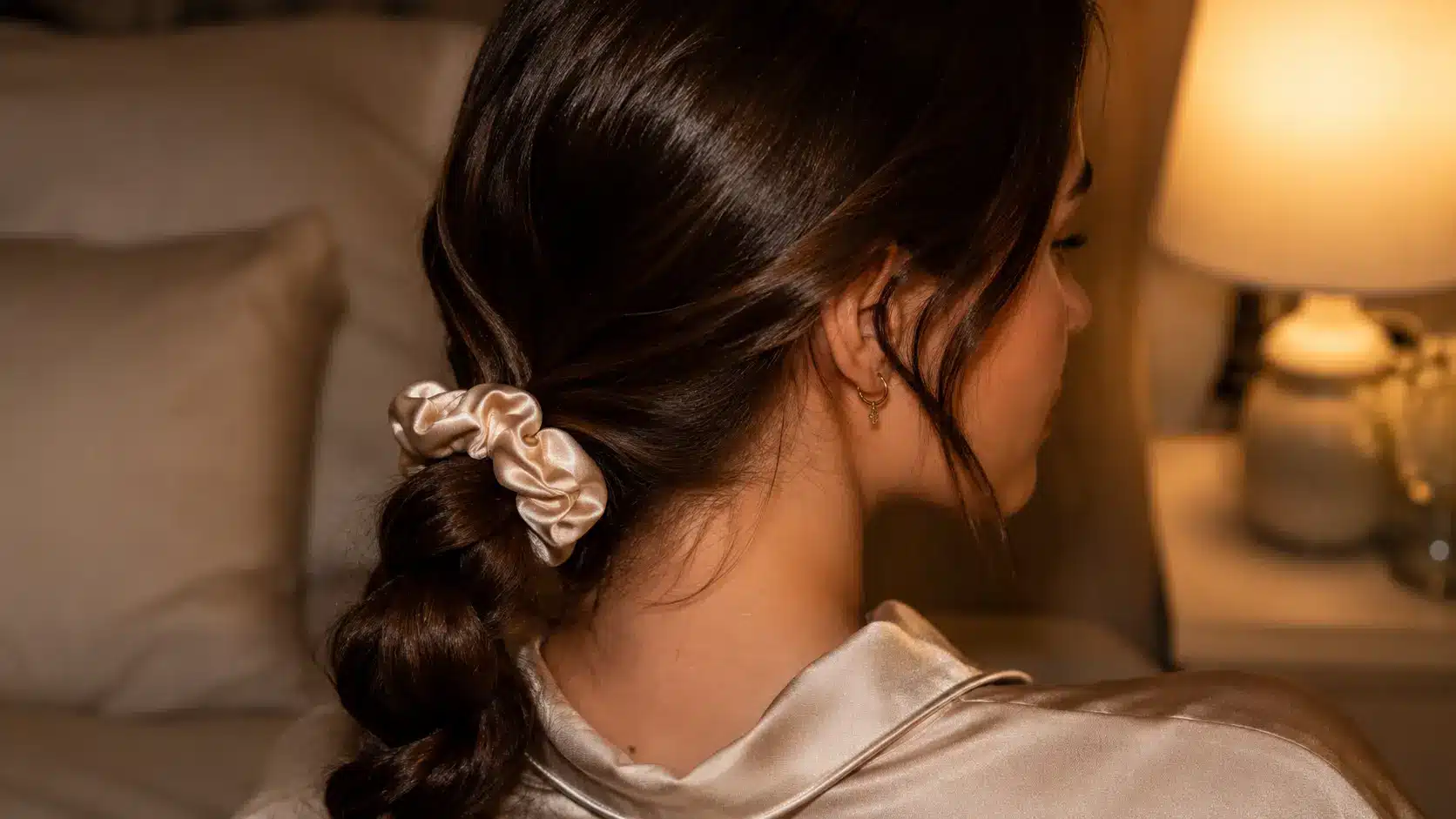
A loose braid at the nape of the neck keeps all your hair in one place without putting pressure on the scalp. It is one of the easiest ways to prevent tangles and reduce frizz overnight.
- Best for: Long and medium hair
- How to do it: Gather your hair at the nape of your neck, divide it into three sections, and braid loosely to the end. Secure with a satin scrunchie.
2. Classic Three-Strand Braid
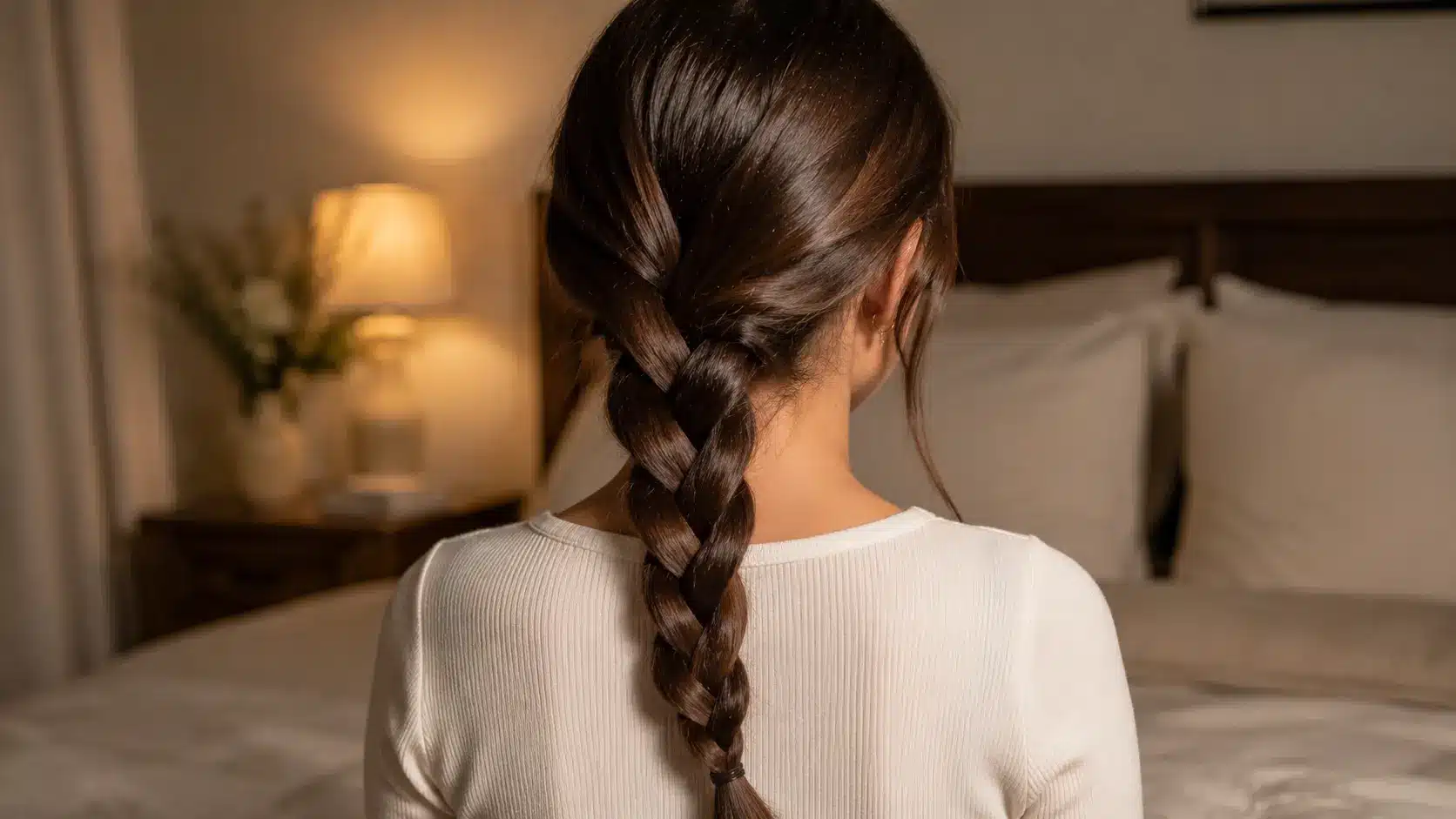
The classic three-strand braid is a simple style that keeps all hair in one place and stops it from tangling during the night. It works for almost every hair type and takes less than two minutes to do.
- Best for: All hair types
- How to do it: Brush out any knots, divide hair into three even sections, and braid from the top or nape of the neck. Keep the tension relaxed.
3. Two Loose Braids
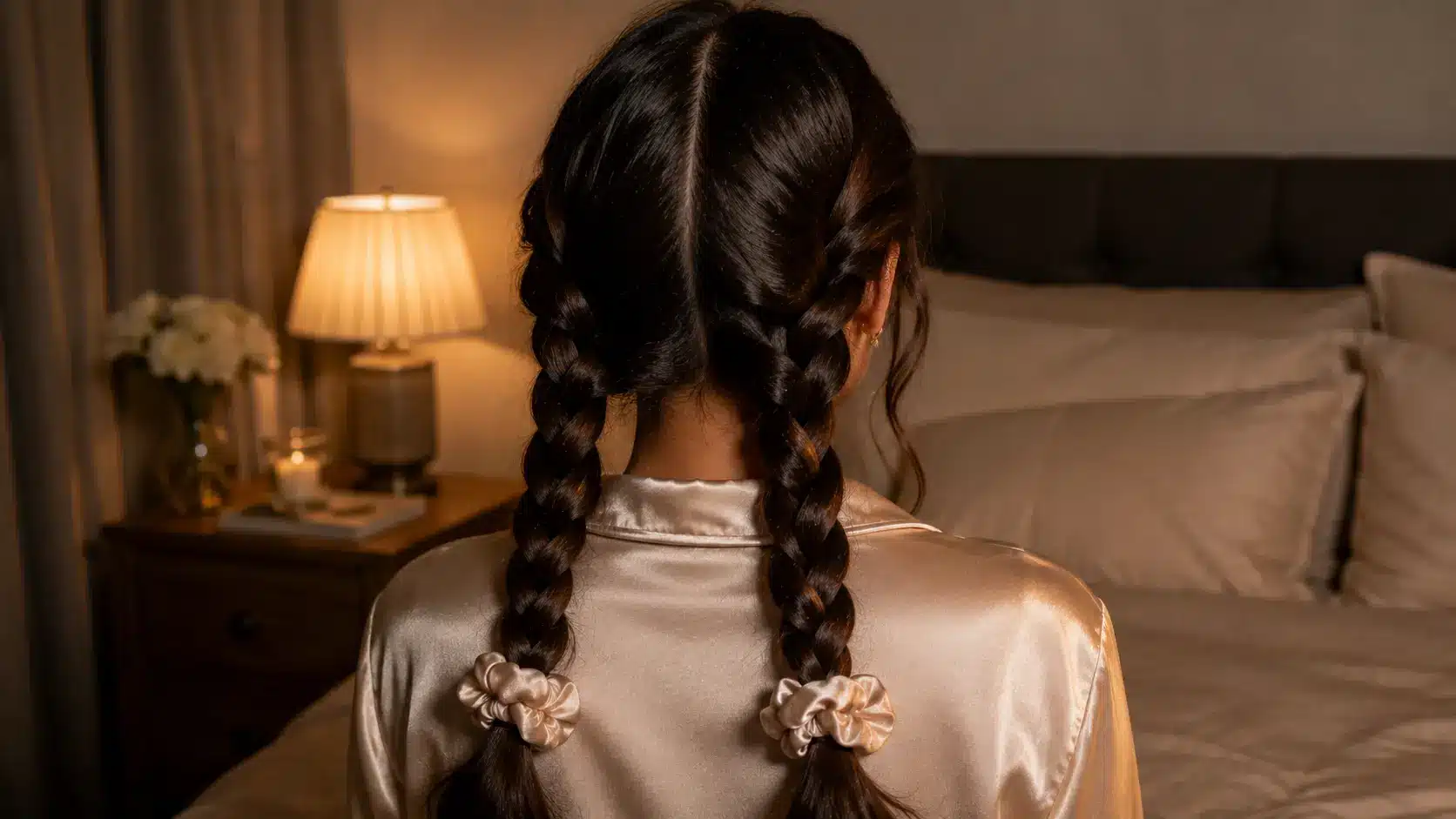
Two loose braids split the weight of thick hair evenly so neither side gets too heavy or tangled overnight. This style also leaves soft waves in the morning without any heat.
- Best for: Thick, wavy, or curly hair
- How to do it: Part your hair down the middle, braid each side loosely, and tie off with soft scrunchies.
4. French Braid
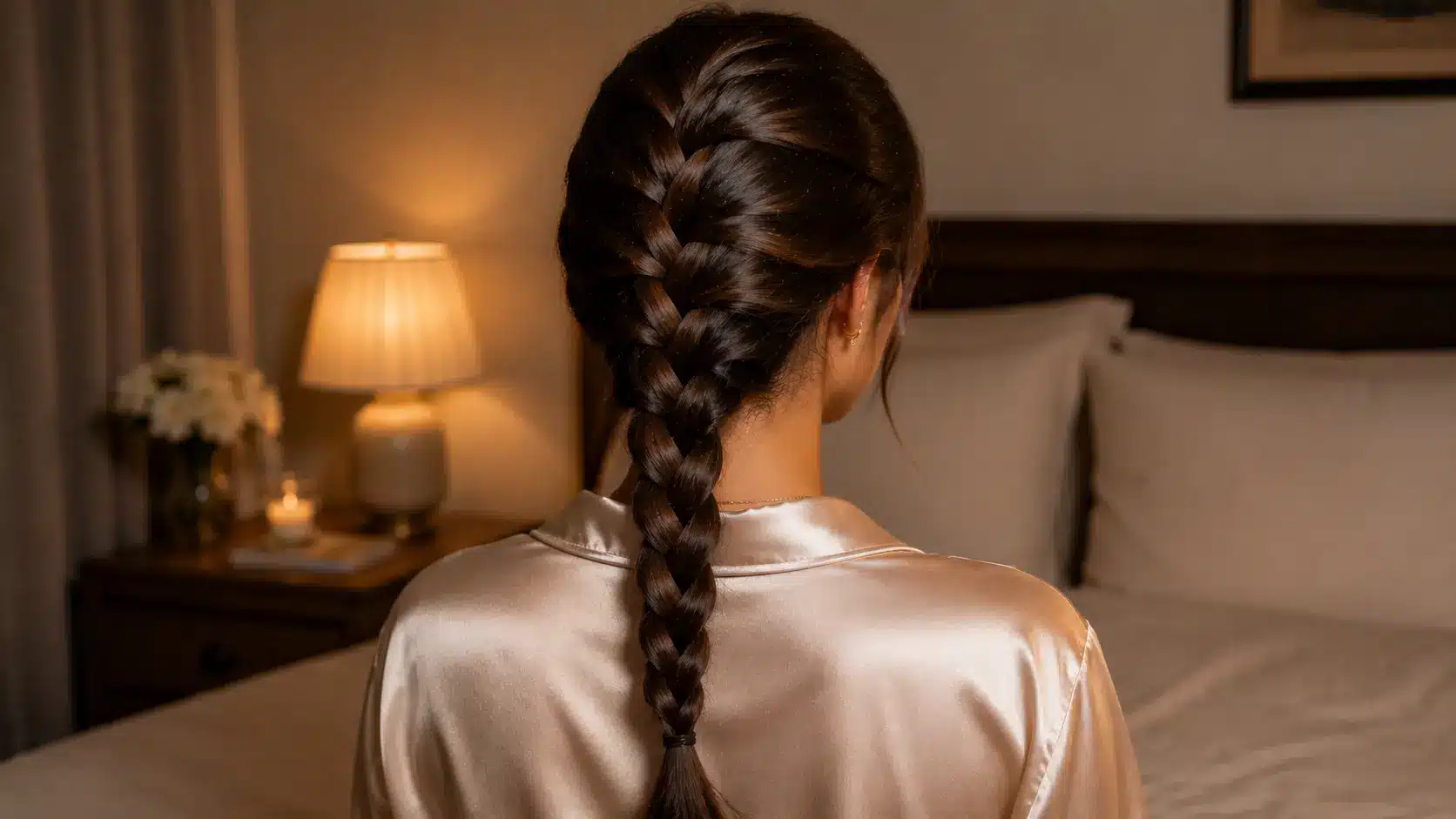
A French braid sits flat against the head and keeps hair from moving around while you sleep. It leaves a beautiful wave pattern in the morning with no heat needed.
Because it creates texture overnight without hot tools, it can be a helpful option for people dealing with heat-damaged hair.
- Best for: Straight and wavy hair
- How to do it: Start at the crown of your head, add small sections as you braid down toward the nape, and secure at the end.
5. Dutch Braid
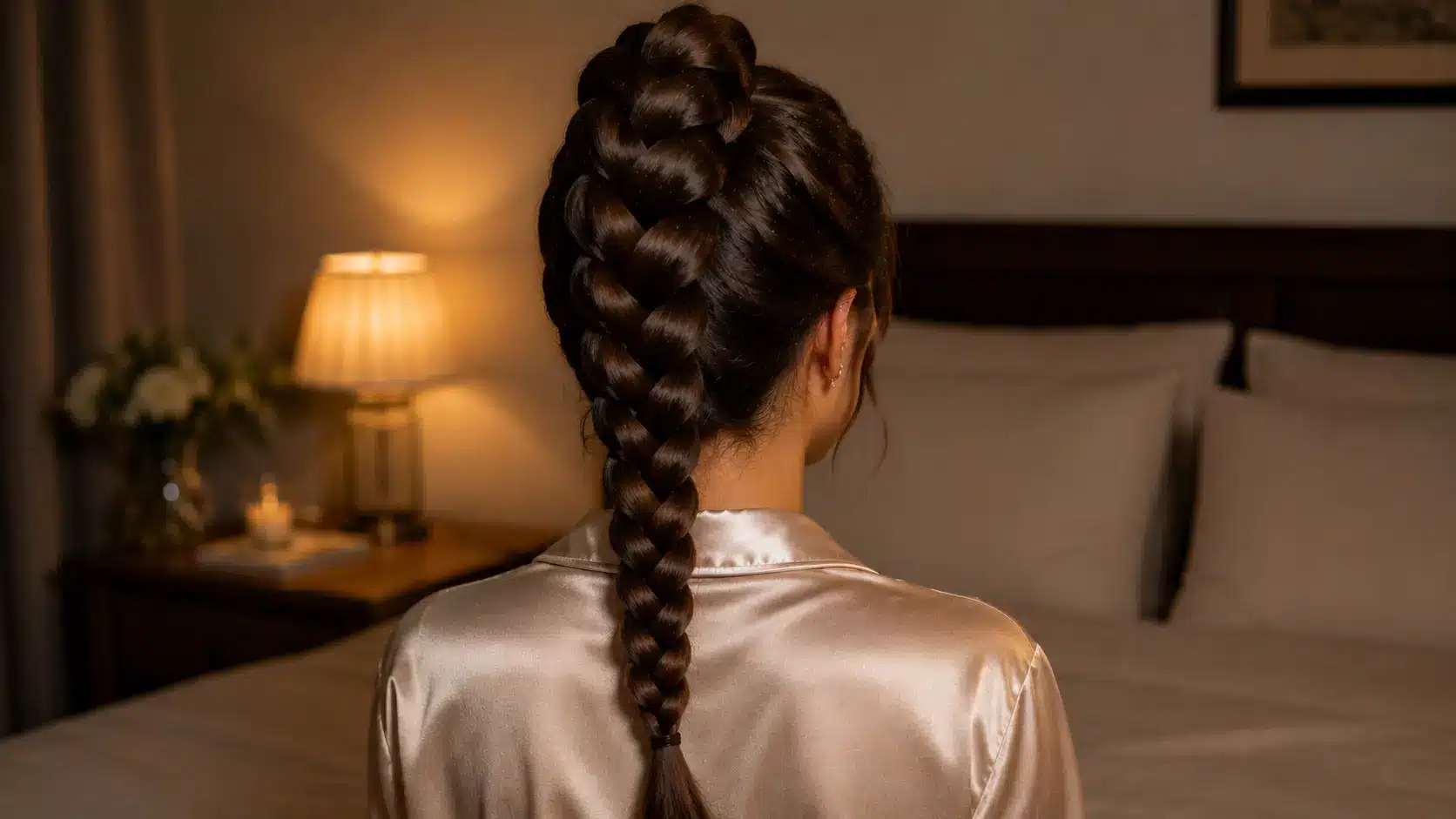
A Dutch braid works like a French braid, but the sections cross under rather than over, so the braid sits on top of the hair. It adds natural volume and texture to the hair by morning.
- Best for: Straight and wavy hair
- How to do it: Follow the same steps as a French braid but cross the sections under instead of over.
6. Loose Low Bun
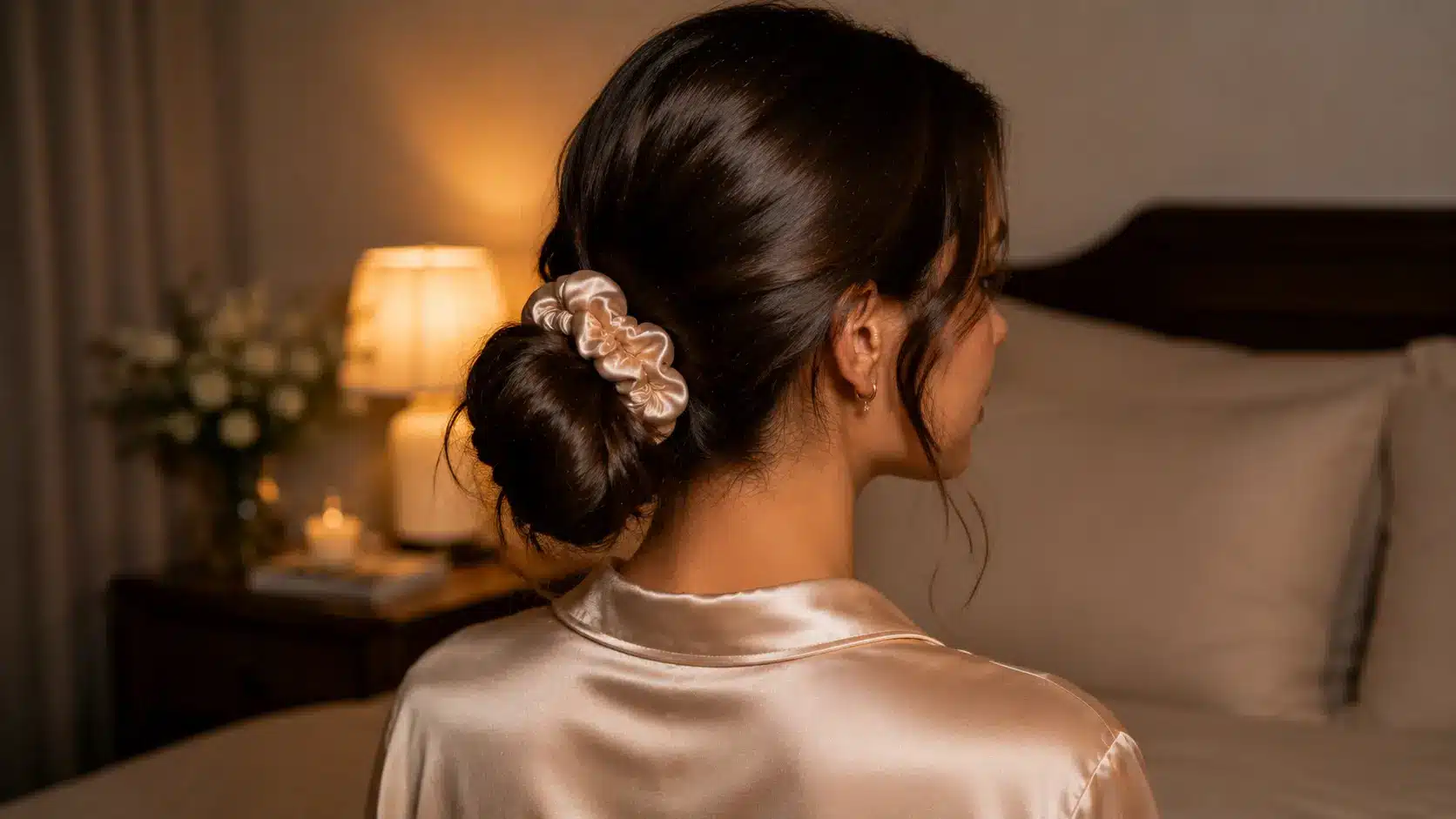
A loose low bun is quick to do and keeps hair off the face and neck all night. It reduces friction with the pillow and works well for straight, wavy, and fine hair.
- Best for: Medium and long hair of all types
- How to do it: Pull hair to the nape of your neck, twist it gently, and wrap it into a loose bun. Secure with a satin scrunchie.
7. Twisted Low Bun
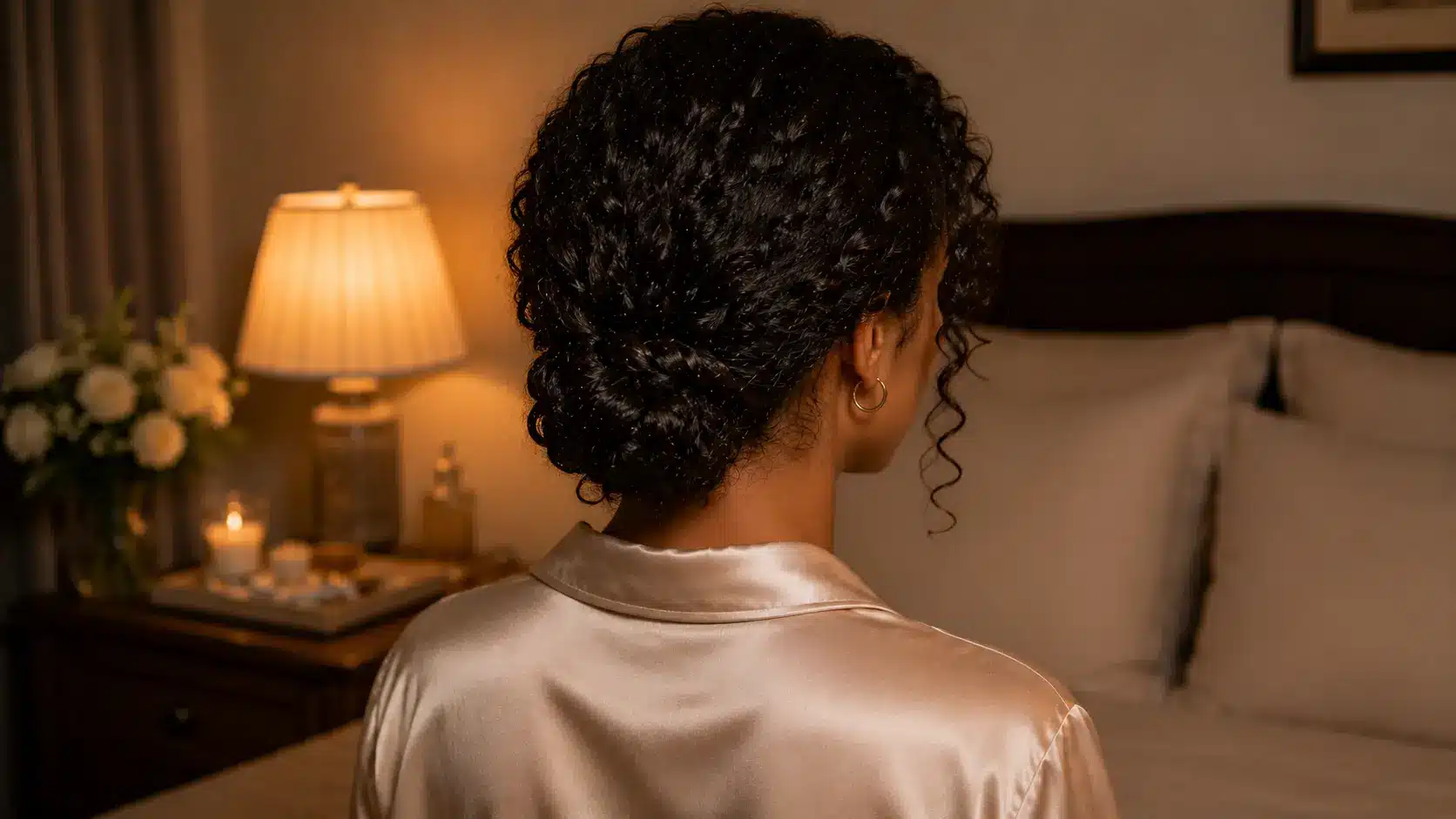
A twisted low bun keeps the natural texture of curly and coily hair intact while reducing frizz and shrinkage during the night. It is gentle on the hair and easy to undo in the morning.
- Best for: Curly and coily hair
- How to do it: Twist your hair in one direction until it coils on itself, then pin or secure it at the nape with a soft hair tie.
8. Low Ponytail With a Satin Scrunchie
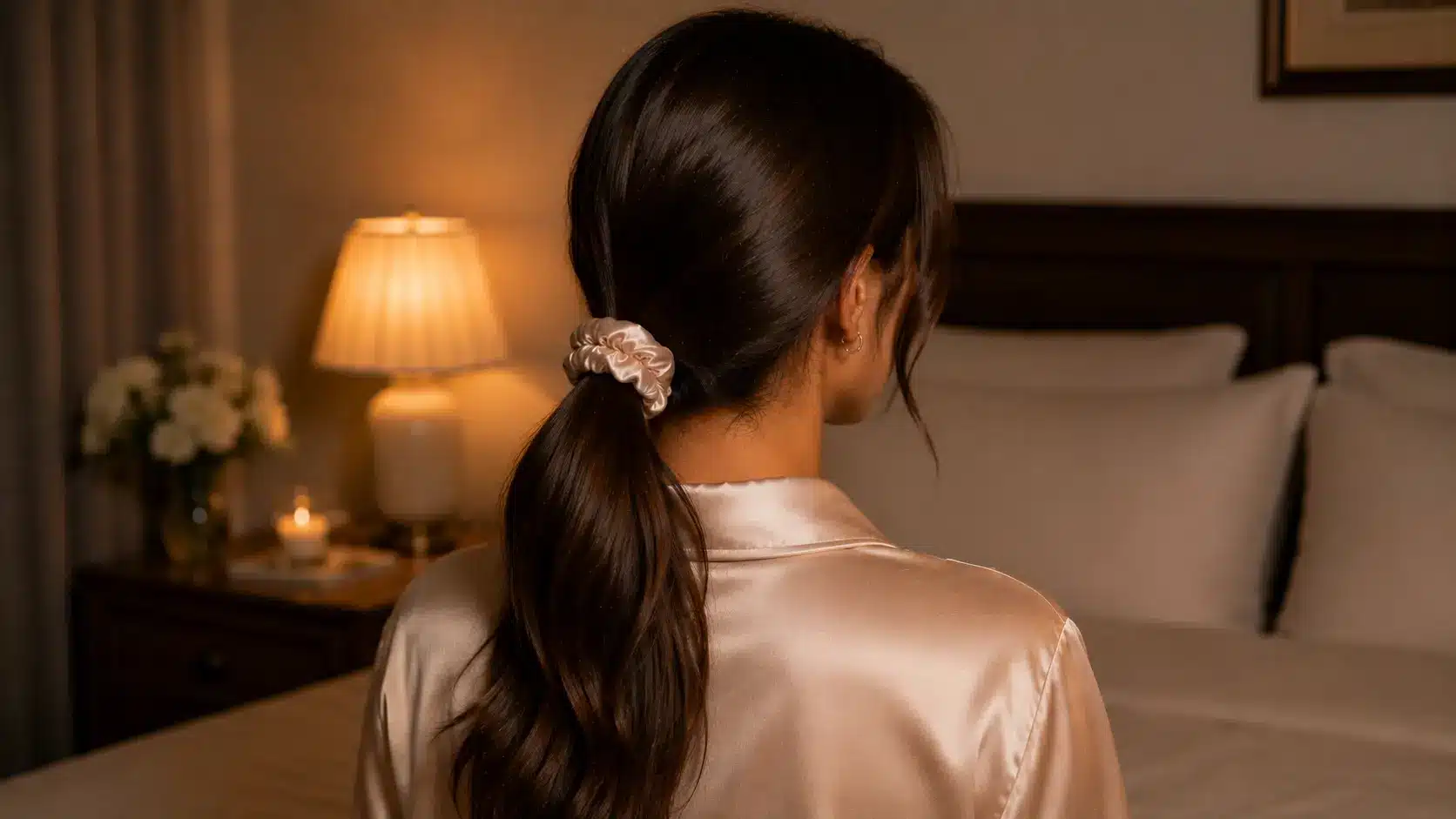
A low ponytail with a satin scrunchie is one of the fastest protective styles you can do before bed. The satin material keeps the hair from creasing or breaking the way a regular elastic would.
- Best for: Straight and fine hair
- How to do it: Brush your hair back and tie it low at the nape of your neck with a satin or silk scrunchie.
9. Pineapple Hairstyle
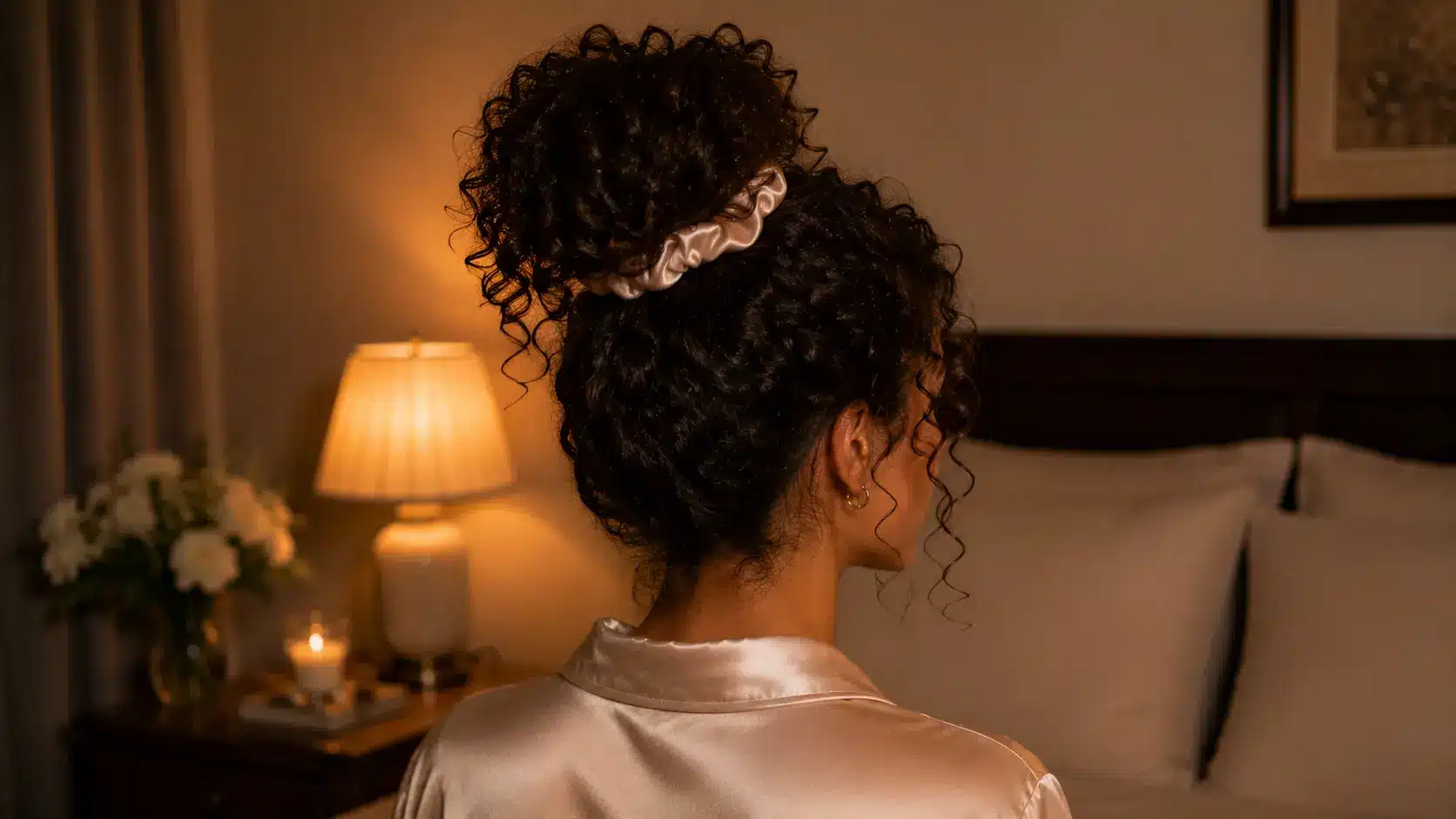
The pineapple hairstyle lifts all your curls to the top of the head so they do not get crushed or flattened by the pillow. It is one of the most popular protective hairstyles for curly hair peoples.
- Best for: Curly and coily hair
- How to do it: Flip all your hair to the top of your head and loosely secure it with a satin scrunchie. The hair should sit like a loose puff on top.
10. High Pineapple Puff
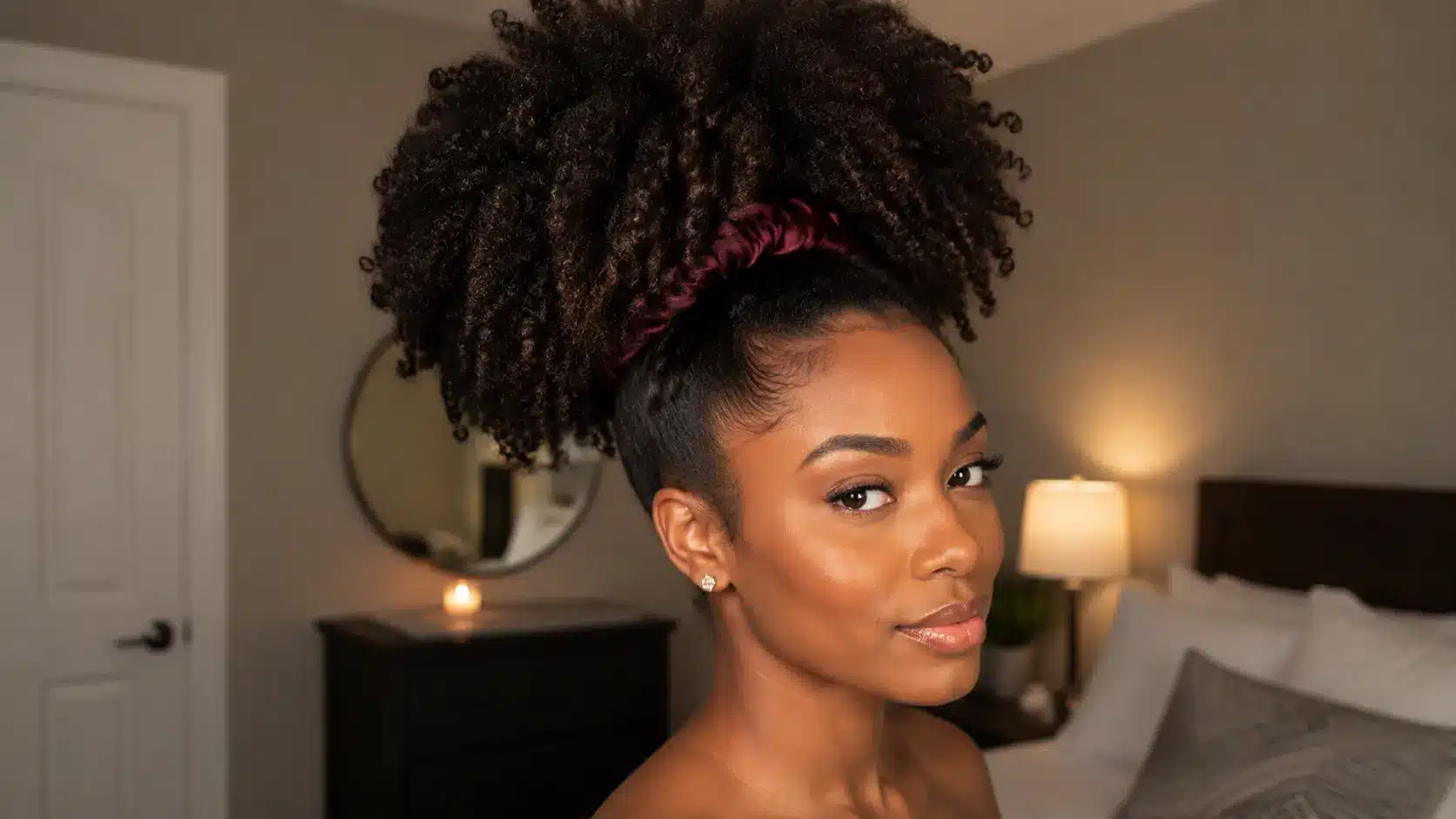
The high pineapple puff works like the classic pineapple but suits thicker, bigger hair that needs more room to breathe overnight. It keeps the shape of the style intact and lifts the hair fully off the pillow.
- Best for: Natural and coily hair with more volume
- How to do it: Gather all hair high on the head, letting it fan out freely. Secure loosely with a wide satin scrunchie or soft hair tie.
11. Two-Strand Twists
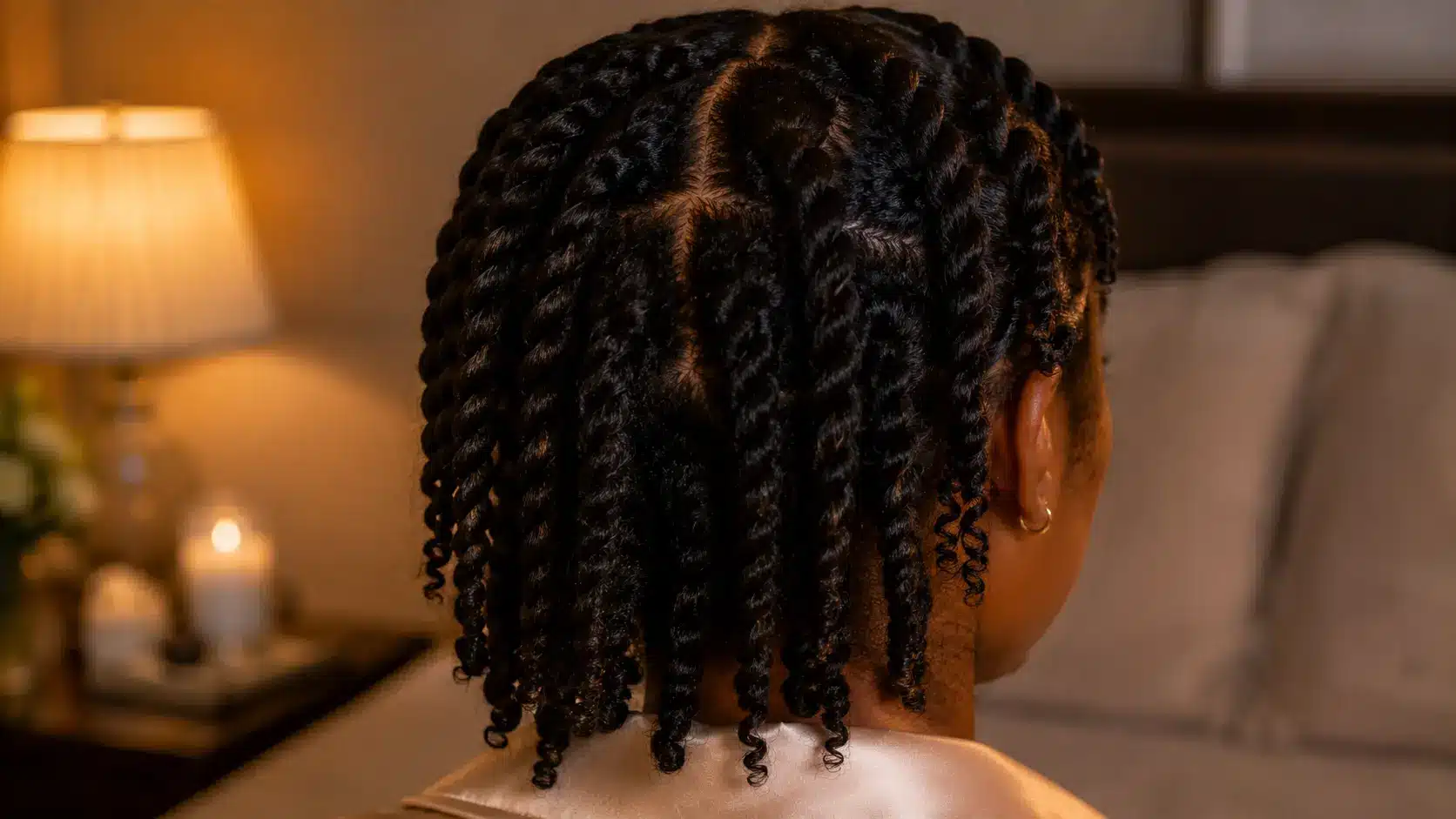
Two-strand twists gently stretch the hair while keeping it protected from friction and tangling overnight. They also help define the curl pattern so hair looks better in the morning with less effort.
- Best for: Curly and natural hair
- How to do it: Divide hair into sections, twist two strands around each other from root to tip, and secure the ends.
12. Flat Twists
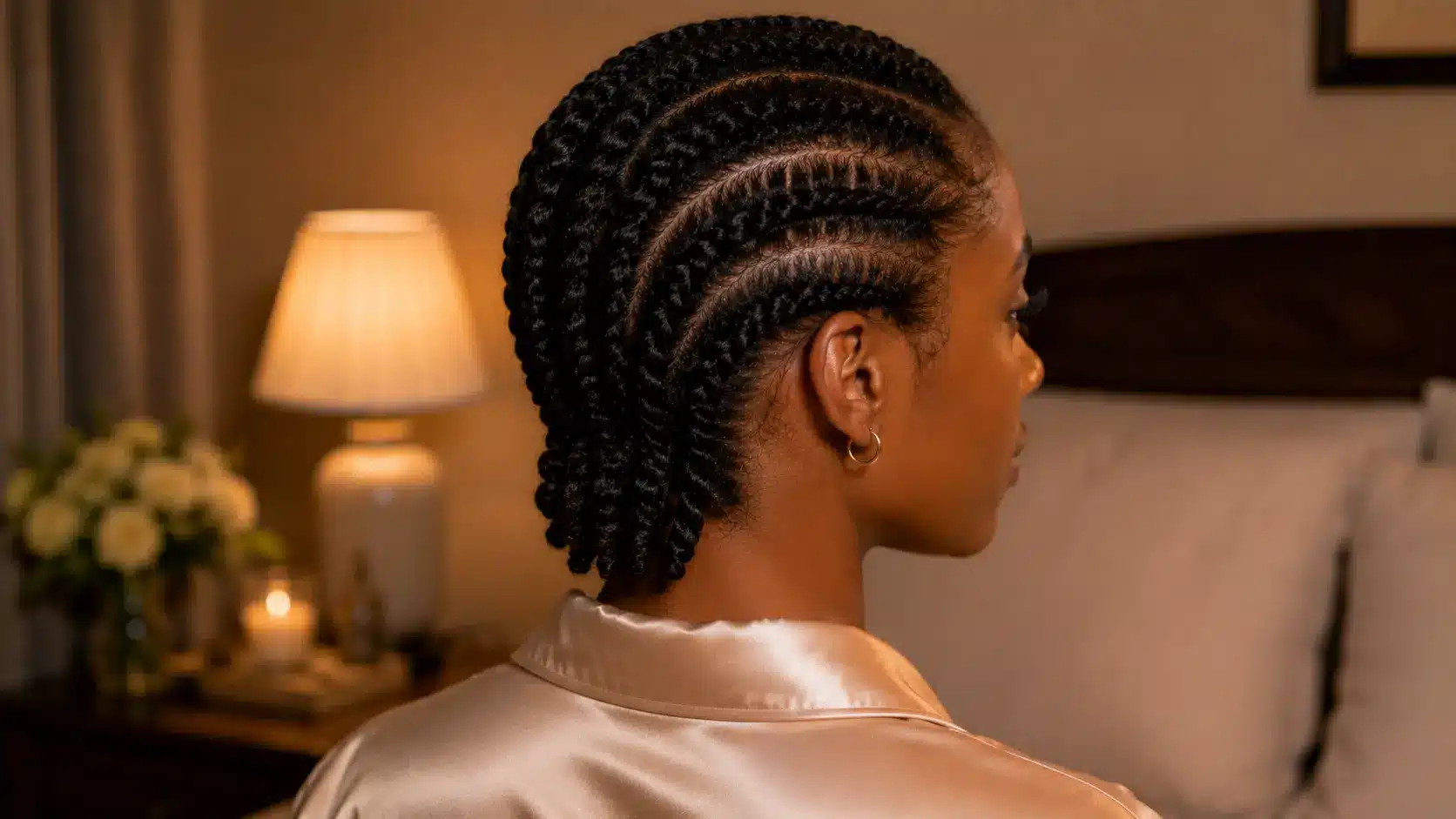
Flat twists lie flat against the scalp, making them comfortable to sleep on and great for protecting the edges. They also gently stretch the hair to keep it from shrinking too much overnight.
- Best for: Natural and coily hair
- How to do it: Work in sections close to the scalp, picking up hair as you twist along the head. Secure at the end with a soft tie.
13. Loose Cornrows
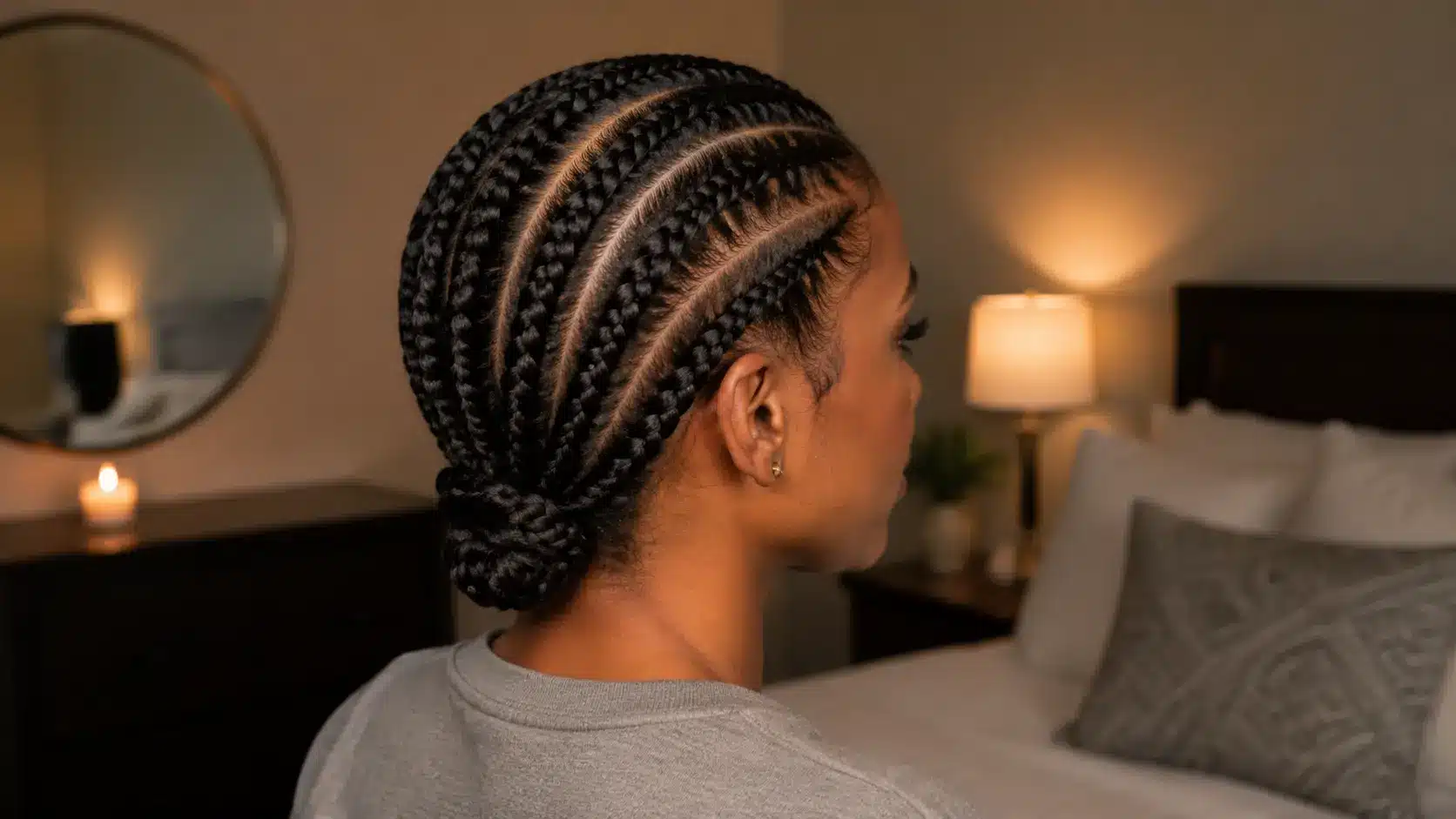
Loose cornrows keep all the hair neatly tucked flat against the head and are great for preserving protective styles underneath. When done with light tension, they are comfortable to sleep on and help reduce daily manipulation.
- Best for: Natural hair and hair extensions
- How to do it: Braid the hair in rows close to the scalp, keeping the tension light so the style feels comfortable lying down.
14. Crown Braid
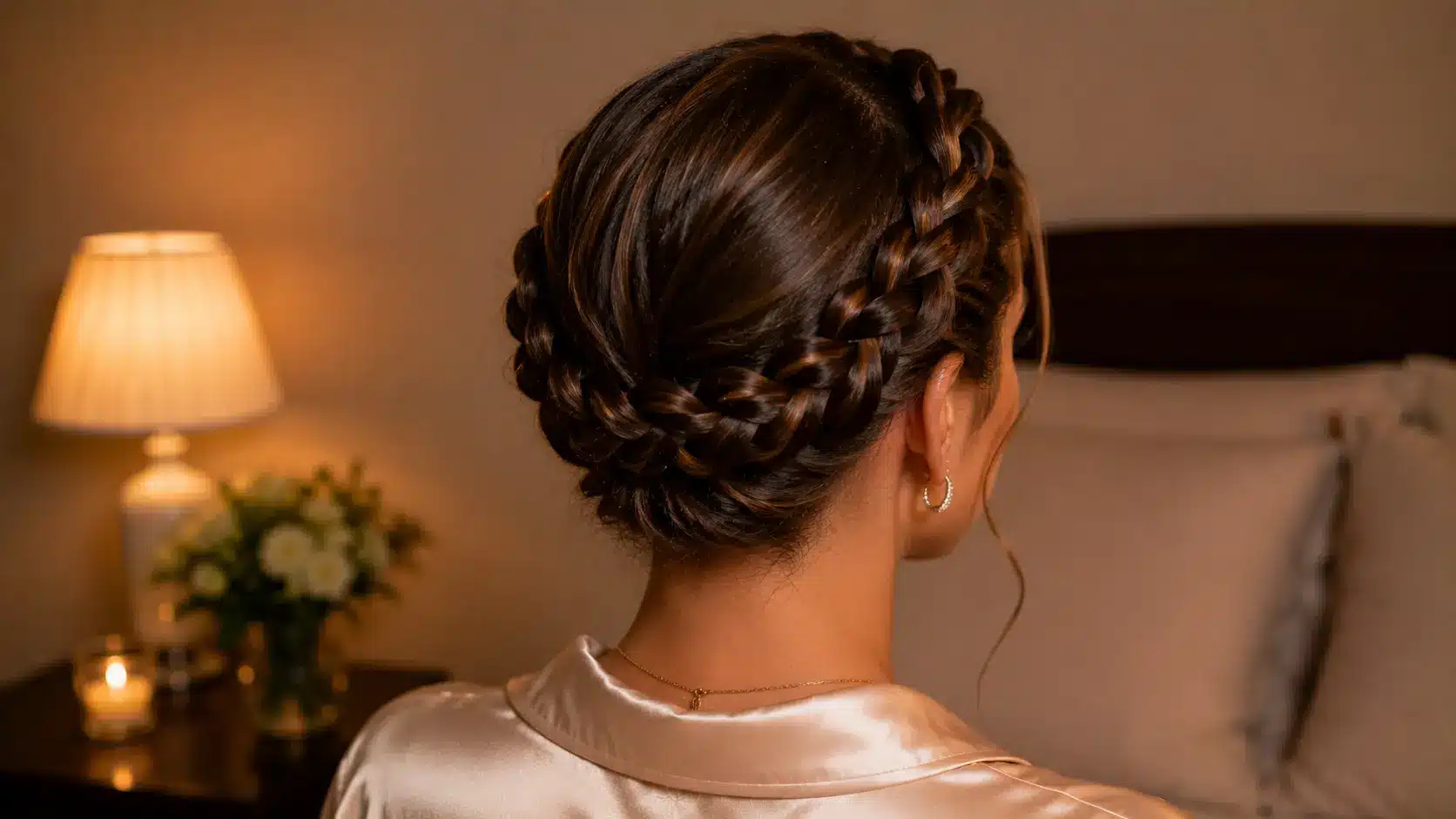
A crown braid wraps hair around the head like a halo and tucks all the ends in so they stay protected overnight. It keeps hair smooth, reduces friction all the way around, and gives a soft wave pattern by morning.
- Best for: Medium and long hair
- How to do it: Create two French or regular braids on each side and pin them across the top of the head to meet in the middle.
15. Silk Scarf Wrap Style
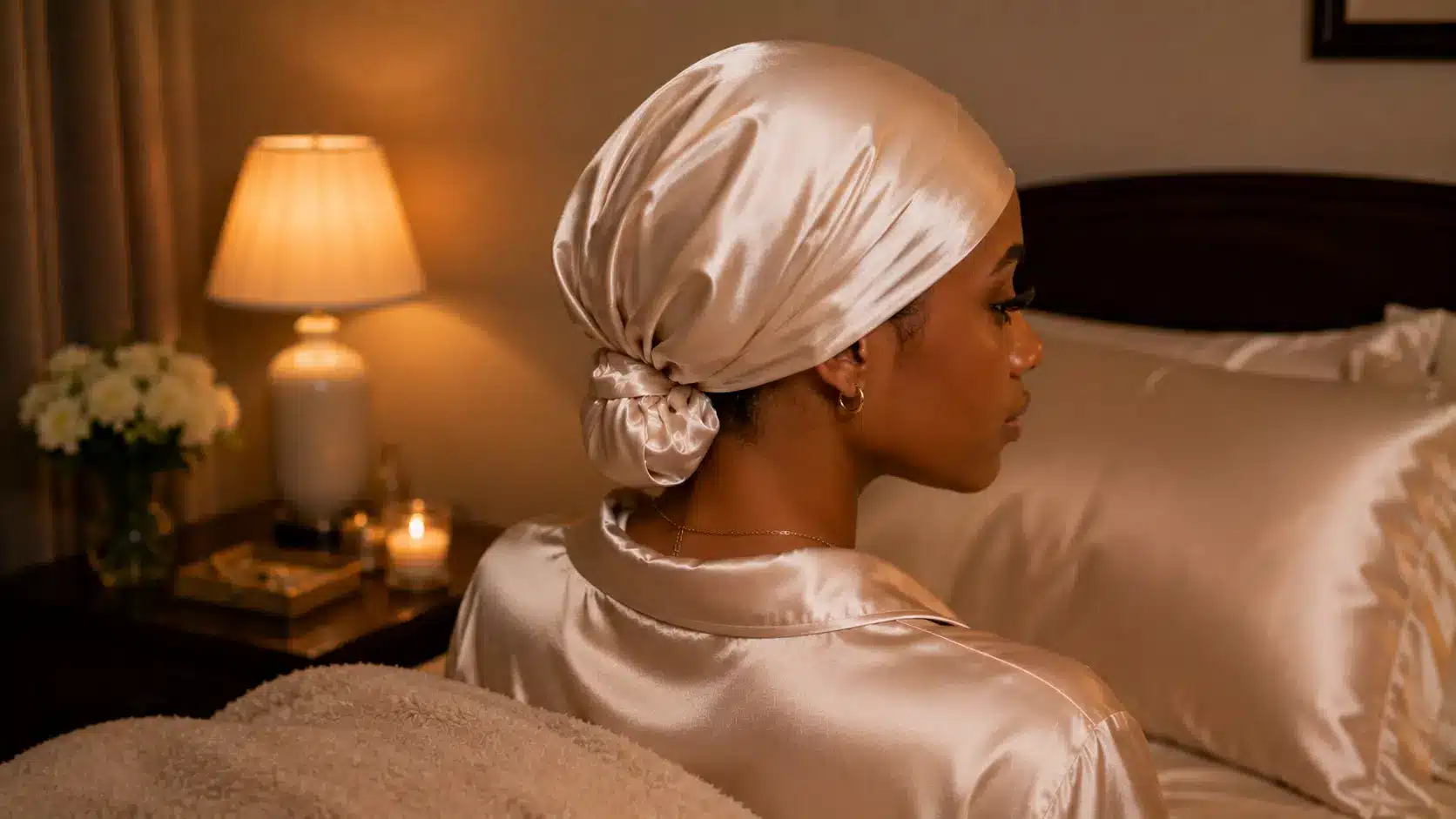
A silk scarf wrap creates a full barrier between your hair and the pillow, cutting down friction, frizz, and moisture loss all at once. It works for any hair type and is especially useful for keeping relaxed or color-treated hair smooth overnight.
- Best for: All hair types, especially chemically treated and fragile hair
- How to do it: Smooth your hair flat or into a loose style, then wrap a silk or satin scarf around your head and tie it securely at the front.
Best Protective Hairstyles for Sleeping by Hair Type
Different hair types have different needs when it comes to overnight protection. The table below highlights the best protective hairstyles for sleeping based on your hair type and the benefits they provide.
| Hair Type | Recommended Protective Hairstyles for Sleeping | Benefits |
|---|---|---|
| Straight Hair | Loose Low Braid, Low Ponytail with a Satin Scrunchie, Loose Low Bun | Minimizes friction, prevents tangles, and reduces breakage. |
| Wavy Hair | Two Loose Braids, French Braid, Silk Scarf Wrap | Helps control frizz, preserves wave patterns, and reduces moisture loss. |
| Curly Hair | Pineapple Hairstyle, Two-Strand Twists, Twisted Low Bun | Retains moisture, maintains curl definition, and prevents flattening. |
| Natural Hair | Flat Twists, Loose Cornrows, High Pineapple Puff, Silk Scarf Wrap | Protects fragile strands, reduces shrinkage, and limits daily manipulation. |
| Fine Hair | Low Ponytail with a Satin Scrunchie, Loose Low Bun, Classic Three-Strand Braid | Prevents breakage, avoids excessive tension, and keeps hair from tangling overnight. |
Choosing the right protective hairstyle for sleeping based on your hair type can help reduce breakage, preserve moisture, and keep your hair looking healthier with minimal effort each morning.
Essential Sleep Accessories That Make Protective Hairstyles Work Better
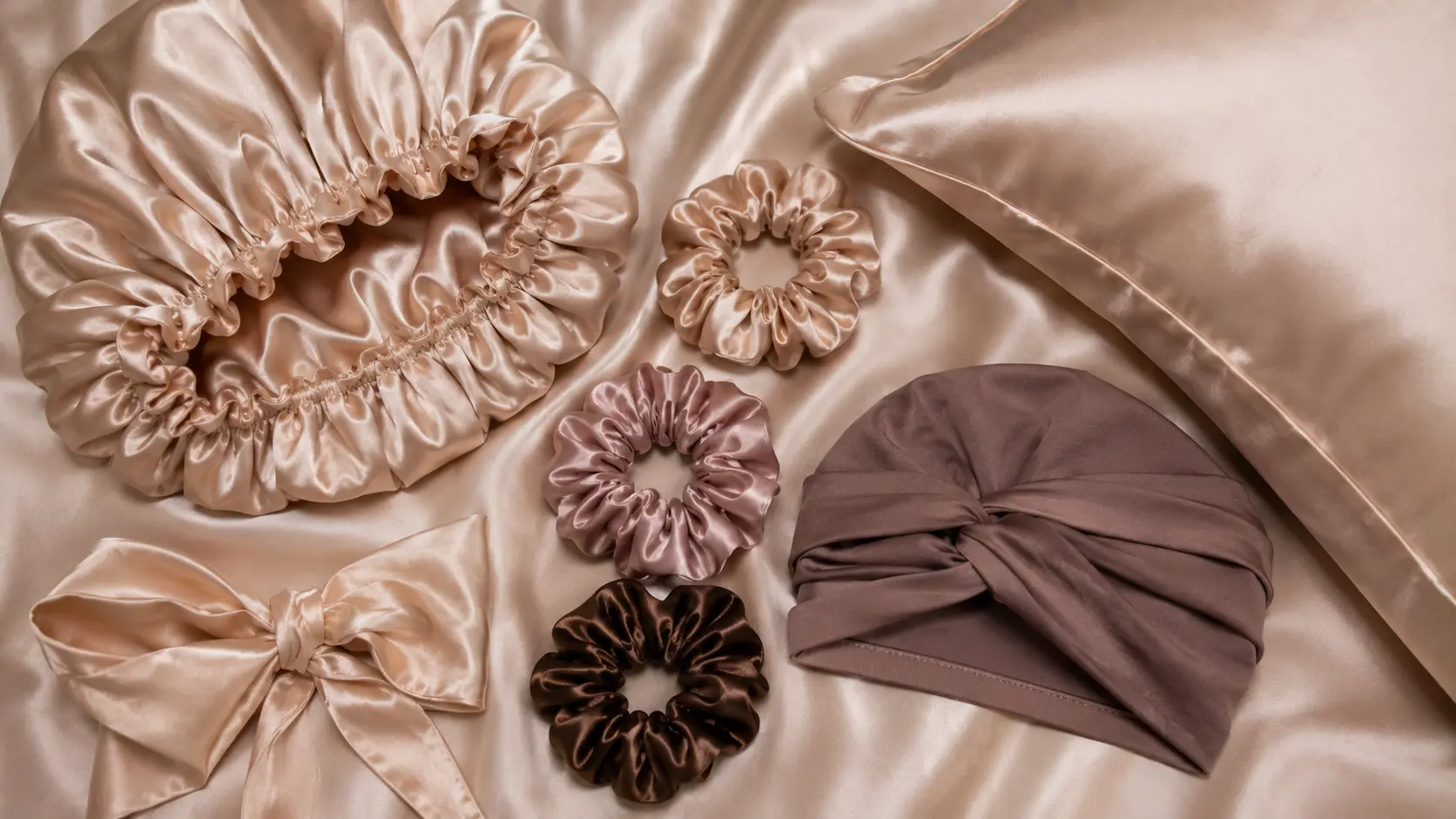
The right accessories can take your nighttime hair routine to the next level. Pairing a good protective hairstyle with satin or silk products gives your hair the best protection against friction and moisture loss.
- Satin Bonnets: A satin bonnet covers your entire hairstyle and keeps it in place overnight. It is one of the easiest ways to reduce friction, retain moisture, and support long-term scalp health.
- Silk Pillowcases: Switching to a silk pillowcase means less friction, even if your hair slips out of a bonnet. It is especially useful for straight and fine hair.
- Satin Scrunchies: Regular elastics cut into the hair shaft. Satin scrunchies hold the hair without gripping too tightly or leaving creases.
- Silk Scarves: Silk scarves are great for wrapping natural hair or covering a protective style. They are lightweight and smooth against the hair.
- Hair Wraps: Hair wraps are wider than scarves and designed specifically to cover braids, twists, and buns without unraveling them during sleep.
Common Mistakes to Avoid When Wearing Protective Hairstyles to Bed
Even the right protective hairstyle can cause damage if done incorrectly.
Tight styles strain the roots and may lead to breakage or traction alopecia, while sleeping with wet hair increases fragility and can promote scalp issues.
Using regular elastic bands can snap hair, so opt for soft satin scrunchies, and always ensure your hair is moisturized before styling.
Finally, protect strands from friction by sleeping on satin or silk pillowcases or wrapping hair in a silk scarf.
Simple Nighttime Hair Care Routine Before Bed
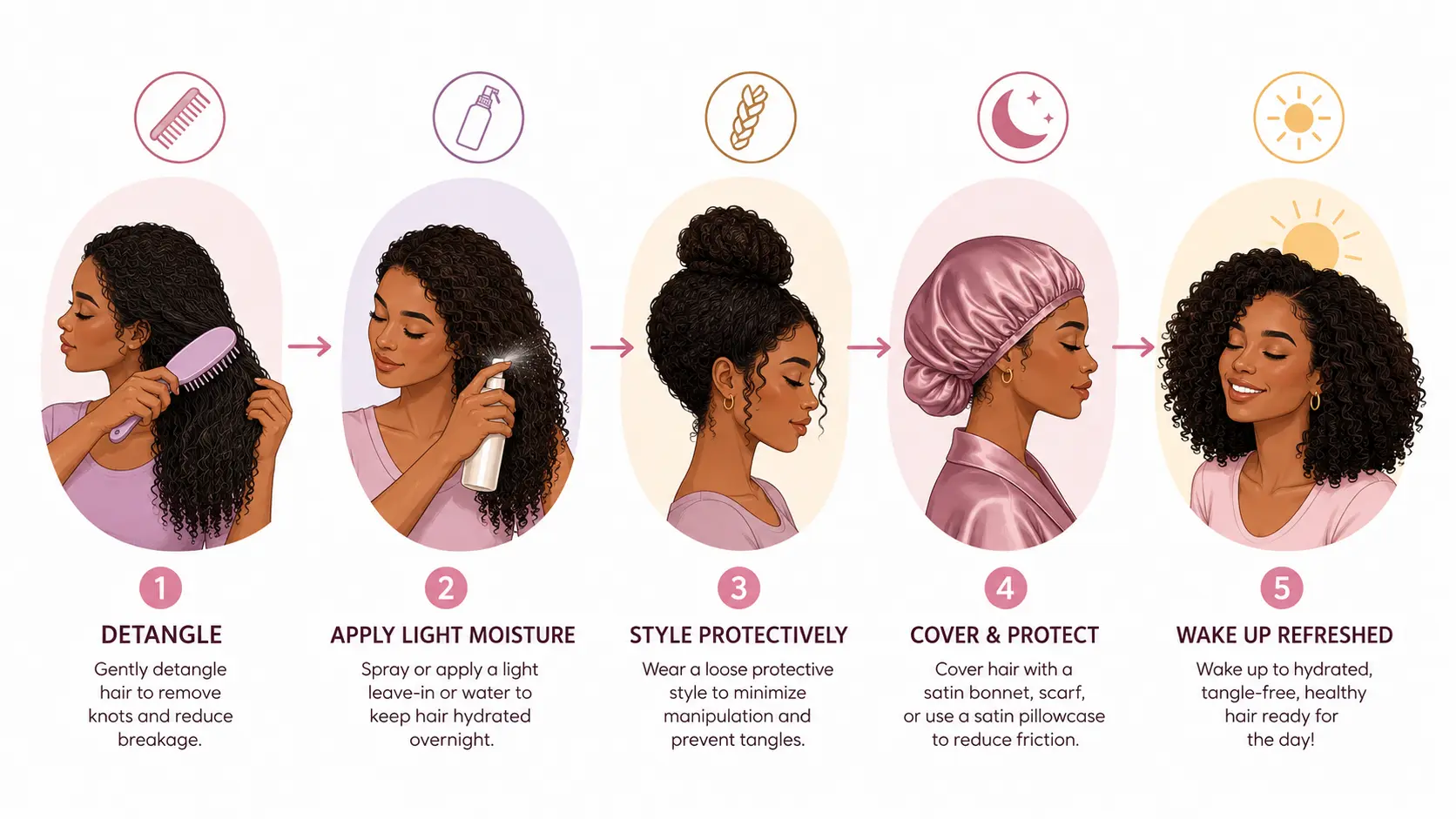
A good nighttime hair routine does not have to take long. Just five simple steps each night can protect your hair, reduce breakage, and keep it looking healthier over time.
- Step 1: Detangle Your Hair: Use a wide-tooth comb or your fingers to gently remove any knots, starting from the ends and working up to the roots.
- Step 2: Apply Lightweight Moisture: Use a small amount of leave-in conditioner or a light hair oil to add moisture before styling, especially if you are dealing with wet hair fragility. Focus on the ends.
- Step 3: Create Your Protective Hairstyle: Choose the style that works best for your hair type and make sure it is loose and comfortable.
- Step 4: Cover Hair With Satin or Silk: Put on a satin bonnet, tie on a silk scarf, or lay your head on a silk pillowcase.
- Step 5: Refresh Hair in the Morning: Spritz with a little water or a curl refresher, gently fluff or unravel the style, and you are ready to go.
Following these simple steps each night helps keep your hair healthy, moisturized, and tangle-free by morning.
Final Thoughts
Protecting your hair at night does not have to be complicated. A simple braid, bun, or twist before bed can reduce breakage, lock in moisture, and keep your hair looking healthy over time.
Pair any style with a satin scrunchie, bonnet, or silk pillowcase for the best results. Start with one style that suits your hair type and stick with it.
Small habits done consistently add up to real results. Your hair works hard every day, and a good nighttime routine is the simplest way to take care of it.
Frequently Asked Questions
Can Sleeping with Your Hair Down Cause Damage?
Sleeping with your hair down can increase friction against the pillow, which may lead to tangles, frizz, and breakage over time. This is especially common for long, curly, or chemically treated hair.
How Often Should You Wash Your Hair if You Use Protective Hairstyles at Night?
Protective hairstyles do not change how often you need to wash your hair, as that depends on your hair type and scalp condition. Most people can follow their regular washing schedule while using sleep-friendly styles.
Is a Satin Bonnet Better than A Silk Pillowcase?
A satin bonnet keeps hair fully covered and helps maintain protective hairstyles throughout the night. A silk pillowcase still reduces friction but offers less protection if your hair moves around while you sleep.