

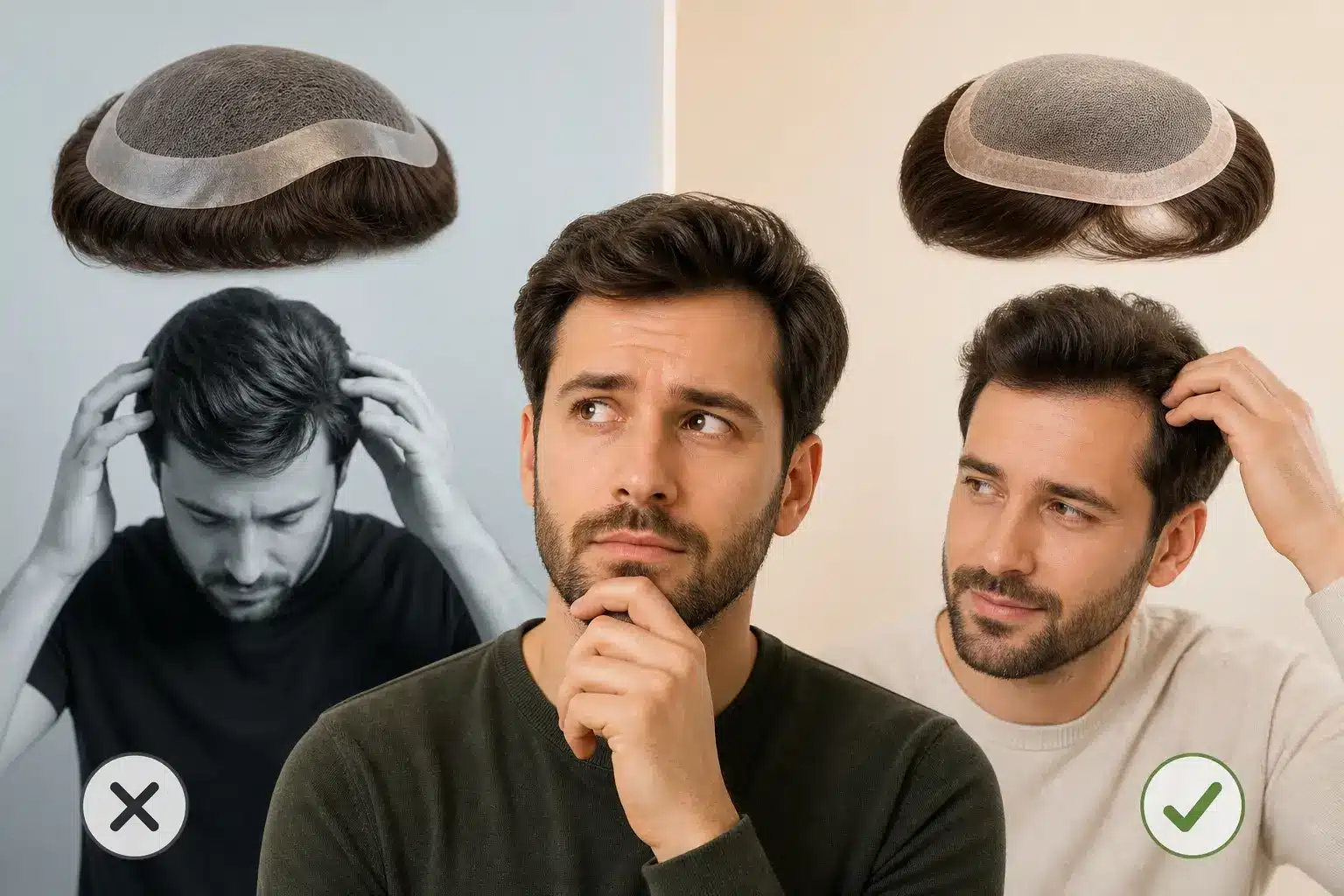

When most people think about non-surgical hair replacement, they picture a full hair system covering the entire top of the scalp. And for men dealing with widespread hair loss, that makes complete sense. But not every man is at that stage. A lot of men are dealing with one specific problem area, a thinning crown, receding temples, a small bald patch at the side, and covering their whole head of hair is not what they need or want.
That is exactly where a hair patch for men comes in. A hair patch is a smaller, targeted piece designed to cover a specific area of loss rather than the entire scalp. It works with your existing hair rather than replacing it, which makes it a very different product from a full system in terms of how it looks, how it feels, and how much effort it takes to maintain. For the right person, it is genuinely the smarter choice.
Understanding What a Hair Patch Actually Is
A hair patch is essentially a compact hair replacement piece built to cover a localised area of hair loss. Think of it as a targeted solution rather than a full overhaul. The piece is made with real human hair attached to a thin base, secured to the scalp with medical-grade tape or adhesive, and blended into the surrounding natural hair so the transition is seamless.
The available styles cover the most common areas where men experience patchy or localised hair loss. Crown patches address the circular thinning that tends to develop at the top back of the head. Frontal patches and oversized frontal pieces cover recession and thinning at the hairline. Temple patches specifically target the temples, which are often the first area men notice changing. Side patches handle hair loss on the sides of the scalp.
Because each patch is designed for a specific zone, it integrates naturally with the hair around it rather than sitting as a separate piece on an otherwise bare scalp. When done right, the coverage looks like your own hair filling back in.
Who Is a Hair Patch Actually For?
This is the question worth answering honestly, because a hair patch is not the right solution for everyone and it is not trying to be.
If your hair loss is patchy or limited to one or two specific areas while the rest of your hair is reasonably intact, a patch is almost certainly the better option over a full system. Covering a crown patch or temple recession with a targeted piece is far less intrusive than wearing a full system that sits over hair you still have. It is lighter, more breathable, and requires less maintenance because there is simply less of it.
Men in the early to middle stages of hair loss often fall into this category. The recession has started, or the crown is visibly thinning, but it has not progressed to the point where a full system makes sense. A patch lets them address the specific problem now without committing to a more involved solution that their current situation does not actually require.
Men who are particular about keeping as much of their natural hair as possible also tend to prefer patches. A full hair system covers everything on top, natural or not. A patch targets only what needs covering and leaves the rest of your real hair exactly as it is.
How a Hair Patch Compares to a Full Hair System
Putting these two options side by side on the things that actually matter to daily life makes the differences clear.
In terms of coverage, full systems are built for extensive hair loss across a wide area. Patches are built for concentrated, specific loss. Choosing the wrong one for your situation creates problems. A patch on a scalp that needs full coverage looks incomplete. A full system on someone with minimal loss looks and feels like more than the situation calls for.
Maintenance tells a similar story. Full systems require regular cleaning, reattachment, and care across a larger surface area. A patch involves a smaller piece and a simpler routine. Cleaning takes less time. Reattachment is quicker. For men who are new to hair replacement and want to ease into it without a steep learning curve, a patch is a far more manageable starting point.
Cost is a practical consideration too. Hair patches are generally priced lower than full systems because they use less material and involve a simpler construction. For men who are trying non-surgical hair replacement for the first time and want to test the experience before committing to a larger investment, a patch makes financial sense as an entry point.
Comfort is the final comparison worth mentioning. A smaller piece covering a specific area of the scalp tends to feel less noticeable day to day than a full system. Less base material means more of your natural scalp breathes freely. In warmer weather especially, that difference is something wearers notice and appreciate.
The Different Types of Hair Patches and What Each One Does
Knowing which patch suits your specific hair loss pattern makes a real difference to the result you get, so it is worth understanding what each option is designed to do.
Crown patches are the most commonly used. Crown thinning is one of the most frequent hair loss patterns in men, particularly from the mid-thirties onward. A crown patch sits over the affected area, blending into the surrounding hair so the thinning simply disappears from view. The piece is sized to cover the loss without extending unnecessarily beyond it.
Frontal pieces address recession at the hairline, which is often where men notice hair loss first and feel it most visibly. An oversized frontal option covers a broader zone for men whose hairline has receded further back. These pieces are designed with ultra-thin bases at the hairline itself so the transition from the piece to the skin looks completely natural.
Temple patches come as a pair and address the recession that often develops at the temples specifically. Because this area is very visible in everyday interaction, having a natural-looking result here matters a lot. Temple patches are made to integrate cleanly with the hair above and around them so the restored area looks like a continuous part of the scalp.
Side patches handle hair loss that develops along the sides of the head, which is less common but still something men deal with. The pair construction ensures both sides can be addressed symmetrically.
The Attachment Process and What to Expect
If you have never worn any kind of hair replacement piece before, the attachment process is probably one of your main questions. The good news is that it is simpler than most people expect, and it gets easier quickly with practice.
Hair patches attach to the scalp using medical-grade double-sided tape or adhesive. Both options create a secure bond that holds through normal daily activity, including exercise and outdoor use. Tape tends to be more forgiving for beginners because it is easy to remove and reapply cleanly. Adhesive creates a stronger bond and is a good option for men who are very active or want maximum security.
The scalp area where the patch sits needs to be clean and free of product before application. Once attached, the surrounding natural hair is combed or styled over the edges of the patch to blend the transition. With a well-matched piece and a little practice, the result looks exactly like your natural hair growing from the scalp.
Most men settle into a routine of cleaning and reattaching every one to two weeks. The first couple of times take longer as you figure out your own process. After that it becomes quick and straightforward.
Is a Hair Patch the Right Starting Point for You?
If you are considering non-surgical hair replacement for the first time and your loss is not yet widespread, a hair patch is one of the most sensible places to start. It lets you experience what modern hair replacement actually feels like, see how natural a well-matched piece looks in real life, and build confidence with the maintenance routine, all without the commitment and cost of a full system.
For men who are already wearing full systems and find the maintenance demanding, a patch is worth considering if their loss pattern has not actually progressed to the point where full coverage is necessary. Sometimes the most practical choice is also the simplest one.
The bottom line is that hair replacement is not a one-size solution, and it never should be. A hair patch exists because a specific group of men have a specific problem that a targeted solution handles better than a larger one. If your situation fits that description, it deserves serious consideration.